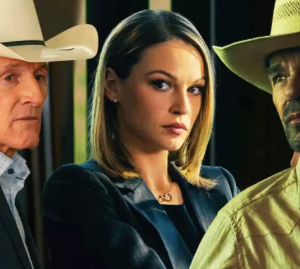
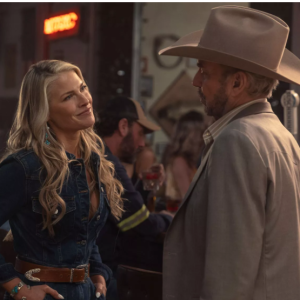
From the moment its sweeping vistas of Montana’s untouched wilderness first graced our screens, Taylor Sheridan’s “Yellowstone” has carved an indelible mark on the entertainment landscape. More than just a television show, it is a visceral saga of power, legacy, and the brutal fight for survival, cementing its status not merely as a hit series but as a veritable cultural phenomenon. As the Dutton family grapples with an ever-encroaching world, facing down enemies from all sides, “Yellowstone” lays bare the raw, often uncomfortable truths about ambition, loyalty, and the human condition.
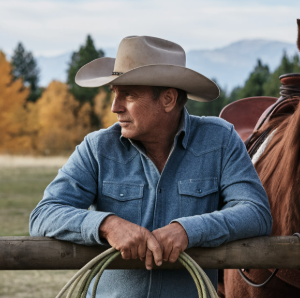
At its core, “Yellowstone” is the story of John Dutton III, portrayed with a stoic, weathered gravitas by Kevin Costner. John is the patriarch of the largest contiguous ranch in the United States, a man whose life is a relentless crusade to preserve his family’s land and legacy. This isn’t just property; it’s a way of life, a sacred trust passed down through generations. The series immediately plunges viewers into the heart of this conflict, with the ranch besieged by land developers eyeing its prime real estate, a neighboring Indian reservation seeking to reclaim ancestral lands, and politicians eager to exploit its resources. Every sunrise over the Big Sky Country brings a new challenge, and John’s desperate, often ruthless, measures to protect his empire form the backbone of the narrative.
The dramatic tension in “Yellowstone” isn’t merely external; it’s intricately woven into the fractured dynamics of the Dutton family itself. John’s children are as complex and volatile as the landscape they inhabit. There’s Kayce, the estranged son and former Navy SEAL, impeccably played by Luke Grimes, who struggles to reconcile his past, his love for his Native American wife Monica, and his undeniable pull back to the ranch. His journey is one of internal conflict, caught between the brutal “Yellowstone way” and his own moral compass, constantly seeking a balance that often seems impossible.
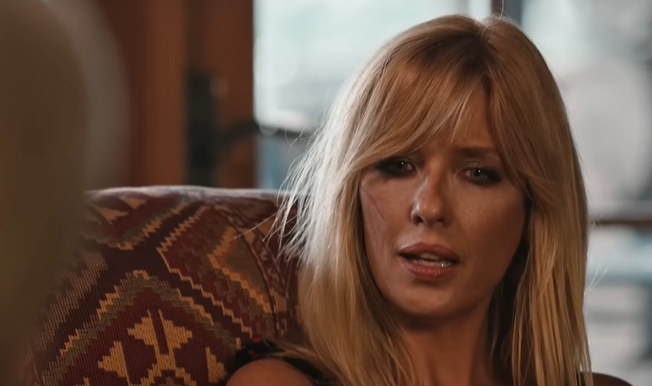
Then there’s Beth Dutton, the fire-breathing, fiercely loyal, and utterly devastating daughter, brought to life with mesmerizing intensity by Kelly Reilly. Beth is arguably the show’s most captivating character, a woman whose sharp wit and venomous tongue are matched only by her profound emotional scars and unwavering devotion to her father and the ranch. Her battles are legendary, whether she’s verbally dismantling corporate predators or physically confronting anyone who dares threaten her family. Beth embodies the raw, unvarnished honesty that few possess the “spine to own.” She points out the very thing everyone else is thinking but is too afraid to vocalize, often with a cruel amusement that belies her deep-seated pain. Her ferocity, though often seen as “mean,” is her ultimate act of love and protection, a shield forged from trauma.

Completing the core quartet is Jamie Dutton, the Harvard-educated black sheep lawyer, played by Wes Bentley. Jamie’s arc is perhaps the most tragic and deeply unsettling. Constantly vying for his father’s approval, forever living in the shadow of his siblings, Jamie’s pursuit of a political career and his desperate attempts to assert his own identity lead him down a path of profound isolation and betrayal. His story explores the devastating impact of generational expectations and the corrosive effects of a family unwilling to accept one of its own for who he truly is.
Beneath the surface of family drama and land disputes, “Yellowstone” delves into profound thematic territory. It’s a poignant exploration of modernity clashing with tradition, where the values of the Old West – self-reliance, rugged individualism, a deep connection to the land – are constantly threatened by urban expansion, technological advancements, and shifting moral codes. The show unflinchingly portrays the violence inherent in this struggle, where justice is often administered not by law, but by the barrel of a gun or the swift hand of retribution. The infamous “train station” – a euphemism for a remote canyon where undesirable individuals disappear – symbolizes the Duttons’ extra-legal methods, a chilling reminder that on the ranch, the Duttons make their own rules.
Central to this enforcement is Rip Wheeler, portrayed with a quiet intensity by Cole Hauser. Rip, John’s loyal ranch foreman and Beth’s soulmate, is the embodiment of the ranch’s brutal code. He is John’s enforcer, his most trusted confidant, and the man who lives and breathes the “Yellowstone way” without question. Rip finds a grim sort of satisfaction in his work, a sense of purpose in defending the Duttons, often with a stark, almost primal efficiency that can be interpreted as finding “fun” in asserting dominance over those who threaten his world. His dedication is absolute, making him the ultimate protector and a fan-favorite character who represents the unwavering, albeit often violent, heart of the ranch.
The series’ impact extends beyond its gripping narratives. “Yellowstone” has reignited public fascination with the Western genre, infusing it with contemporary relevance and gritty realism. It challenges conventional notions of heroism and villainy, presenting characters that are morally ambiguous, driven by a complex mix of love, fear, greed, and an unshakeable sense of belonging. The stunning cinematography, showcasing Montana’s breathtaking natural beauty, serves as a character in itself, emphasizing the vastness of the land the Duttons are fighting so desperately to protect.
As “Yellowstone” hurtles towards its climactic conclusion, the stakes have never been higher. The fragile peace on the ranch is constantly shattered by betrayals, both internal and external, forcing the Duttons to confront their choices and the consequences of their relentless fight. The show’s ability to maintain its dramatic intensity, its commitment to exploring the darker facets of human nature, and its unparalleled portrayal of a family clinging to its legacy against all odds, ensure its place as a monumental achievement in television. In a world where everyone’s thinking about survival and dominance, “Yellowstone” doesn’t just acknowledge it; it throws it in your face, daring you to look away. And like the unyielding spirit of the West, it just keeps coming.