**Yellowstone Ranch, Montana –** In the sprawling, often brutal world of Taylor Sheridan’s *Yellowstone*, few locations hold as much raw, unfiltered character as the bunkhouse. It’s a crucible of camaraderie and conflict, where the untamed spirit of the ranch hands is forged, tested, and sometimes broken. A recent “Stories from the Bunkhouse” bonus feature, aptly titled “Watch & React: Wildcats,” offered an illuminating and often uproarious peek behind the curtain of one such pivotal, yet subtly complex, scene from Season 2, revealing the layers of improvisation, character dynamics, and understated gravitas that define the series.
The segment, featuring fan-favorites Ian Bohen (Ryan), Denim Richards (Colby), and Jefferson White (Jimmy Hurdstrom), dissected a scene that perfectly encapsulates the bunkhouse’s unique blend of levity and looming tension. What begins as a seemingly innocuous afternoon of football-watching descends into a masterclass of character interaction, from ribald humor to a chilling reminder of the ranch’s unyielding code.
The scene opens with a familiar, almost idyllic glimpse of rancher downtime. The cowboys, momentarily unburdened by the relentless demands of the Dutton spread, are engrossed in a football game. The air is thick with playful banter, punctuated by the raucous shouts and good-natured ribbing typical of the bunkhouse. Jimmy, ever the earnest, if somewhat bewildered, urban transplant, struggles to grasp the distinctions between the “Wildcats” and “Bobcats” on screen. His innocent confusion (“What’s the f***ing difference?”) sparks a classic bunkhouse debate, highlighting the practical, no-nonsense mentality of the seasoned ranch hands against Jimmy’s more academic, albeit misguided, questioning.
This seemingly trivial exchange, as the actors reveal, is a testament to the show’s commitment to authenticity and character-driven humor. It’s a moment that grounds these larger-than-life figures in relatable, everyday squabbles, reminding viewers that beneath the dust and denim, these are men navigating a life that is both demanding and deeply communal. The debate, however absurd, underscores the distinct personalities within the bunkhouse: Ryan, the pragmatic and slightly exasperated voice of reason; Colby, whose quiet intensity often belies a sharp wit; and Jimmy, perpetually learning the ropes, often through trial by fire – or, in this case, by football.
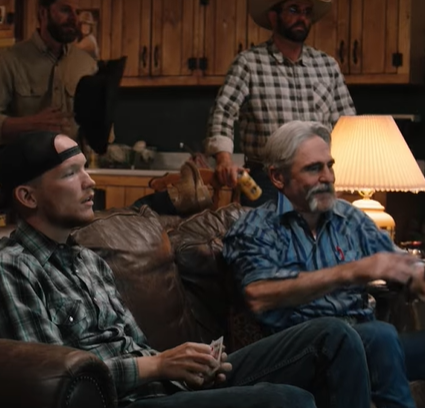
Yet, it’s the spontaneous brilliance born from the actors’ palpable chemistry that truly defines the scene’s comedic heart. The “Cougar” joke, aimed pointedly at Colby and his mother, is a prime example of *Yellowstone*’s organic writing process. “Colby’s mom, that’s a cougar?” the line echoes, igniting a ripple of genuine laughter among the actors watching the playback. Denim Richards’ deadpan retort, “That’ll be the last time you ever refer to my mom as a cougar,” followed by the improvisational gem, “She prefers wildcat?” became an instant, indelible part of *Yellowstone* lore.
The actors confirm that this gem of a line, along with the subsequent, infectious cat-growling imitations that swept through the bunkhouse, were entirely unscripted ad-libs. “You guys made this up on the day, right?” one actor queries, met with a resounding “Yep.” This revelation provides invaluable insight into how the series breathes life into its characters, allowing the actors’ natural rapport to shape and enrich the narrative. The “Cougar/Wildcat” running gag, as they note, “stuck,” becoming a beloved, humanizing detail that offered a glimpse into Colby’s personal life and his surprisingly protective nature, despite the constant teasing he endures. It’s a testament to the fact that even in the harsh world of the Dutton ranch, there’s room for lighthearted jabs and the unshakeable bonds of chosen family. The comedic timing and delivery from Richards, Bohen, and White underscore their deep understanding of their characters and the rhythm of bunkhouse life.
However, the scene’s true dramatic weight descends with the arrival of Rip Wheeler, played with an almost primal intensity by Cole Hauser. The very *click* of the door and Rip’s imposing silhouette filling the frame is enough to instantly transform the room’s boisterous atmosphere. The laughter dies, the chattering ceases, and a palpable tension replaces the playful energy. This sudden shift is a signature of *Yellowstone*’s dramatic prowess: the immediate imposition of authority, the inherent danger that perpetually lurks beneath the ranch’s surface. Rip is not just a ranch foreman; he is the Dutton family’s most loyal, most feared enforcer, and his presence alone is a stark reminder of the ranch’s brutal realities and the absolute obedience it demands.
The scene’s tension is further amplified by the quiet, yet profound, contribution of Steven Williams. As the actors reflect on his performance, they speak with reverence. Williams, embodying an older, weathered cowboy, delivers a single, unforgettable line to Rip: “You thought you got out of prison?” It’s a line pregnant with unspoken history, a chilling suggestion of Rip’s past and the dark path he has walked. Williams’ “gravity and specificity,” as described by Jefferson White, alongside his character’s distinctive earring and toothpick, transforms a fleeting appearance into a moment of profound significance. This minor character’s singular line isn’t just dialogue; it’s a narrative bomb, hinting at deeper lore and the shadowy origins of the ranch’s most formidable figure. It’s a prime example of *Yellowstone*’s mastery in creating a world where even the briefest of appearances can carry immense narrative weight and emotional resonance.
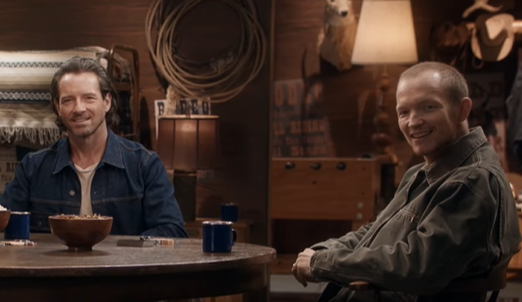
The actors themselves marvel at the scene’s construction, describing it as a masterclass in “juxtaposition.” “Man, that scene really has all the like juxtapositions that make the bunkhouse so fun,” remarks one. “Intensity… Yeah, with the banter and the fun, the tenseness.” They highlight the logistical challenges of shooting “three different scenes going on at the same time” within “three different rooms in a larger room,” a feat of filmmaking that underscores the meticulous craft behind the show’s seemingly effortless flow. This intricate layering of simultaneous narratives – the football game, the comedic banter, and the sudden, chilling arrival of Rip and Williams’ loaded exchange – creates a dynamic tapestry that is uniquely *Yellowstone*.
The “Watch & React: Wildcats” segment is more than just a bonus feature; it’s an essential companion piece for *Yellowstone* aficionados. It pulls back the curtain on the creative process, revealing how improvisation and the sheer talent of its ensemble cast elevate the show beyond mere television drama. It reminds us that the bunkhouse, with its blend of rowdy humor, unwavering loyalty, and ever-present danger, is not just a setting, but a character in itself—a microcosm of the Dutton Ranch’s soul. It’s where cowboys live, laugh, and confront the harsh realities of a life lived on the very edge of civilization, eternally bound by the unwritten rules of the land and the men who claim it. And in moments like the “Wildcats” scene, we are reminded why *Yellowstone*’s dramatic allure continues to captivate audiences worldwide.