From the windswept plains of the Dutton Ranch to the shadowed corners of Montana’s burgeoning urban sprawl, Taylor Sheridan’s *Yellowstone* has carved out a singular niche in television history. It’s a series where the breathtaking beauty of the American West collides with the brutal realities of power, greed, and family loyalty. Central to its gripping narrative are the confrontations – raw, visceral, and often deadly – that define its characters and propel its high-stakes drama. More than mere arguments, these are clashes of ideology, will, and deeply ingrained trauma, often leaving indelible scars or, in some cases, shallow graves. Paramount Network has mastered the art of delivering these explosive moments, and we’re dissecting some of the most unforgettable, heart-pounding showdowns that have kept audiences riveted.
### The Venomous Barrage: Beth vs. Jamie
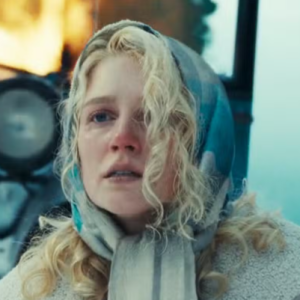
Few relationships on *Yellowstone* are as fraught with venom and deeply rooted pain as that between Beth and Jamie Dutton. Their interactions are less conversations and more psychological warfare, each word a scalpel designed to inflict maximum damage. One particularly searing exchange saw Beth, amidst a self-destructive spiral, brutally confronted by Jamie. He, ever the logical but emotionally stunted brother, attempted to dissect her behavior as a “giant cry for help,” accusing her of acting like the “only 34-year-old on Spring Break.”
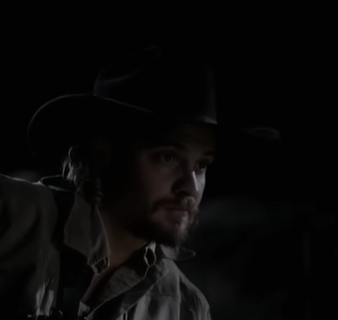
But Beth, a master of deflection and counter-attack, turned the tables with chilling precision. “He asked me to wreck Jenkins and I am wrecking him,” she snarled, before launching into a barrage of deeply personal insults aimed at Jamie’s perceived weakness and lack of conviction. The confrontation escalated from verbal jabs to a physical assault, as Beth smashed a lighter into Jamie’s head, deriving a twisted satisfaction from his pain. Yet, it was her subsequent declaration that truly exposed the abyss between them: “You know why you’re so soft, Jamie? Huh? Because you never lost, you never lost anything in your whole soft fucking life.” When Jamie countered, citing their shared loss of their mother and brother, Beth’s response was a chilling testament to her trauma. Holding a gun to her own temple, she declared, “You don’t have them, you didn’t lose them. There is a difference. You gotta watch ’em die to lose ’em.”
This scene is a masterclass in showcasing the profound, irreversible damage inflicted by their shared past. It highlights Beth’s self-loathing, her inability to heal, and her desperate need to externalize her pain onto Jamie, who she blames for a pivotal, horrific event in their youth. For Jamie, it underscores his perpetual struggle for acceptance and his inability to truly connect with his sister or understand the depth of her despair, forever positioning him as the outsider in their shared trauma. The confrontation wasn’t just a fight; it was a psychological x-ray of the fractured Dutton family, revealing the deep, festering wounds that continue to define Beth and Jamie’s destructive dynamic.
### The Unwritten Rules: Rip and Kayce’s Chilling Lesson
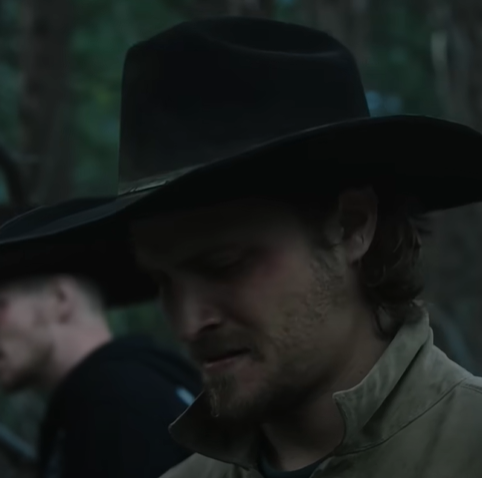
The Dutton Ranch isn’t just a home; it’s a kingdom with its own set of laws, enforced with an iron fist by men like Rip Wheeler. When outside forces threaten the family’s dominion, the retribution is swift, brutal, and often delivered in the desolate, isolated landscapes that define their world. Following a calculated attempt on John Dutton’s life by rival developer Dan Jenkins, Rip and Kayce Dutton delivered a chilling lesson to one of Jenkins’ associates, tied ignominiously to a tree in the wilderness.
The captive, terrified and exposed, was forced to confess Jenkins’ elaborate scheme to inflate land prices and drive the Duttons out. “We inflate the land prices, run up the property tax and you price people out,” he stammered under Rip’s menacing gaze. This brutal interrogation served a dual purpose: to extract vital information and, more importantly, to initiate Kayce into the grim realities of protecting the Yellowstone. “Now you know, Kayce,” Rip stated, his voice devoid of emotion, sealing Kayce’s understanding of the lengths they must go to. The subsequent implied “hanging” of Dan Jenkins himself (off-screen, but the dialogue suggests a very real threat or even an execution-style message) cemented the terrifying reputation of the Yellowstone and its enforcers. “It happens all the time,” Rip explained, dismissing the captive’s desperate cries about prison. “The lost souls, they come out here into the forest and they can’t bear live another day, so they decide to end it all.” This chilling justification, delivered with a casual cruelty, underscores the Duttons’ ability to bend reality and justice to their will. This confrontation wasn’t about simple revenge; it was a declaration of war, a terrifying demonstration of power, and a stark reminder that in this valley, the Duttons make the rules, and breaking them comes with an unimaginable price.
### Bunkhouse Brawl: Jimmy’s Reckoning and Rip’s Retribution
Life in the Yellowstone bunkhouse is a crucible, testing the mettle of every man who wears the brand. For Jimmy Hurdstrom, an aspiring cowboy from a checkered past, the journey has been fraught with missteps and painful lessons. One such lesson unfolded in a bar, where his attempts to impress Avery, a fellow ranch hand, backfired spectacularly. When a persistent stranger aggressively pursued Avery, Jimmy’s fumbling attempt to stand up for her – “Sorry. Fuck off!” – only provoked a brutal escalation. The bar exploded into a chaotic brawl, with the Yellowstone wranglers, outnumbered and caught off guard, taking a severe beating.
The consequence for this humiliation was swift and uncompromising. Rip, upon learning that his men had been “worked over,” took a select crew – including the battered wranglers – back to the bar for a retaliatory reckoning. What followed was less a fight and more an exhibition of Yellowstone might. Riding their horses inside the bar, turning chaos into controlled violence, Rip directed Jimmy to “call him out!” and the wranglers delivered a brutal, yet calculated, beating to the instigators. This wasn’t just about winning a fight; it was about reasserting dominance and teaching Jimmy the true meaning of the Yellowstone brand. It was a baptism by fire, forcing Jimmy to confront the violence inherent in the life he chose, and solidifying the bond of loyalty within the bunkhouse. The bar fight, and its subsequent retaliation, served as a vivid reminder that the Yellowstone code demands not just strength, but absolute loyalty and a willingness to defend the ranch’s honor, no matter the cost.
### The Cowboy’s Code: Rip vs. Walker
The Yellowstone bunkhouse is also a volatile mix of personalities, and few clashes were as charged as the simmering feud between Rip Wheeler and Walker. Walker, a talented musician and cowboy, but an independent spirit, often chafed under Rip’s rigid authority. The tension boiled over when Walker, disrespecting the bunkhouse’s unspoken hierarchy, openly mocked Rip and implied a past intimacy with Beth, referred to as the “farmer’s daughter.” This casual insinuation, striking at Rip’s deepest vulnerability and his possessive love for Beth, ignited a powder keg.
“I reckon I got a fondness for the farmer’s daughter,” Walker quipped, a smirk playing on his lips. Rip’s response was immediate and terrifying. A single, powerful punch sent Walker reeling, followed by Rip’s chilling vow: “I’m gonna take your fucking heart out through your throat, Walker. Shove that little fucking knife up your ass.” The confrontation wasn’t just physical; it was deeply personal, exposing Rip’s raw, protective instinct over Beth and his zero tolerance for insubordination, especially from a branded man. The loyalty of the other wranglers was tested, with Lloyd immediately declaring, “I’m on whatever side you’re on,” showcasing the unbreakable bond of the branded. The scene ended with Rip effectively banishing Walker, threatening to cripple him: “You won’t die today, Walker, but you’ll be taking your last step. Let’s see what kind of cowboy you are in a wheelchair.” This confrontation underscored the absolute authority Rip wields on the ranch and the severe consequences for anyone who dares to challenge it, particularly when it comes to the sanctity of the Dutton family.
### John Dutton’s Justice: The Bikers’ Grave Mistake
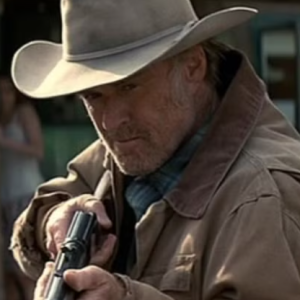
No character embodies the fierce, unyielding spirit of the Yellowstone quite like John Dutton. His methods of dealing with trespassers and threats are legendary, often blurring the lines between justice and frontier brutality. When a group of bikers dared to trespass on his land, damaging fences and arrogantly claiming they were “just having some fun,” John Dutton delivered a lesson they would never forget.
“This field’s mine. That fence mine. You damaged both, then you came back to damage it more,” John calmly stated, his voice carrying the weight of generations. When one biker defiantly asked, “Let me guess, this is your field?” John’s chilling reply was, “You gonna burn it? That’s your plan? Might burn you with it.” The bikers’ flippant disrespect quickly turned to abject terror as John forced them to dig their own graves in the middle of his field, the sound of shovels scraping earth echoing in the vast silence. “If I did this to your home, what would you do?” John asked, and the biker’s terrified response – “Well, I’d kill you” – perfectly encapsulated John’s logic. The profound terror in their eyes as the sun rose, hinting at the depths of his resolve, was palpable. John’s decision to let them live, making them swear never to return and publicly denounce Montana, was a masterful display of psychological warfare. “Montana doesn’t want you,” he made them repeat, asserting not just his ownership of the land, but the very spirit of the state he embodies. This confrontation was a visceral reminder of John Dutton’s unwavering commitment to his land and his willingness to employ terrifying, unconventional means to protect it.
### Ghosts of the Past: John Dutton vs. Wade Morrow
The past has a way of returning to haunt the Duttons, and few specters were as menacing as Wade Morrow. A man from John’s past, branded and seemingly imprisoned for life, Wade’s unexpected return with a herd of buffalo near the Yellowstone boundary reignited an old, deeply personal feud. The initial exchange was a thinly veiled threat: “Sporting Club running buffalo now?” Wade sneered, to which John calmly retorted, “Sporting Club ain’t running shit no more.” The tension was thick, each man daring the other to make the first move.
Wade’s taunts about John’s son, Kayce, and more agonizingly, about John’s deceased wife, Evelyn, pushed John to his breaking point. “You could have told the truth. You could have told him what she’d become,” Wade spat, referring to Evelyn. John’s response was a raw, guttural display of grief and rage: “She became what you made her. Then you killed her for it.” This confrontation delved into the dark, hidden corners of John’s history, revealing the origins of the brand’s irreversible commitment and the profound betrayal Wade represented. It wasn’t just a dispute over land or cattle; it was a battle for the soul of the Yellowstone, a reckoning for old sins. John’s chilling promise to Wade – “If your plan is to get me back for what you did to yourself, I will treat you like everyone else who showed up with the same idea and I’ll rid the fucking world of you” – underscored the deadly seriousness of the Dutton patriarch’s resolve. The scene cemented Wade Morrow as a formidable, deeply personal antagonist, a ghost returned to torment John, and showcased John’s unwavering, almost biblical, commitment to preserving his family’s legacy, no matter how many ghosts he has to bury.
### The Unforgettable Impact
These confrontations are more than just isolated incidents; they are the bedrock upon which *Yellowstone*’s compelling narrative is built. They illuminate the complex, often contradictory, nature of its characters, revealing their deepest fears, unwavering loyalties, and capacity for both love and shocking brutality. Through these intense clashes, the series consistently reminds us of the relentless fight required to defend a legacy, a family, and a way of life in the unforgiving, yet breathtakingly beautiful, American West. As the Duttons continue their struggle, one thing remains certain: the clashes will only grow more intense, more personal, and undeniably more unforgettable.