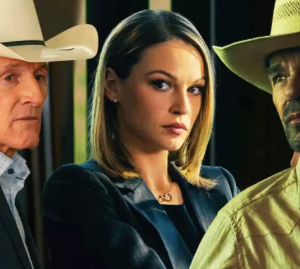
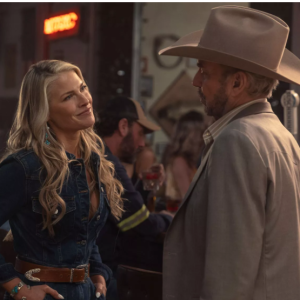
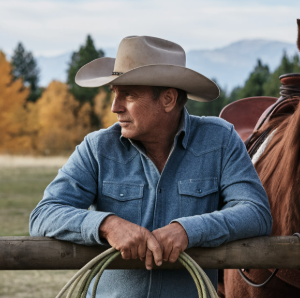
From its sprawling vistas to its raw, unyielding portrayal of power, Paramount Network’s *Yellowstone* has captivated audiences with its visceral narrative of family, loyalty, and the brutal fight for survival on the last great American ranch. Beneath the picturesque backdrop of Montana, however, lies a chilling secret, a dark euphemism whispered only among the chosen few: “the train station.” This isn’t a quaint depot for passengers or freight; it is a desolate, anonymous cliff face in a county with “no people, no sheriff, and no 12 jurors of your peers,” a graveyard for those who cross the Duttons, a place where secrets are buried and inconvenient truths disappear forever.
More than just a burial ground, the train station is the ultimate testament to the Dutton family’s ruthless pragmatism and their unwavering commitment to protecting their land and legacy by any means necessary. It represents the point of no return, the final, irreversible consequence for betrayal, insolence, or simply knowing too much. Every journey to this grim destination is a pivotal moment, shaping character arcs, cementing loyalties, and illustrating the horrifying depths to which the Duttons will descend to preserve their empire.
**The Genesis of Loyalty: Rip’s Indoctrination**
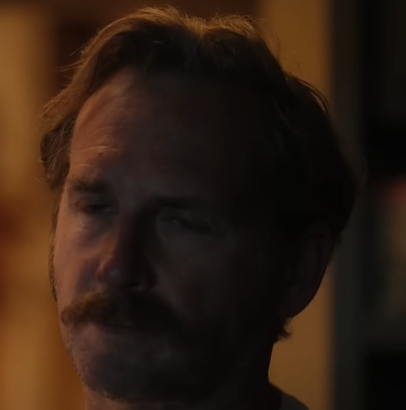
The earliest, and perhaps most impactful, visit to the train station chronicled in the series is not a punitive measure against an enemy, but a desperate act of love and loyalty that binds Rip Wheeler to the Dutton family forever. A young, troubled Rip, caught in a violent confrontation with fellow ranch hand Rowdy over a disrespectful comment about Beth, strikes Rowdy too hard with a rock, accidentally killing him. Facing a lifetime in prison, Rip is confronted by John Dutton, who offers him an unthinkable way out.
“That ain’t gonna help,” John declares, surveying the lifeless body. “Why didn’t you just tell me he fell off his horse?” When Rip, ever truthful, insists on his version of events, John lays out the stark choice: lie, or go to prison. It’s Lloyd who suggests the train station, acknowledging the profound trust such a act would demand from Rip. John then delivers the chilling ultimatum: if Rip accepts this dark pact, he will never leave the ranch. “You’ll be part of this ranch until the day you die and you will do for this ranch what I say do no matter what that is. You understand me?” Rip’s poignant reply – “This ranch is the only family I’ve got. Ain’t never leaving, no matter what you do” – seals his fate. This pivotal moment solidifies Rip’s role as John’s unwavering enforcer, bound by a secret so dark it could never be broken. The train station becomes the crucible where Rip’s unshakeable loyalty is forged, marking him as the Duttons’ most lethal weapon.
**Enforcer and Executioner: Rip’s Burden**
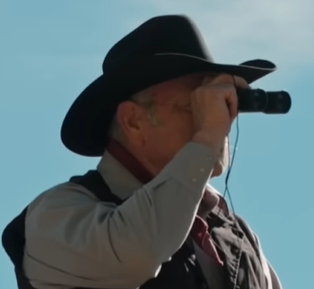
As the years pass, Rip Wheeler becomes the primary conductor of the “long black train.” His visits to the train station are almost routine, each one a stark reminder of the ranch’s brutal code. When wrangler Fred works over Jimmy, Rip instinctively knows Fred’s fate. “Train station’s where I’d leave him,” Rip tells John, who calmly agrees, “You run the bunkhouse, Rip. Do what’s best for the ranch.” This exchange underscores John’s complete faith in Rip’s judgment and ruthlessness.
Later, Rip is seen disposing of an entire truckload of nameless bodies, uttering the cold, final words, “Adios, assholes.” These nameless victims likely represent the collateral damage of the Duttons’ ongoing war for their land, emphasizing the scale of the operations Rip is entrusted with. His quiet efficiency in carrying out these grim tasks paints him as a man hardened by circumstance, a necessary monster in the Duttons’ brutal ecosystem.
**The Unwilling Participant: Kayce’s Moral Compass**
The train station’s reach extends even to those who initially resist its pull. Kayce Dutton, torn between his desire for a normal life and his family’s dark legacy, finds himself drawn into its orbit when he transports an injured hitman, a survivor of a brutal ambush, to the fateful cliff. The hitman, shockingly aware of the location, asks to be taken to the “train station,” suggesting its notorious reputation extends far beyond the ranch’s boundaries.
Kayce, though visibly uncomfortable, drives the man to the remote location. When asked where he’s going, the hitman chillingly replies, “He said he’s gonna take me to the train station. Reckon I’ll figure it out from there.” Kayce, now fully aware of the grim reality, asserts, “I know exactly where it is,” solidifying his acceptance, however reluctant, of his role in the family’s dark dealings. This moment is a significant step in Kayce’s transformation from reluctant hero to a man capable of the same brutal actions as his father and Rip, all for the sake of the family.
**The Drifter’s Dilemma: Walker’s Return**
Walker, the former convict turned ranch hand, is another character whose arc is inextricably linked to the train station. After witnessing Rip dispose of bodies, Walker becomes a dangerous liability. However, instead of meeting the usual fate, Rip offers him a stark choice: disappear forever and never speak of what he saw, or die. Walker chooses the former, promising, “I won’t forget this. I owe you one.” Rip’s prophetic response, “Knowing this world, I’m sure you’ll get a chance to return the favor,” hints at the circular nature of the Duttons’ violent world.
True to form, Walker eventually finds his way back to the ranch, his knowledge of the train station making him a constant source of tension. His presence is a ticking time bomb, a living reminder of the Duttons’ deepest secret, highlighting the dangerous gamble Rip took in sparing his life.
**Revenge and Retribution: The Fate of Wade Morrow**
Perhaps one of the most visceral and widely discussed visits to the train station involves Wade Morrow, a rival rancher who brazenly encroaches on Dutton land. Wade’s continuous provocations, culminating in the cruel act of running down a Dutton cow, push John Dutton to his breaking point. “That piece of shit is a bully and a coward,” John seethes, “but he ain’t stupid. His job ain’t riding tours by buffalo. This is what he was hired to do.”
Unable to involve the authorities, John delivers the infamous command to Rip: “You figure out a plan that works and you take that trash to the f**king train station.” What follows is a brutal act of retribution. Rip and the cowboys pursue Wade, brutally scalp him, ripping off his Yellowstone brand as a chilling message. Wade’s terrified pleas are met with cold indifference before he is dragged to the cliff and sent to his final, unmarked grave. This act underscores the Duttons’ medieval sense of justice and their uncompromising approach to anyone who dares to threaten their land or way of life.
**Jamie’s Dark Descent: A Son Embraces the Legacy**
The train station truly becomes a symbol of the Dutton family’s corrupted soul when it claims a victim by the hands of one of their own: Jamie Dutton. Long struggling with his identity and his place within the family, Jamie’s ultimate commitment to the Dutton way comes with a horrifying price: the murder of his biological father, Garrett Randall. Garrett, who pushed Jamie to embrace his inner darkness, becomes an ultimate liability after attempting to poison John Dutton.
Driven by a desperate need for acceptance and a desire to prove his loyalty, Jamie confronts Garrett. His chilling reflection on killing – “Shoot ’em in the back of the head, they never know it’s coming. Better for them, better for me” – reveals a man who has fully embraced the brutal logic of his adopted family. After a tense standoff, Jamie executes Garrett, then loads his father’s body into a truck. He drives to the desolate cliff, performing the grim ritual himself.
Unbeknownst to Jamie, Beth, ever the orchestrator of pain and consequences, captures his act on camera. Her chilling declaration, “You should have picked options one or two. Three is gonna be worse, but you’re f**king mine now,” leaves Jamie utterly beholden to her, and by extension, to the very family he always struggled to belong to. This moment marks Jamie’s full immersion into the Duttons’ moral abyss, a permanent stain on his soul, ensuring his unwavering, albeit begrudging, loyalty.
**The Enduring Shadow**
The “train station” is more than just a plot device in *Yellowstone*; it is a character in itself, a silent, menacing presence that looms over every character and decision. It represents the Duttons’ ultimate power, their ability to operate beyond the reach of the law, and the terrifying cost of their survival. Each body sent over that cliff reinforces the show’s core theme: the fight for the Yellowstone ranch is not just about land, but about a way of life that demands absolute, unquestioning loyalty, even if it means embracing the darkest aspects of humanity.
As the series progresses, the “train station” remains a stark reminder of the unbreakable, often tragic, bonds that tie the Duttons together. It is a place of no return, a testament to the fact that in the unforgiving world of *Yellowstone*, some secrets are best kept buried deep, literally and figuratively, at the bottom of a lonely canyon. The journey to the train station is always a one-way trip, a final, brutal testament to the Yellowstone’s enduring, blood-soaked legacy.