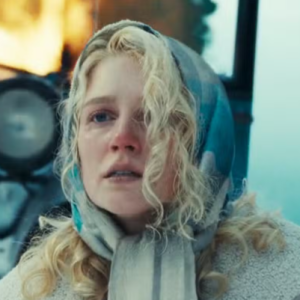
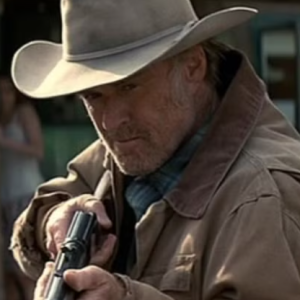
The sprawling, untamed wilderness of the American frontier in *Yellowstone*’s prequel, *1883*, is a landscape defined by brutal beauty, relentless struggle, and the ever-present shadow of conflict. In a moment of profound tension and unexpected grace, a pivotal encounter unfolded that not only challenged the Dutton family’s precarious journey west but also laid bare the complex, often tragic, dynamics of land, legacy, and survival. The scene, aptly titled “Red Bear Asks James Dutton If He Can Bury His Father On His Land,” transcended a mere plot point, becoming a poignant tableau that explored the raw humanity at the heart of an unforgiving era.
From the very outset, the air crackled with a palpable tension that mirrored the fraught realities of 19th-century expansion. James Dutton, the stoic patriarch of the nascent Dutton dynasty, leads his family and their fellow travelers through a land that is both a promised future and a haunted past. The unexpected appearance of a band of Native Americans immediately triggers a defensive stance, reflecting the deep-seated fears and prejudices of the time. “Indians? Yeah. Why aren’t they on the reservation?” one of the travelers mutters, articulating the prevailing anxieties and the historical context of displacement. James, ever the pragmatist and protector, urges his family to stay close, his eyes scanning for threats, his hand instinctively near his weapon.
The initial standoff is a masterclass in controlled suspense. The travelers, huddled together, voice their fears and uncertainties. “What do we do? We do what he said. We stay here. What do they want? I don’t know.” This raw, unvarnished dialogue underscores their vulnerability and dependence on James’s leadership. The discovery that one of the Native Americans speaks English introduces a glimmer of possibility, a potential bridge across the chasm of mistrust. Yet, James’s seasoned caution remains unwavering: “Will you trust them, son? I don’t trust anyone until they’ve earned it.” This line isn’t just a statement of personal philosophy; it’s a foundational principle for survival on the frontier, a stark reminder that every interaction carries life-or-death implications.
As the two groups finally converge, the narrative’s emotional core truly takes shape. Red Bear, a figure of quiet dignity and immense gravitas, confronts James Dutton. The exchange is deceptively simple, yet it carries the weight of generations of history and dispossession. “This your land now?” Red Bear asks, his gaze unwavering. James’s reply, “It is,” is met with the mournful, undeniable truth from Red Bear: “Used to be ours.” This dialogue encapsulates the entire colonial narrative – the violent, often arbitrary, transfer of land that forms the very bedrock of the Duttons’ eventual empire. Red Bear, however, makes it clear that his visit is not an act of reclamation in the traditional sense: “Not the one that took it from you.” “No matter,” Red Bear responds, “Still got took.” This exchange brilliantly sets the stage for the unusual request that follows, signaling that this encounter is not about direct conflict over territory, but something far more profound.
Red Bear’s true purpose unfolds, a poignant plea delivered with a solemnity that demands respect. “I’m here to ask a favor,” he states, his voice carrying the weight of a sacred duty. His father, a man deeply connected to the land, had a final wish: to be laid to rest where he was born, beneath a specific tree. Red Bear elaborates on the deeply spiritual and practical reasons behind his request: “I want to put him in that tree where the wolves won’t dig him up, and he won’t spend the spring in the mud where relatives can come visit.” This isn’t just about burial; it’s about eternal peace, about ensuring the sanctity of his ancestor’s rest.
The profound cultural significance of his request is then laid bare, touching upon the existential fears of his people. “He could find peace in that tree a long time ago. Now there is no peace.” This line resonates with the historical trauma and ongoing struggle faced by Native American tribes. Red Bear’s greatest fear is the desecration of his father’s remains, a fear born of the relentless westward expansion and the callous disregard for Indigenous sacred sites. “Maybe you saw this land or lose it to the bank. Then someone finds this tree, scatters his bones, steals his sacred’s. Then he has no peace forever.” This raw, vulnerable admission cuts through the immediate tension, transforming Red Bear from a potential threat into a grieving son, seeking to honor his father in a world that offers little solace.
James Dutton’s response to this deeply personal and culturally resonant plea is a defining moment for his character. He listens intently, his initial wariness slowly giving way to a nascent understanding. The harsh realities of the frontier have forced James to be pragmatic, yet beneath his tough exterior lies a moral compass. He recognizes the universal human need for dignity in death and the sanctity of ancestral land, even if that land is now legally “his.” His decision to grant the favor, “I’ll let you,” is not a sign of weakness, but of an unexpected, profound empathy and a strategic wisdom that avoids unnecessary conflict while demonstrating an earned respect.
The nuances of the agreement further illuminate the complex dynamics at play. “Where do you want to bury him? Someplace no one finds him. You included.” This last proviso from Red Bear is crucial. It underscores the continued necessity for discretion and the lingering mistrust, a recognition that even in a moment of shared humanity, the fundamental divisions remain. The journey from the reservation is long – “Eight sleeps” – a testament to the displacement suffered by Red Bear’s people. Both groups are struggling, their horses hungry, their bodies weary. “You look hungry, too,” James observes, a shared hardship that momentarily bridges the cultural divide. “I’m used to being hungry,” Red Bear replies, a stark comment on the endemic deprivation faced by his community. “It’s been a hard winter.” Red Bear’s somber retort, “Our winters are hard. This one? This one is punishment,” speaks volumes about the suffering inflicted by the ongoing injustices and environmental ravages of the era.
In a remarkable gesture of nascent goodwill, James offers respite and provisions. “The horses can graze here while you choose a spot for your father. We’ll leave you a beef. Your family can graze, too.” This act of generosity, though pragmatic in its aim to de-escalate, humanizes James and solidifies the fragile détente. It’s a calculated risk that pays off, a moment where a shared understanding of hardship and a mutual desire for peace, however fleeting, overrides the inherent dangers of the frontier. The final exchange, “I’m sorry for you being punished. We are too,” delivered by James as he prepares to cut a steer, encapsulates the shared suffering that binds these disparate groups, even as their destinies remain intertwined in a land they both claim.
This profound encounter between Red Bear and James Dutton is more than just a dramatic scene; it’s a foundational moment for the Dutton narrative. It establishes James as a leader capable of both unflinching resolve and unexpected compassion. It highlights the deeply spiritual connection Indigenous peoples have to their ancestral lands, a connection that transcends mere ownership. It underscores the brutal realities of survival on the frontier, where moments of empathy are rare but powerfully impactful. Most importantly, it foreshadows the complex legacy of the Yellowstone ranch – a legacy built not just on ambition and violence, but also on moments of uneasy alliances, fraught negotiations, and the persistent echoes of a land that was “took.” This sacred pact, forged in the vast, unforgiving wilderness, remains a stark reminder of the human cost and the enduring spirit that shaped America’s rugged landscape.