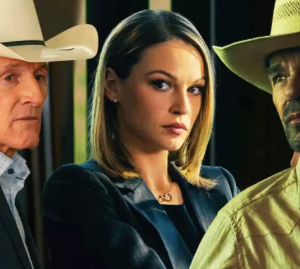
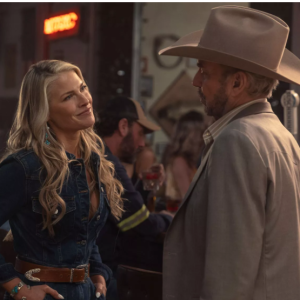
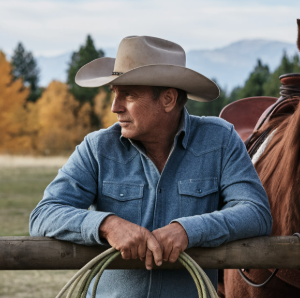
From the moment the haunting cries of cattle echo through the vast Montana wilderness and the relentless thrum of a helicopter slices through the crisp air, Paramount Network’s “Yellowstone” plunges viewers into a world where the old West collides with modern struggles. More than just a television show, “Yellowstone” is a visceral ode to the American cowboy, a dramatic tapestry woven with the threads of loyalty, survival, and the raw, unyielding spirit of the land. This is a universe where every ride is a battle, every negotiation a war, and the bond between man and beast, earth and sky, defines existence.
At the heart of this sprawling epic lies the Dutton family, led by the stoic and fiercely protective patriarch, John Dutton (Kevin Costner), and his formidable ranch foreman, Rip Wheeler (Cole Hauser). Their daily lives, far removed from the idyllic romanticism often associated with cowboy lore, are a relentless ballet of danger and dedication. Consider the chaotic, high-stakes cattle round-up, a microcosm of the Duttons’ constant struggle against the encroaching world. “Rip, we got stragglers in the timber,” yells a cowboy over the whirring blades of a chopper, a stark reminder of the sheer scale and complexity of managing a ranch the size of the Yellowstone. Rip, ever the unflappable commander, barks orders with an authority forged in countless hours in the saddle: “I ain’t asking your fucking permission, Jimmy. I’m telling you, now let’s go.” This is not just work; it’s a way of life, a grueling test of skill, courage, and sheer will.
Among the ranks of the Yellowstone cowboys, Jimmy Hurdstrom (Jefferson White) stands as a testament to the steep, often painful, learning curve of this unforgiving lifestyle. His journey from a bewildered, city-slicker novice to a struggling but determined ranch hand is fraught with comedic missteps and painful lessons. From putting his hat on the bed—a cardinal sin in cowboy superstitions—to consistently mixing up his horses’ names, Jimmy embodies the humility required to truly become part of the Yellowstone family. His repeated mishaps, like losing his horse mid-roundup or getting tangled in a rope, serve as constant reminders of the peril that lurks in every task. John Dutton, in a moment of exasperated wisdom, dismisses Jimmy’s claims of bad luck with a blunt truth: “There ain’t no such thing as luck, but I sure believe in stupid ‘cause you prove it every fucking day.” Yet, beneath the harsh words lies a paternalistic guidance, an unspoken challenge for Jimmy to rise above his perceived limitations.
The ranch life spares no one its harsh realities, not even those attempting to bridge worlds. Monica Dutton (Kelsey Asbille), navigating her identity between the Broken Rock Reservation and the Dutton ranch, finds herself thrust into the chaotic embrace of a cattle drive. Her attempt to ride with the cowboys leads to a harrowing encounter with a “bit angry” horse, a wild creature that bucks and fights, reflecting perhaps her own struggle to find her footing in this untamed environment. Rip’s curt instructions and the ensuing near-disaster underscore the fact that on Yellowstone, there’s no room for hesitation or inexperience when lives are on the line. Every horse, every ride, is a partnership forged in trust and control.
The true intensity of cowboy life on Yellowstone culminates in the legendary cattle drives, particularly the hair-raising descent down a treacherous mountain face. Facing an impossible task, John and Rip embody the ranch’s “fuck it” philosophy – a blend of grim determination and a primal acceptance of fate. “Best we came up with, sir, is like fuck it, you know? Let’s get up there as fast as we can and just chase them sons of bitches down the mountain,” Rip states, his voice devoid of fear. John, with a wry grin, seconds the sentiment: “Fuck it. That’s your plan too, fuck it?” It’s a testament to their shared understanding that some challenges can only be met with reckless courage and unwavering belief in their abilities. The ensuing montage is pure cinematic poetry – a symphony of thundering hooves, shouting cowboys, and a breathless race against the mountain itself. Emerging from the dust and chaos, their faces grim but victorious, the cowboys find a moment of shared triumph. “I thought for sure someone was going to the hospital,” one cowboy remarks, to which another adds, “Yeah, I thought someone was dying.” Yet, the adrenaline-fueled joy is palpable: “You know I got half a mind to run up that hill and do it again.” This is the essence of Yellowstone – a life lived on the edge, where survival is its own reward, and the bond formed in shared peril is unbreakable.
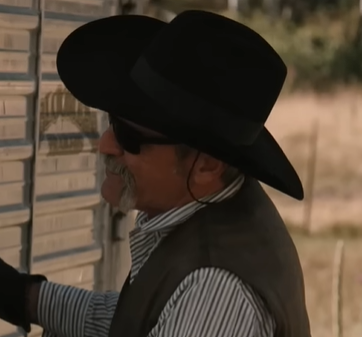
Beyond the daily grind, the economic realities of running a multi-million-dollar ranch are laid bare. John Dutton’s sharp business acumen is showcased during the horse auction, where he discusses the two ways to make money on a ranch: “Sell cattle or market horses.” His keen eye for a “using horse” and his appreciation for “the best riders in the world” highlight the strategic side of his operations. The arrival of Travis Wheatley (Taylor Sheridan) with a trailer full of elite, high-performance horses – “race cars” costing more than the truck itself – offers a glimpse into the dizzying heights of equine sport. These are not merely working animals but prized athletes, an investment in the ranch’s future and a symbol of its enduring legacy. The awe and longing in the eyes of cowboys like Ryan (Ian Bohen), who dreams of riding such a magnificent animal, underscore the profound connection between the cowboys and these creatures, a bond that transcends mere utility.
Yet, amidst the grit and the high stakes, Yellowstone finds moments of profound human connection. One such poignant scene features Rip, the hardened enforcer, seeking out Lloyd Pierce (Forrie J. Smith), the weathered and wise elder statesman of the bunkhouse. Rip’s confession, “I’m getting married. I need a best man,” is delivered with an uncharacteristic vulnerability. Lloyd’s immediate, almost paternal response, gently steering him towards Kayce before Rip firmly reiterates, “I ain’t, I’m asking you,” speaks volumes about the chosen family forged through shared hardships and unwavering loyalty on the ranch. It’s a tender, quiet moment that reminds viewers that even the toughest cowboys have hearts and that bonds forged in the saddle can be as strong, if not stronger, than those of blood.
Kayce Dutton (Luke Grimes), wrestling with his identity and his role as Livestock Commissioner, embodies another facet of the Yellowstone cowboy. His journey to recover stolen, branded horses from federal holding pens, disguised as wild Mustangs, showcases his ingenuity and dedication to justice. Faced with a seemingly impossible task – moving hundreds of horses without trucks or conventional means – Kayce devises a plan so audacious, it must be witnessed to be believed. The magnificent spectacle of the cowboys, mounted on their own trusted horses, herding the recovered herd across the vast plains, is a triumphant display of skill, heritage, and the enduring spirit of the American West. It’s a powerful statement that true cowboy grit can outmaneuver bureaucratic obstacles and reclaim what is rightfully theirs.
Ultimately, the soul of “Yellowstone” is distilled into moments of quiet reflection, like John and his grandson Tate (Brecken Merrill) fishing by a creek after a successful cattle drive. John’s profound statement, “Don’t ever call this work, okay? Ever,” transcends the physical labor, elevating it to an almost spiritual experience. He understands that the true wealth of the Yellowstone is not measured in cattle or land, but in the freedom, the connection to nature, and the sense of purpose it provides. Tate’s enthusiastic declaration, “That was fucking awesome!” and his inability to nap due to sheer exhilaration, perfectly encapsulate the intoxicating allure of this life. As John sagely observes, “You could bottle it up and sell it,” to which Tate responds, “I don’t think there’s anyone to sell it to, Dad. Anyone who knows what it’s worth is already doing it.”
“Yellowstone” doesn’t just entertain; it immerses. It drags viewers into the saddle, through the dust, and into the very heart of what it means to be a cowboy in the 21st century. It’s a dramatic, unflinching portrayal of a dying way of life, sustained by the indomitable spirit of its characters. From the harrowing roundups to the quiet moments of camaraderie, from the brutal lessons learned to the unwavering loyalty to family and land, “Yellowstone” is a powerful, visceral testament to the enduring legend of the American cowboy. It reminds us that some traditions are worth fighting for, some bonds are unbreakable, and some landscapes are worth dying for, all brought to life with a gritty authenticity that makes it one of television’s most compelling and unforgettable sagas.