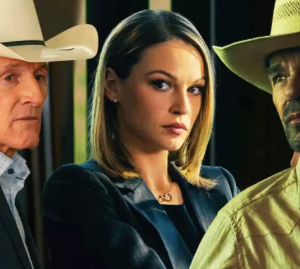
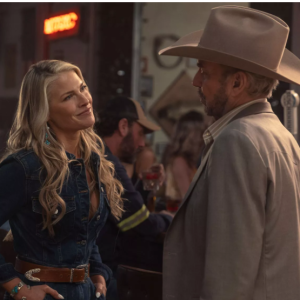
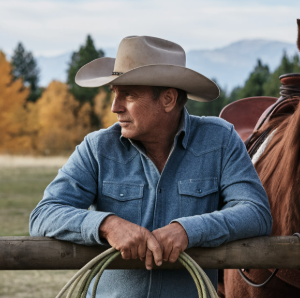
On the sprawling, unforgiving plains of Montana, where the wind bites and loyalty is etched into flesh, the Yellowstone Dutton Ranch stands as both a monument and a battleground. But beyond the patriarch John Dutton and his fiercely protective children, the true grit and unyielding spirit of the ranch resides in its hands—the branded cowboys and cowgirls who live by its brutal code. Paramount Network’s “Yellowstone” has pulled back the curtain on these unsung heroes, showcasing their harrowing initiations, their fraught relationships, and the deep, often unspoken bonds forged in the face of relentless adversity. From the moment a newcomer steps onto the dusty grounds, their mettle is tested, their past is purged, and their future becomes inextricably linked to the iconic Y.
**THEN: Baptism by Fire – The Rough Road to Redemption**
The Yellowstone isn’t just a place to work; it’s a last resort, a sanctuary for the broken and the desperate, where redemption is offered through sweat, blood, and a searing brand. For characters like Jimmy Hurdstrom and Walker, their arrival at the ranch wasn’t a choice, but a life sentence—a lifeline thrown by the enigmatic and imposing ranch foreman, Rip Wheeler.
**(SOUND: Hooves thudding, a distant taser zap)**
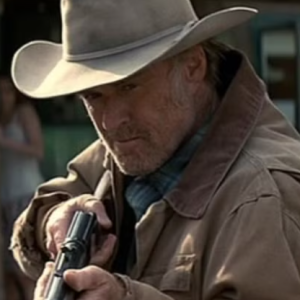
Jimmy Hurdstrom, introduced to audiences as a quintessential two-time loser, arrived at the Yellowstone a walking liability. His introduction to Rip Wheeler was less an interview and more an intervention. Confronted with a broken-down trailer and the remnants of a life spiraling into petty crime, Jimmy was given a stark ultimatum. Rip’s methods are unflinching: a taser jolt to the chest, a searing hot iron pressed against skin. This brutal induction, the infamous Yellowstone brand, wasn’t just a mark of employment; it was a pact. “You’re a two-time loser, Jimmy. One more felony and they throw away the keys,” Rip growled, his voice a low, gravelly promise of either salvation or damnation. The brand, painful and indelible, signified a surrender of one’s past and an unwavering pledge of loyalty to John Dutton – a loyalty that would supersede family, dreams, and even personal safety. Jimmy, once defiant (“I ain’t no fucking servant… I’m a thief”), soon learned that on the Yellowstone, you were either branded or discarded.
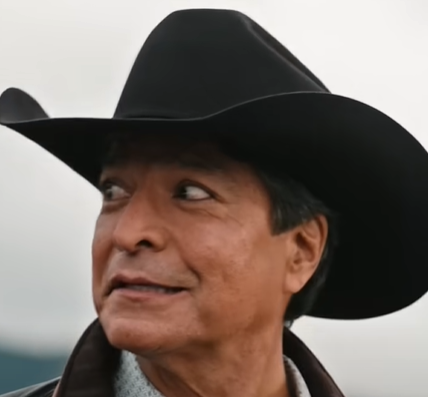
Walker’s arrival echoed Jimmy’s, albeit with a darker past. A former convict freshly released from prison for manslaughter, Walker embodied the cowboy archetype with a cynical edge. Pulled from the roadside by Rip, the grizzled foreman wasted no time in his customary interrogation. “You a cowboy or you suck somebody’s dick for that hat?” Rip challenged, cutting through Walker’s bravado. Walker, with his deadpan wit (“By the looks of your truck, you’ve been sucking plenty”), stood his ground, revealing a past defined by a bar brawl gone lethally wrong. His skill as a cowboy was undeniable, but his independent spirit clashed almost immediately with the rigid hierarchy of the bunkhouse. Like Jimmy, Walker’s choice was simple: the brand, or a return to the bleak confines of incarceration. He chose the brand, a decision that would forever bind him to the ranch, even as he yearned for the open road and a microphone.
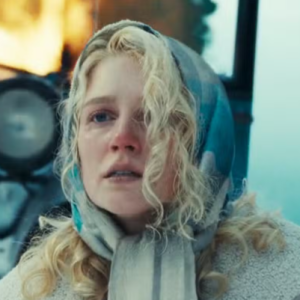
The Yellowstone also introduced viewers to a new breed of ranch hand, one that shattered traditional bunkhouse expectations. Teeter, a force of nature from Texas, galloped onto the scene with a flurry of unintelligible, yet utterly compelling, gibberish. Her introduction was a chaotic masterpiece: a woman who could “ride the hair off a horse,” but whose Texan drawl was so thick it was mistaken for “Spanish” and “gibberish.” “Do I look like my fucking name is Peter, you skunk haired motherfucker?” she snarled, instantly endearing herself to Rip and Beth Dutton, who recognized her untamed spirit. Teeter wasn’t just hired; she was a revelation, a testament to the idea that on the Yellowstone, true grit knows no gender, only an unshakeable connection to the land and livestock. Her presence, a “wildfire” waiting to consume the bunkhouse, immediately injected a raw, unpredictable energy into the male-dominated world.
**NOW: The Unwritten Code – Forging Family in Fire and Ice**
Life in the bunkhouse is a crucible, molding disparate individuals into a cohesive, if volatile, unit. Hierarchies are brutally enforced, personal space is non-existent, and every action is scrutinized. The communal bathroom, in particular, became a stage for power dynamics and uncomfortable hazing, vividly illustrated by Jimmy’s perpetual struggle for a hot shower, always usurped by the older, more established hands like Lloyd and Walker. “Cold shower’s in your future, Jimmy. Until they hire someone new, so you might as well get used to it,” Lloyd drawled, a constant reminder of Jimmy’s probationary status.
But amidst the harshness, moments of genuine camaraderie emerge. Lloyd’s birthday, a rare occasion for celebration, brought out the complex dynamics of the bunkhouse. While teasing and ribbing (“Does this look like the face of a 70-year-old man?”), there was an underlying current of affection, a recognition of shared hardship. Teeter, in her own unique way, offered genuine support: “Don’t listen to a word these assholes are saying. You just keep doing them pushups every day. You’s just going to live to be 100.” These are not just coworkers; they are a reluctant, often dysfunctional, family.
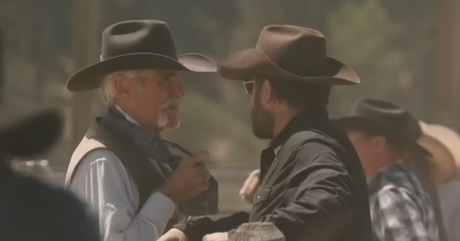
The true test of their bonds, however, came with the terrifying bear attack. A routine task of hazing a bear away from the herd turned into a life-or-death struggle for Jimmy, pinned and screaming for help as the massive creature loomed. In that harrowing moment, the true colors of the ranch hands were revealed. Ryan and Walker, despite their frequent antagonism towards Jimmy, didn’t hesitate. Their laconic banter (“Bit early to get this Western, ain’t it?”), even in the face of mortal danger, underscored their ingrained cowboy instinct and the unwritten code that bound them: you never leave a man behind. It was a brutal baptism by fire for Jimmy, and a stark reminder that survival on the Yellowstone required relying on the very men who had tormented him.
The ultimate test of loyalty and sacrifice came with the decision to move the herd to Texas. Facing a brutal winter and dwindling resources, John Dutton made the difficult choice to lease land down south, sending a significant portion of his herd and several trusted hands on a year-long journey. Rip, as ranch manager, selflessly chose to remain behind, sacrificing his own desire to lead the expedition. Lloyd, the wizened veteran, joined the drive, alongside Jake, Teeter, Ryan, and, begrudgingly, Walker. This mass exodus underscored the immense personal sacrifices demanded by the ranch.
For Ryan, the journey to Texas meant a heartbreaking separation from Abby, the barrel racer who had captured his heart. Their poignant farewell encapsulated the ranch hand’s dilemma: the call of duty versus personal happiness. “Chasing a dream, I understand, and I hope you catch it. Just wish that dream was me,” Abby tearfully conceded, a stark illustration of the emotional toll the cowboy life exacts. Ryan’s commitment to the herd, to the Yellowstone, was paramount, even at the cost of the love he had found.
**The Enduring Legacy**
Today, the Yellowstone ranch hands are more than just a workforce; they are the heart and soul of the Dutton empire. Jimmy, having matured through trials and tribulations, now stands as a more capable and confident cowboy, having experienced the world beyond the ranch and chosen to return, proving his devotion. Teeter has become an indispensable and beloved fixture, her quirks now embraced as integral to the bunkhouse’s vibrant, chaotic energy. Walker, despite his rebellious streak and his attempts to escape, consistently finds himself drawn back, a testament to the unbreakable pull of the Y and the unexpected family he has found within its confines.
The journey of the Yellowstone ranch hands is a compelling narrative of transformation. From broken men seeking refuge to a branded brotherhood defined by fierce loyalty and unwavering resilience, their stories are a raw, unflinching look at life on the edge of modern society. They are the bedrock of the Yellowstone, embodying the rugged beauty and brutal demands of the American West. And as the challenges to the Dutton ranch continue to mount, it is these branded hands, more than any boardroom decision or political maneuver, who will ultimately determine its fate. Their loyalty is branded, their spirit unyielding, and their future, much like the Montana landscape they inhabit, remains as dramatic and unpredictable as ever.
**(MUSIC FADES: A lone fiddle plays, echoing across the vast plains)**