In the rugged, unforgiving world of Taylor Sheridan’s “Yellowstone,” where sprawling landscapes meet ruthless ambition, one character stands as the unshakeable bedrock of the Dutton Ranch: Rip Wheeler. Played with a visceral intensity by Cole Hauser, Rip is more than just a ranch foreman; he is the ranch’s living, breathing embodiment of its brutal code, its unwavering loyalty, and its fiercely guarded heart. From his dark, traumatic origins to his evolution as the most devoted protector and unlikely romantic hero, Rip Wheeler has carved an indelible mark on the landscape of modern television, captivating audiences with his stark morality, quiet strength, and explosive ferocity. This piece delves into the moments that define Rip, exploring the raw power and surprising tenderness that make him the undisputed “Best of Rip Wheeler.”
The Scarred Soul: A Foundation Forged in Fire
Rip Wheeler’s backstory is a chilling testament to the unforgiving nature of his youth, a past that shaped him into the man he became – a man both feared and revered. He arrived at the Yellowstone Ranch as a terrified, orphaned boy, having committed a desperate act of violence to protect himself from an abusive stepfather. John Dutton offered him not just a home, but a purpose, branding him (literally and figuratively) into the Yellowstone family. This brutal initiation forged an unbreakable bond of loyalty, a debt Rip repays daily with his life.
One of the most haunting glimpses into Rip’s internal world comes when he confronts his traumatic past, revealing the depths of his enduring pain and his unique, almost ritualistic, approach to closure. “I spent twenty-two thousand dollars on my mom’s headstone,” he confesses, a stark symbol of his profound grief and respect. But it’s his revelation about his father that truly chills: “five thousand to a gravedigger in Forsyth… he dug out my father… and I drove from there all the way to North Dakota, throwing him out the [expletive] window.” This chilling admission, delivered with a chilling matter-of-factness, showcases a man who processes trauma not through therapy, but through definitive, often violent, acts of severance and control. It paints a picture of a man who understands the finality of death and wields it, not just as a weapon, but as a tool for personal justice and emotional release. It’s a moment that defines his raw, untamed spirit, explaining the lengths he will go to protect his chosen family, the Duttons, because he knows too well the cost of not being protected.
The Enforcer: Upholding the Code
At the heart of the Yellowstone, Rip Wheeler is the ultimate enforcer of John Dutton’s law. His authority is absolute, his methods uncompromising. He is the first line of defense against any threat to the ranch, its livestock, or its inhabitants. His legendary loyalty is never more evident than in his unwavering protection of those who bear the Yellowstone brand – the physical mark of their allegiance, and the symbolic representation of their surrender to the Dutton way of life.
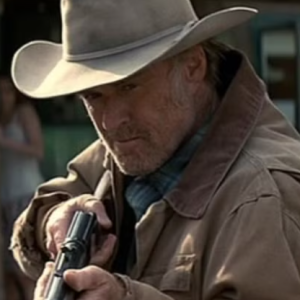
The scene where he confronts outsiders attempting to intimidate a branded ranch hand, Fred, is quintessential Rip. With cold fury in his eyes, he declares, “Don’t [expletive] touch Fred. Don’t [expletive] touch.” His words are not a suggestion; they are an absolute command, backed by an unspoken, yet palpable, threat of devastating consequences. He takes responsibility for the altercation, asserting his dominance and shielding those under his care, demonstrating that any affront to a branded man is an affront to him, and by extension, to the Yellowstone itself. This moment encapsulates his role as the ranch’s living embodiment of its iron-clad rules: you follow the code, you earn the protection; you violate it, you face Rip’s wrath.
The Brutal Mentor: Forging Loyalty Through Fire
Rip’s approach to leadership and mentorship is as harsh as the Montana winter, but it yields unwavering loyalty. He doesn’t coddle; he demands. He doesn’t teach; he tests. For new recruits, like the often-troubled Jimmy Hurdstrom, Rip is the gateway to a life that offers structure, albeit a dangerous one, that society never afforded them.
“Life doesn’t give people like you chances,” Rip tells Jimmy, speaking from a deep well of personal experience. “And asking for one is a waste of goddamn time.” This philosophy, born from his own journey from a foster home to the ranch, defines his pragmatic worldview. When Jimmy asks for a job, Rip doesn’t inquire about his riding or roping skills, but rather issues a primal test: “You see that bag in the field? Go ahead and take your backpack up. I want you to run out there and I want you to grab it for me and just bring it back.” This seemingly simple task is a crucible, gauging Jimmy’s willingness to obey, to endure, and to commit. The unyielding “There’ll be no stealing, you understand me? If I catch you stealing, you’re [expletive] gone,” firmly establishes the one unbreakable rule that governs life on the Yellowstone: absolute honesty and loyalty to the ranch. Rip provides a sanctuary for the lost, but it comes with a strict, unforgiving contract.
The Unyielding Protector: A Force of Nature
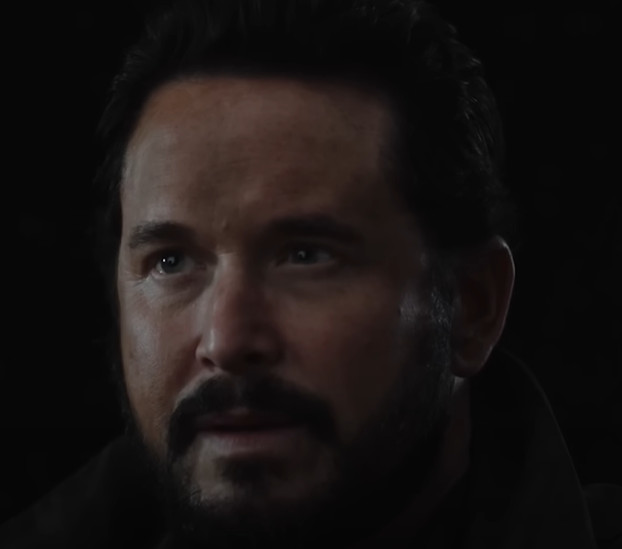
When the ranch is threatened, Rip transforms from a quiet, watchful presence into an unstoppable force of nature. He doesn’t hesitate, he doesn’t negotiate; he eliminates the threat with ruthless efficiency. Whether confronting trespassers, rustlers, or rival factions, Rip is the Yellowstone’s living, breathing warning.
The scenes of Rip defending the ranch from intruders are electrifying. “You’re [expletive] dead,” he warns, his voice a low growl, “this’ll be the last [expletive] thing you ever do.” There’s no bombast, just chilling certainty. His actions are not driven by malice but by an innate, almost animalistic, drive to protect his territory and his family. The chilling confrontation with a group of aggressors, demanding to know “Which one of these [expletive] is the boss of you?” before offering a final, dire warning – “I’ll give you one last chance. You leave now or you’ll never leave. I’ll bury you where you [expletive] stand” – showcases his complete command of any situation. He is the ranch’s ultimate weapon, a man whose word is law and whose wrath is apocalyptic. This unwavering commitment to defending the Dutton legacy, often through brutal means, solidifies his indispensability to the series.
The Unexpected Romantic: The Heart of the Beast and Beth Dutton
Perhaps the most compelling dimension of Rip Wheeler is his profound, tempestuous, and utterly devoted relationship with Beth Dutton. Their love story is not one of fairytale romance, but of two broken souls finding solace and ferocity in each other. Beth, a force of nature in her own right, strips away Rip’s stoicism, revealing a tenderness and vulnerability that he shows to no one else.
Their interactions are a masterclass in unique chemistry, from playful banter to raw, intimate confessions. His declaration, “I’m the best office,” a simple phrase loaded with years of unsaid affection, perfectly encapsulates his unwavering presence and unwavering love for Beth, always there, always her rock. Even a simple, quirky exchange like her showing him a wallet and him denying it’s his, only for her to teasingly call it “a little present from California,” highlights the intimate, playful dynamic that belies the darkness they both carry. Rip’s love for Beth is a quiet storm, a fierce protectiveness that burns hotter than any fire. She is his anchor, his reason, his only weakness and his greatest strength.
The Vows: A Union Forged in Devotion
The culmination of Rip and Beth’s epic love story arrives in their unconventional, yet deeply moving, wedding. Eschewing tradition, their ceremony is a raw, authentic reflection of their lives on the ranch, devoid of pretense, brimming with genuine emotion.
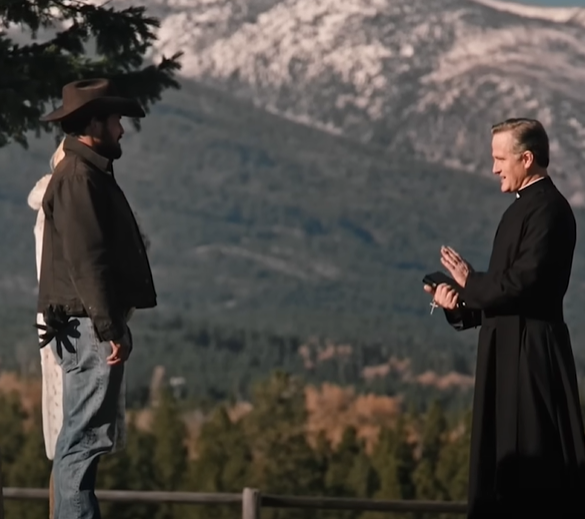
“Who presents the bride?” asks the impromptu officiant. “Me. I’m… I’m a father,” Rip replies, stepping into a role he never imagined, embracing the unconventional family he has built. His vows, delivered with an earnest sincerity that cuts through his usual gruff exterior, are a profound declaration of unwavering commitment: “I, Rip Wheeler, do take Beth Dutton to be my lawful wedded bride, to have and to hold, to honor and cherish, from this day forward, for better or worse, for richer or poorer, in sickness and in health, until death do us part. To honor and to love, to cherish through everything, until I die, and it’s no longer.” It’s a vow stripped of flowery language, distilled to its purest essence: complete, unconditional devotion unto death.
Beth, ever the rebel, initially responds with a defiant “Yes, I do,” only to correct herself. The moment where she pulls out her mother’s ring – “my mother’s ring. We didn’t have much, Beth, we were poor. But it’s yours, and so am I” – is a powerful symbol of their union. It’s not about material wealth or grand gestures, but about legacy, sacrifice, and the merging of two fiercely independent souls. Their wedding, messy and beautiful, is the ultimate testament to their unique bond, a promise of eternal loyalty in a world where promises are rarely kept.
The Legacy of Rip Wheeler
Rip Wheeler is more than just a character; he is a phenomenon. He represents the untamed spirit of the West, the unwavering loyalty forged in hardship, and the unexpected tenderness that can bloom in the harshest environments. He is the Yellowstone’s loyal dog, its brutal fist, and its unwavering heart. From his traumatic past to his enduring love for Beth, Rip’s journey is a compelling tapestry of violence and vulnerability, making him one of television’s most complex and beloved figures. As “Yellowstone” continues its captivating saga, Rip Wheeler remains the anchor, the enforcer, and the soul of the ranch, ensuring his legend will endure long after the final credits roll.