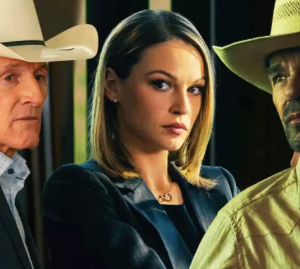
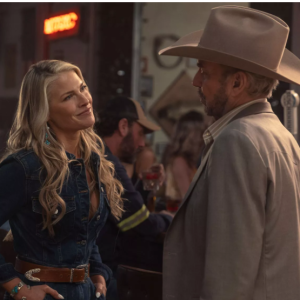
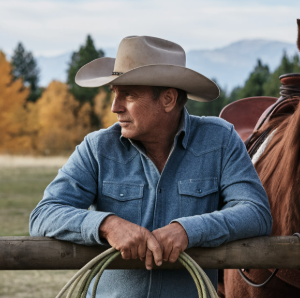
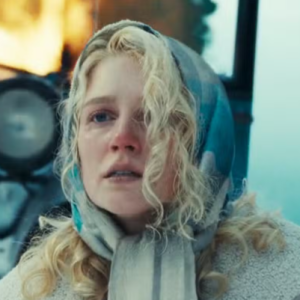
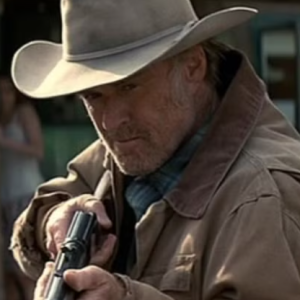
Paradise Valley, Montana – In the rugged heart of the Yellowstone Dutton Ranch, where the land is as unforgiving as its inhabitants, a new kind of firestorm ignited with the arrival of Summer Higgins. A vegan activist from Colorado, Summer’s burgeoning relationship with ranch patriarch John Dutton was destined to clash spectacularly with his fiercely territorial daughter, Beth. What unfolded was not merely a personality conflict, but a seismic ideological battle, captured unforgettably in one of Yellowstone’s most visceral and talked-about confrontations.
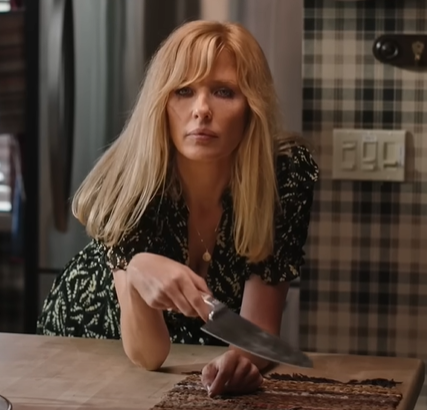
From the moment Summer stepped foot into the Dutton lodge as John’s new… acquaintance, the air crackled with a tension that promised an explosive reckoning. Beth Dutton, a force of nature cloaked in designer clothes and barbed wit, wasted no time in unleashing her fury. The morning after Summer’s arrival, Beth, clad in her usual state of undress, emerged from her bedroom, a knife in hand, ready to confront the perceived interloper. “Who the fuck are you?!” she roared, her voice a guttural snarl that could curdle milk. Her immediate assessment, delivered with characteristic bluntness, branded Summer a “hooker” – a scathing insult that set the tone for the ensuing war.
John Dutton, caught in the crossfire of his daughter’s protectiveness and his own burgeoning, complicated interest in Summer, attempted to mediate the escalating chaos. His weary plea for Beth to “Put the knife down, honey” underscored the bizarre, volatile dynamics of the Dutton household. He extended a fragile olive branch by calling Summer a “guest,” a term Beth immediately scoffed at, her disdain for Summer’s very presence palpable.
The breakfast table, typically a setting for familial warmth, transformed into a battleground of wills and ideologies. Summer, attempting to navigate the alien landscape of ranch life, innocently inquired about the provenance of their food, expressing her vegan principles. Her questions about “GMOs” and “what had a heartbeat last week” were met with Beth’s unbridled contempt. Beth’s rapid-fire taunts – dismissive of Summer’s dietary choices, her environmental activism, and her very existence – were a masterclass in psychological warfare. “I’m not sure what that means,” Beth deadpanned regarding GMOs, before launching into a tirade that painted Summer as a “fing hippie” and wished her “ass cancer.”
John, visibly exasperated, finally laid down the law: “She’s my guest. You’ll treat her with respect or you’ll leave.” It was a rare, albeit temporary, assertion of parental authority, momentarily silencing Beth but doing little to quell the simmering animosity. As Summer retreated, Beth’s parting shot—a crude remark about Summer’s “cowboy fantasy”—highlighted Beth’s deep-seated skepticism about anyone trying to integrate into their world, let alone someone as fundamentally different as Summer. The morning concluded with Beth’s cynical pronouncement of their “one big happy family” now including “an assistant and a hooker,” punctuated by her pouring a glass of whiskey, signaling her coping mechanism for the relentless chaos that defines her life.
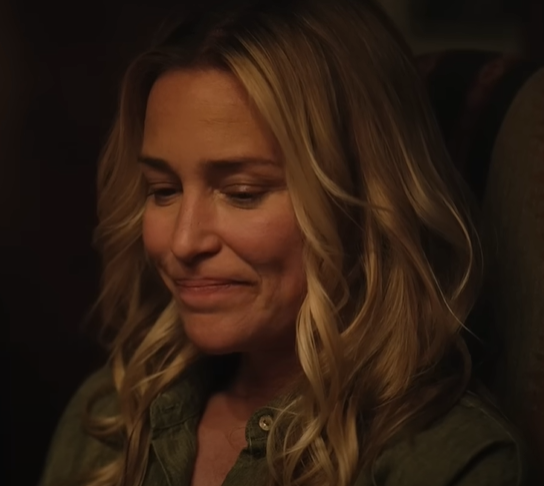
The day’s tension only intensified by dinner. Beth continued her relentless torment, querying Gator, the ranch cook, about what he “killed for dinner” and suggesting he “feed her what we feed the horses.” The sheer discomfort in the room was palpable, pushing Summer to the brink. It was John, again, who intervened, suggesting he and Summer “take a walk” to “educate” her on their ways. Beth, ever the provocateur, challenged, “You have values?” before shocking everyone by proposing she herself take Summer on this “educational” stroll.
What followed was not a walk of enlightenment, but a brutal, primal demonstration of power. Beth led Summer deep into the fields, what Summer initially thought was a metaphorical invitation quickly turned literal. Beth then, with a chilling smile, revealed her true intent. “Familiar position for you?” Beth sneered, forcing Summer to the ground in a shocking display of dominance. The verbal jabs escalated into a full-blown physical altercation. Beth, honed by years of surviving the Dutton family’s cutthroat world, fought with a savage, unflinching brutality. She pinned Summer down, delivering blows and a chilling monologue about respect. “This is my fing house! You will show me and everyone in it respect, you understand?!” Summer, outmatched and out of her element, could only gasp, “What respect do I get?!” to which Beth delivered the chilling retort, “You get exactly what you give!” The fight was a visceral illustration of Beth’s doctrine: the Dutton ranch operates by its own rules, and outsiders must either conform or be broken. It was a harsh, physical lesson in the hierarchy and brutality of the Yellowstone.
The following morning brought a bruised and battered Summer to the porch, a stark contrast to Beth’s unblemished, defiant appearance. Yet, amidst the lingering tension, a fragile détente began to form. Their conversation shifted from physical violence to intellectual sparring, particularly on the topic of marriage. Summer, adhering to her feminist principles, dismissed marriage as an “arcane ritual” designed to “oppress and control a woman.” Beth, surprisingly, offered a nuanced counterpoint, acknowledging that “if you’re married to a piece of shit it can be,” but if it’s “the love of your life, the mirror to your soul, it’s pretty fing great.” This moment offered a glimpse into Beth’s own complex emotional landscape, softened by her profound love for Rip Wheeler, and hinted at a shared, albeit twisted, understanding between the two women.
The verbal barbs continued, but with a subtle shift. Beth probed Summer about her relationship with John, questioning her perceived subservience. “Why does it bother you so much that I see in him exactly what you see?” Summer shot back, striking at a core truth of Beth’s own possessiveness and complicated feelings for her father. This led to Summer’s desperate, shocking attempt to assert her own wildness: “Where’s your dad live, hmm? I’ll go f him!” Beth, unfazed, simply set her own peculiar boundaries: “Don’t touch my Titos. Don’t touch my peanut M&Ms in the freezer. I will kill you in your sleep.” It was a bizarre, yet strangely humanizing exchange, hinting at a path forward, however tenuous.
The true turning point, however, came when Beth, with a rare gesture of common ground, revealed the bombshell news to Summer: Governor John Dutton was facing an impeachment tribunal. This shared threat, an external enemy that imperiled the man they both, in their own drastically different ways, cared for, forced a temporary cessation of hostilities. It underscored the Yellowstone’s constant state of siege and Beth’s unwavering focus on its survival.
The Beth vs. Summer saga is more than just a catfight; it’s a masterclass in character dynamics, a brutal exploration of clashing ideologies, and a testament to the unforgiving nature of the Yellowstone Dutton Ranch. It forced Summer to shed her naive idealism and confront the brutal realities of the world John Dutton inhabits. It showcased Beth’s multi-layered personality – her ferocious loyalty, her destructive tendencies, and her surprising capacity for pragmatic alliance when the stakes are high. As John Dutton continues his fight for the soul of Montana, the uneasy truce between Beth and Summer signals a potentially transformative alliance, forged in fire and shared adversity, a stark reminder that on Yellowstone, even the most unlikely of partnerships can arise from the most violent of conflicts. The future of the ranch, and perhaps even their own fractured relationships, now hinges on their ability to navigate a common threat, proving that sometimes, the most bitter rivals can find common ground when their world is on the line.