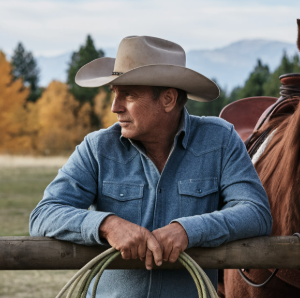
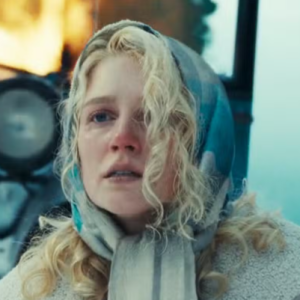
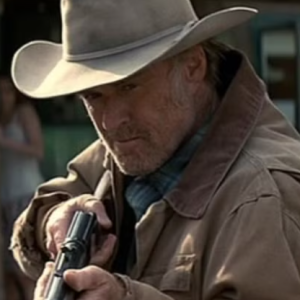
Breathtaking vistas and an untamed spirit define Taylor Sheridan’s “Yellowstone,” but beneath the sprawling beauty of the Dutton Ranch lies a ceaseless battle for survival, waged not only against external threats but also within the very heart of its formidable family. Few scenes encapsulate the raw, unfiltered essence of the series, and the profound, unspoken bond at its core, as powerfully as the quiet, yet intensely revealing, exchange between patriarch John Dutton (Kevin Costner) and his loyal enforcer, Rip Wheeler (Cole Hauser), sharing a bottle under the vast Montana sky.
It’s a moment steeped in the kind of hard-won wisdom only found in the crucible of ceaseless conflict. The rhythmic sloshing of amber liquor into a glass, the low grunt of a weary man, and the gentle clink of bottles serve as the sparse, yet potent, soundtrack to a conversation that lays bare the souls of two men intrinsically linked by fate, loyalty, and the land they protect. John, appearing at the mercy of burdens too heavy to bear alone, finds solace not in the vastness of his empire, but in the quiet, steadfast presence of the man he regards as a son, a brother, and the truest extension of his will.
The Weight of the Crown: A Patriarch’s Vulnerability
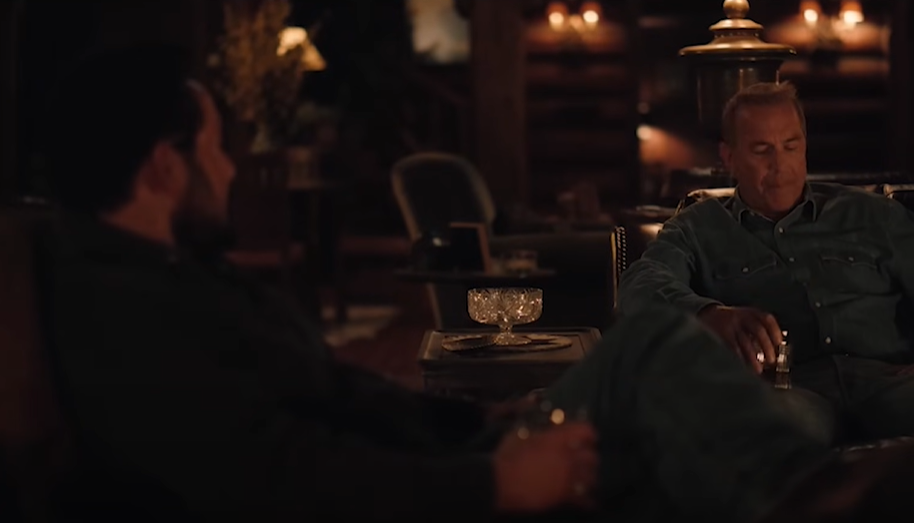
The scene opens with an uncharacteristic display of vulnerability from John Dutton. Rip, ever vigilant and anticipating his mentor’s needs, has already poured himself a drink when John arrives, seeking the very same oblivion or clarity the whiskey promises. “I took the liberty, sir, if you don’t mind,” Rip offers, a subtle acknowledgment of his place, yet also a testament to his deep understanding of John. “I need it,” John admits, a rare concession of weakness from a man who typically presents an impenetrable façade of strength. This simple exchange immediately sets the tone: this is not a business meeting, but a rare communion, a shared moment of relief from the relentless pressures of the ranch.
As glasses clink, a brief, almost imperceptible grunt escapes John – a sound that speaks volumes of physical and emotional fatigue. It’s the sound of a man carrying the weight of generations, fighting a losing battle against the encroaching modern world. And then, John turns his gaze to the most unpredictable force in his life: his daughter, Beth.
Beth Dutton: The Wildfire and the Anchor
“My daughter,” John begins, his voice laced with a mixture of exasperation and grudging admiration. “I commend you, Rip. It must take a lot of courage to sleep next to that woman.” This line, delivered with Costner’s characteristic blend of weary charm and deep affection, cuts to the very heart of Beth Dutton (Kelly Reilly). She is a force of nature, a hurricane in human form, fiercely intelligent, devastatingly loyal, and utterly without filter or fear. Her love for John and her ferocity in defending the ranch are legendary, but so too is her capacity for destruction, often turning her tempestuous nature on those closest to her.
Rip’s response is classic: stoic, understated, and laced with a knowing humor that belies the tumultuous reality of his marriage. “You know the old saying, ‘Don’t go to sleep mad,’ that’s never truer than my marriage.” It’s a line that perfectly encapsulates the unique, volatile, yet deeply passionate bond between Rip and Beth. Their relationship is not built on conventional romance but on an unspoken understanding, shared traumas, and an unbreakable loyalty forged in the fires of the Yellowstone. Rip, the unwavering anchor in Beth’s storm, understands that her wildness is part of her power, a power he has learned to harness and protect, even as it sometimes threatens to consume them both. This dialogue not only highlights Beth’s singular character but also Rip’s profound dedication, positioning him as the only man capable of truly loving and surviving her.
The Dutton Legacy: A Strength Turned Liability?
The conversation then shifts, broadening its scope from personal dynamics to the very foundation of the Dutton empire. John, in a moment of profound philosophical introspection, laments the changing world. “You know, the first Duttons to settle this valley, fighting was all they knew. It’s how they got here. How they kept the land once they did.” This powerful statement serves as a stark reminder of the Dutton family’s bloody origins – a legacy of conquest, violence, and uncompromising will that secured the largest contiguous ranch in the United States. It’s the very DNA of the Duttons, the “Yellowstone code” that has governed their actions for generations.
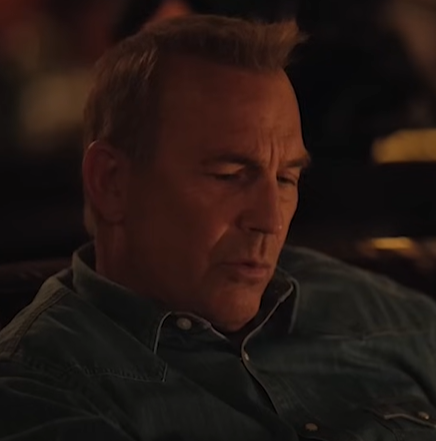
But John’s voice, once proud, now carries a note of deep disillusionment. “But today it’s—today seems like it’s a liability. Cowards rule the world these days, Rip. With coward rules and coward customs. To succeed today, all you gotta know is how to blame and how to complain. I truly believe it’s a survival of the unfittest these days.” This monologue is a scathing indictment of modern society through John Dutton’s traditionalist lens. He sees the values that built his empire – strength, resilience, direct action, and a willingness to fight – being undermined by a world that values grievance over grit, litigation over loyalty, and perceived victimhood over genuine courage.
This profound lament is central to the thematic core of “Yellowstone.” John feels his way of life, his very existence, is becoming an anachronism. The “coward customs” he speaks of are the environmental regulations, the corporate greed, the political machinations, and the societal shifts that threaten to dismantle everything he holds sacred. His frustration is palpable; the tools and strategies that once guaranteed victory now seem impotent against a new kind of enemy – one that fights with lawsuits and public opinion rather than bullets and brawn. This reflection underscores John’s fundamental dilemma: how to protect his legacy when the rules of engagement have fundamentally changed, and when the very strength of his heritage feels like a burden rather than a blessing.
A Father’s Heart: Love, Pity, Regret, and Envy
The emotional crescendo of the scene arrives as John turns his reflections inward, to his own children. His eyes, heavy with experience, gaze into the distance as he delivers a heartbreakingly honest assessment of his paternal relationships. “You know, I got one child that I miss. One child I pity. One I regret. But that girl—that child I envy.” This raw, unfiltered confession offers a rare glimpse into the complex emotional landscape of John Dutton.
The child he misses: This is almost certainly Lee Dutton, his eldest son, whose tragic death early in the series left an indelible void. Lee was the intended heir, the one who embodied the future of the ranch, and his loss deeply wounded John, leaving him to grapple with the succession and the bitter reality of a future that never was. His absence hangs heavy over the Dutton family, a constant reminder of sacrifice and vulnerability.
The child he pities: This refers to Jamie Dutton (Wes Bentley), the adopted son trapped in a perpetual cycle of seeking his father’s approval while simultaneously rebelling against the Dutton way. John pities Jamie for his inherent weakness, his inability to fully embrace the ruthless Dutton ethos, and his perpetual struggle with identity and belonging. Jamie’s intellectual prowess is undeniable, but his emotional fragility and desperate yearning for acceptance have often led him down paths of self-destruction, making him a figure of profound sorrow and frustration for his father.
The child he regrets: This, too, points to Jamie, or perhaps more broadly, John’s own failures as a father, particularly in how he raised Jamie. The regret likely stems from the toxic dynamic that has defined their relationship, the emotional manipulation, the lack of true connection, and the irreversible damage caused by John’s inability to fully embrace Jamie as his own. It’s a poignant admission of a father’s deepest sorrow – the realization of past mistakes that have irrevocably shaped a child’s life.
The child he envies: And finally, Beth. The culmination of his confession is a startling revelation: John envies his tempestuous, often destructive, daughter. “What it must feel like to be that free,” he muses, a longing in his voice. Beth, unburdened by the expectations of legacy, unconstrained by societal norms or even personal safety, lives with a raw authenticity that John, despite his immense power, cannot achieve. She is the embodiment of the Dutton will to survive, but without the moral compromises or the weight of responsibility that constantly chain her father. Her freedom is born from an almost terrifying lack of self-preservation, a willingness to burn everything down, including herself, for what she believes in. It’s a freedom John, bound by his duties and his past, can only dream of.
The Unbreakable Bond: A Night’s End, a Legacy’s Continuation
The conversation concludes with John returning to the mundane realities of ranch life, a subtle transition back from profound introspection to pragmatic leadership. “I’ll see you in the kitchen about four,” he instructs Rip, a familiar directive that reaffirms their working relationship, yet now imbued with the added weight of their shared vulnerability. Rip’s simple “Yes, sir. Goodnight,” is a testament to his unwavering loyalty, his profound respect, and his understanding of the profound weight his mentor carries.
This scene, deceptively simple in its execution, is a cornerstone of “Yellowstone,” encapsulating the series’ most compelling themes: the struggle for land and legacy, the complex dynamics of family, and the burden of leadership in a changing world. It solidifies Rip’s position not just as an employee or even a son-in-law, but as John’s confidant, the man who understands him better than anyone else, the unwavering foundation upon which the Dutton empire, however fragile, continues to stand. As the vast Montana night envelops them, it leaves viewers with a deeper understanding of the soul of the Yellowstone ranch and the men who are willing to fight, bleed, and confess their deepest fears to protect it.