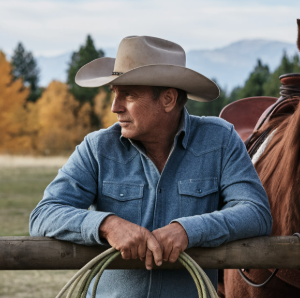
Paramount Network’s hit series “Yellowstone” has captivated audiences with its sprawling Montana landscapes, high-stakes power struggles, and the raw, often brutal, dynamics of the Dutton family. At the heart of this empire, and arguably its most compelling relationship, lies the fierce and complicated bond between patriarch John Dutton (Kevin Costner) and his formidable daughter, Beth Dutton (Kelly Reilly). Their connection, a tempestuous dance of unwavering loyalty, shared trauma, and unyielding love, forms the very bedrock of the show, proving time and again that in the unforgiving world of the Yellowstone, some bonds are truly unbreakable.
From the moment Beth fiercely declares, “I need you to stay long, Daddy,” her plea echoes not just a daughter’s need for her father, but a warrior’s demand for her commander-in-chief. It’s a stark reflection of the existential threat constantly looming over the Yellowstone Ranch, a burden John shoulders with a weary pride, and one Beth is uniquely equipped to fight. This deep-seated reliance immediately sets the stage for their extraordinary partnership, where familial love intertwines with strategic necessity.
John’s audacious proposal to place Beth in a legislative seat – initially floated for Jamie, but swiftly pivoted to Beth due to her perceived “weakness” in the political arena – is a classic Dutton maneuver. It speaks to John’s ruthless pragmatism and his willingness to exploit any angle to protect his legacy. Beth’s response, “I will never tell you no, Daddy, but I’m not sure I’ll withstand the vetting,” isn’t a sign of weakness, but a self-aware acknowledgment of her own wild reputation. John, with characteristic bluntness, dismisses her concerns: “I quit vetting politicians a long time ago, sweetheart. Let’s go figure out the how.” This exchange encapsulates their dynamic: John identifies the target, and Beth, with a potent mix of reservation and absolute devotion, sets about dismantling the obstacles, no matter the cost to herself.
The iconic Yellowstone dining table serves as a profound metaphor for the Dutton family’s fractured existence. John’s melancholic reflection, “I remember a time when every seat at this table was filled,” is a wistful lament for a bygone era, a family unit decimated by loss and internal strife. Beth’s sharp retort, “No, you’re not, Dad, that’s not a memory, it’s a dream,” cuts through his nostalgia with the brutal clarity of reality. Their conversation then pivots to a tender, yet fiercely determined, declaration of purpose. John, ever the protector, assures Beth, “It doesn’t matter how many people sit at the table, honey, what matters is they have a place to sit. The table’s the only thing that matters. I need you to understand that. I’m not doing this for a table, I’m doing this for you.” Beth, however, provides the devastating counterpoint, revealing the depth of her fear and her almost fatalistic attachment to her father: “And when you’re gone, I’ll sell the table first. I’m not going anywhere. I sure hope not.” It’s a raw, unfiltered exchange that lays bare the desperate stakes for both of them: for John, the continuation of his lineage; for Beth, the very survival of her emotional anchor.
Beth’s keen understanding of the shifting cultural landscape is invaluable to John. She articulates the existential crisis facing the ranch with chilling precision: “What this place is facing, it isn’t an enemy, it’s a perspective. It’s a shift in values. The world doesn’t value your way of life anymore, Dad.” This insight positions Beth not just as a loyal daughter, but as a strategic visionary, recognizing that brute force alone will not preserve the Yellowstone. This pragmatic worldview clashes, at times, with John’s stubborn adherence to tradition, yet it’s a conflict that ultimately strengthens their approach.
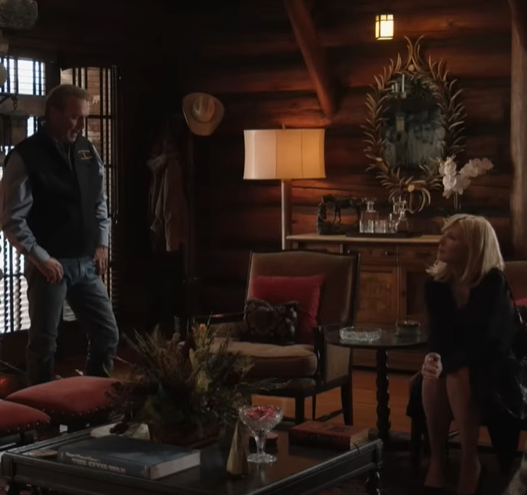
However, the deep well of their shared history also contains scars, particularly those involving Jamie. When John, in a moment of exasperation, suggests Beth learn to “trust Jamie,” the dam breaks. “Trust Jamie?! You’re the one telling me I shouldn’t trust Jamie!” Beth’s furious outburst, followed by John’s quiet, probing question, “What did you do, Beth? What did he do?” underscores the enduring trauma linked to Jamie, a secret that poisoned Beth’s life and cemented her hatred for her adoptive brother. This unresolved pain is a constant undertow in their relationship, a silent acknowledgment of the lengths Beth went to protect her father, and the unspeakable price she paid.
Yet, amidst the violence and betrayal, moments of profound tenderness and vulnerability surface. Beth’s quiet confession to John about her desire to marry Rip Wheeler, and her fear that Rip would never ask for her hand without John’s blessing, is a rare glimpse into her softer, more uncertain side. John’s response is a masterclass in fatherly love and acceptance. He doesn’t interrogate or judge; instead, he offers unconditional support, recognizing Beth’s happiness as his paramount concern. “Happy’s all I’ve ever wanted for you, sweetheart. You give him your hand if he gives you that.” His subsequent apology – “I’m sorry, Beth. Sorry for what? That you thought you couldn’t come to me… I’m the one safe person in this world that you can turn to, Beth, for anything. It breaks my heart I didn’t make you know that” – is a powerful moment of reconciliation, solidifying their bond with a renewed sense of trust and understanding. It’s a testament to John’s evolving fatherhood, acknowledging his past failures and offering the unwavering sanctuary Beth desperately craves.
Beth’s strategic brilliance is further highlighted when John tasks her with transforming the ranch into a viable business “beyond cattle.” Her immediate acceptance is laced with a characteristic, biting humor: “I got a job offer today… I made them an offer they can’t accept. If they do, well, you went into politics to control the things a ranch can’t control… my loyalty is the one thing on this planet that you don’t have to worry about.” Beth’s decision to work against the very developers John is fighting, but from within, showcases her unparalleled cunning and her absolute fidelity to the Dutton cause. Her wry warning about “300 people in that arena for a fing wedding” perfectly encapsulates her approach: ruthless, effective, and utterly devoid of pretense.
The weight of the ranch, and the endless fight it demands, takes its toll on every Dutton. Monica’s departure, seeking peace away from the constant turmoil, prompts a poignant discussion about the absence of tranquility on the Yellowstone. Beth’s blunt assertion, “There’s no peace in this place, Dad. Never has been. Doesn’t bother you or Casey because you aren’t peaceful. Yes, I’m not peaceful either,” is a raw admission of their shared nature – a restless, fighting spirit that finds solace only in the battle itself.
Perhaps the most potent illustration of their unique comfort and reliance on each other comes after John’s near-fatal shooting. Beth’s decision to forgo her own room and sleep in John’s, seeking a quiet reassurance that the foundations of her world haven’t crumbled, is deeply moving. Her explanation about the house making noises when empty, as if “it was going to tear itself up from the foundation and walk away,” speaks volumes about her profound fear of abandonment and the solace she finds in her father’s presence. The “Solace of Open Spaces” poem exchanged between them is a cornerstone of their philosophical understanding. Beth, staring into the vastness of Montana, admits her “heart’s still empty,” unable to “wash lonely off like dirt.” But then, “I walk in here and I discover you. Now my heart’s full.” This vulnerable admission, followed by John’s own heartfelt declaration, “I sure hope you’ll leave me, Beth. I’m not sure I could tolerate the world without you in it,” underscores the depth of their mutual dependency. Beth’s darkly humorous retort – “Worry not, Daddy. Only the good die young. If a meteor strikes her at the night, it is me and the cockroaches running this fing tomorrow” – is the perfect encapsulation of their relationship: profound love, existential dread, and gallows humor intertwined.
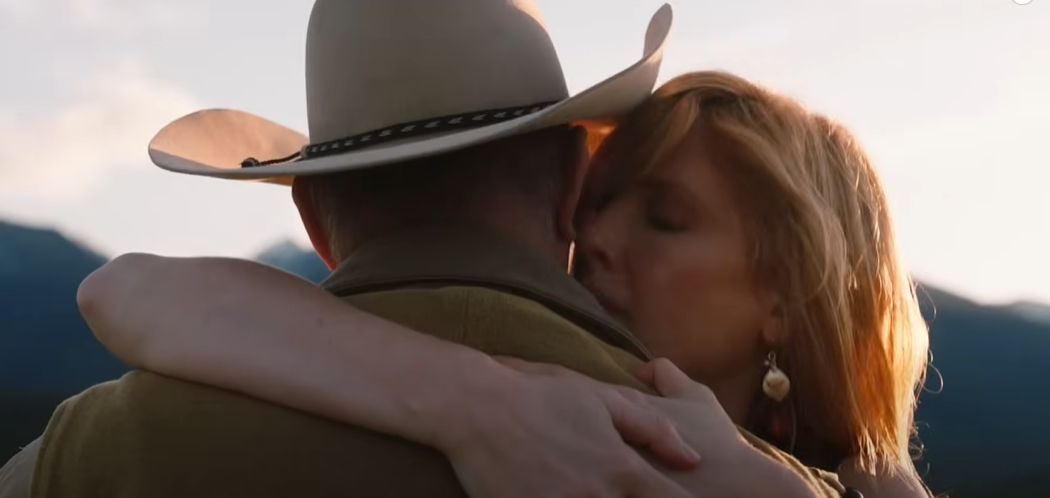
The raw fury of Beth’s confrontation with John in his hospital room after his shooting is perhaps the most defining moment of their bond. Her visceral rage, fueled by the memory of “60 fing days” watching the life drain from him, is a testament to her profound love and terrifying protectiveness. “I am not willing you back to life the next time you die!” she screams, her voice hoarse with pain and indignation. Her subsequent demand for justice – “You look for justice everywhere, everywhere but the mirror. Where is the justice for the man who tried to kill you, huh? You will risk your life for strangers, but what are you risking to find a man who fing did this, Dad? Look at it! He burned the skin from me and you have done nothing about it!” – reveals the depth of her personal suffering and her relentless need for vengeance. The revelation that Jamie was not behind the attack, but a convict named Terrell Riggins, shifts Beth’s focus, yet her dedication to John’s survival remains paramount: “You’re asking me to waste my life on that piece of sht… Oh, Daddy, that’s what my life’s for.” This chilling declaration solidifies her role as John’s avenging angel, his shield, and his most potent weapon.
Even in quieter moments, like their morning reflections on the porch, their bond deepens. John’s remembrance of Beth’s mother and his regret that Beth didn’t live long enough to truly know her mother’s love, is a rare glimpse into John’s own grief and his desire for Beth to find a love that can truly reciprocate, unlike the memory of a lost loved one. “You can love a memory all you want, but it can’t love you back. You need someone that you can love while you’re still young enough to do it. You know her memory is not going anywhere.” It’s John, the pragmatic patriarch, offering a profound lesson on living fully in the present, even as the past casts its long shadow.
The relationship between John and Beth Dutton is not merely a subplot; it is the very soul of “Yellowstone.” It’s a dramatic, often uncomfortable, exploration of loyalty forged in fire, of love that borders on obsession, and of a shared purpose that transcends conventional family dynamics. Their dynamic is a brutal ballet of devotion and defiance, where vulnerability is a rare currency, and love is expressed through actions often perceived as harsh. In a world constantly threatening to consume the Yellowstone, John and Beth stand as its fiercely dramatic, undeniably compelling, and eternally bound protectors. Their story is a raw, compelling testament to the power of an unbreakable oath.