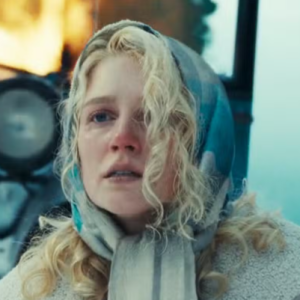
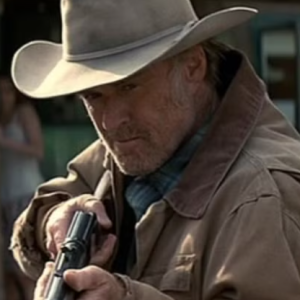
Yellowstone | Paramount Network – In the rugged, unforgiving landscape of the Dutton Ranch, where alliances are forged in blood and loyalty is the ultimate currency, one relationship stands as the beating heart of Yellowstone: the tumultuous, passionate, and utterly magnetic bond between Beth Dutton and Rip Wheeler. Theirs is not a fairytale romance, but a raw, unvarnished depiction of two broken souls finding solace and completion in each other. From their unconventional beginnings to their hard-won commitment, their journey is a masterclass in dramatic storytelling, a testament to love’s ability to thrive even in the harshest of environments.
From the outset, Beth Dutton, the sharp-tongued, fiercely intelligent, and deeply damaged daughter of John Dutton, was never one for traditional courtship. Her early interactions with Rip, the stoic, loyal ranch hand who has been part of the Dutton family since his youth, were laced with a unique blend of playful antagonism and undeniable chemistry. When Rip, ever the traditionalist, suggested a music festival for a date, Beth’s response was characteristically blunt: “Take me anywhere but a music festival.” Her preference? Something “more suited to my personality.” Rip’s immediate, almost resigned, suggestion— “You wanna go get drunk watching wolves killing elk in a park?”—was met with Beth’s delighted, if morbid, approval. “I’ve done some morbid sht on a first date, this takes the cake, Rip.” It was a clear sign that their connection transcended the mundane, thriving on a shared understanding of life’s darker edges. Theirs was a relationship built not on pretense, but on brutal honesty, a foundation that would prove invaluable in the years to come.
Their wild, unbridled spirit was further showcased in their exhilarating horseback ride, where Rip, with a devilish grin, challenged Beth to “cheat death.” As they galloped across the open fields, Beth’s laughter echoed, declaring him “the craziest person I’ve ever met in my life.” These moments, infused with danger and adrenaline, perfectly encapsulated their dynamic: two wild spirits finding freedom and exhilaration in each other’s presence. Yet, even amidst this intoxicating freedom, Beth maintained a guarded distance, a defense mechanism born from years of trauma and a profound fear of vulnerability.
This emotional wall was brutally confronted when Beth, seemingly nonchalant, declared their relationship “never exclusive,” asserting, “I don’t care who you f.” The words, delivered with a casual cruelty, visibly wounded Rip, who responded with a raw, heartfelt confession: “I care about you. And I thought we knew each other. I remember the first time I saw you. So wild, so angry. God, you were beautiful.” It was a pivotal moment, showcasing Rip’s unwavering devotion against Beth’s self-sabotaging behavior. He saw beyond her barbed exterior, recognizing the damaged beauty within. This brutal honesty from Rip was a key turning point, forcing Beth to confront the depth of his feelings and her own guardedness.
The full weight of Rip’s understanding of Beth’s pain came to the fore in a powerful, understated scene involving a skull. Beth, consumed by her inner demons, confessed, “There’s plenty of good in you, Beth, and none in that son of a btch.” Rip’s quiet, steadfast reassurance, “No, you didn’t do it to me,” cut through years of self-blame and guilt. It was a moment of profound absolution, a quiet promise that he saw her not for her mistakes, but for the woman beneath the armor. His ability to forgive and understand her deepest wounds, even the ones she inflicted upon herself, was a bedrock upon which their future would be built.
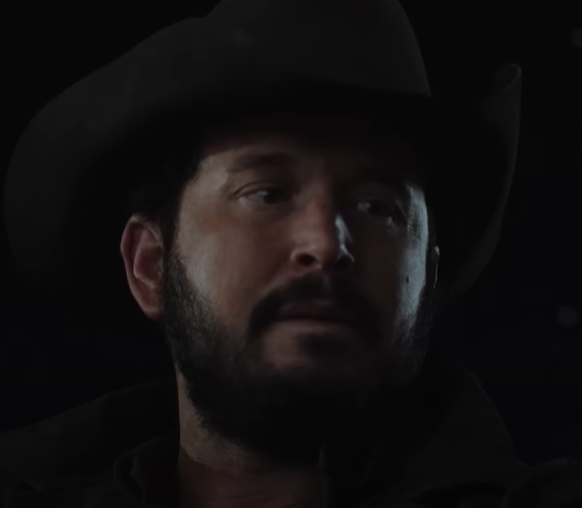
Their journey was further cemented through shared trials and tribulations. In the wake of a devastating fire that consumed Kayce’s house, Rip’s primal rage—“God, I wish I could bring him back to life so I could kill him again”—was met with Beth’s fierce, protective embrace. “Does it hurt? Yeah. Black hell. But I was built to go through hell with you,” she declared, her words a testament to her unyielding loyalty and her readiness to face any darkness by his side. This shared crucible strengthened their bond, turning tragedy into a reaffirmation of their commitment to each other, an unspoken vow to endure hell together.
As their relationship deepened, so did Beth’s willingness to surrender to a more conventional, albeit still “Beth-like,” form of domesticity. Her request for Rip to take her on a proper date— “I want you to take me on a date, with dinner. Maybe we can go to that music festival after all”—signaled a monumental shift. It was a yearning for normalcy, for the simple pleasure of companionship. Rip, exhausted but tender, recognized the true desire beneath her words. Moments like these, whether sharing fried bread in their new home or Rip quietly observing Beth from the porch, unfurled the softer side of their love, demonstrating that even the wildest hearts seek peace and quiet intimacy.
The tender vulnerability that Beth rarely showed blossomed in her simple, whispered “I love you” over the phone, a groundbreaking confession that moved their relationship into uncharted territory. This fragile declaration paved the way for deeper intimacy, as evidenced by their joyous, uninhibited dance in the deserted ranch house. “We can do whatever we want, baby. You’ve been doing whatever you want your whole damn life, but no one can see us. We could take off all our clothes, we could go run naked through the field. First we’re gonna dance.” This freedom, this complete comfort in each other’s presence, stripped away all pretense, revealing the raw, unadulterated joy they found in each other.
It was during these moments of profound intimacy that Rip began to vocalize his deepest desires. His casual use of “baby” as a term of endearment, followed by Beth’s playful yet serious query, “Call me that again… What should I call you? Wife?” was a pivotal step towards commitment. Though Beth quickly tried to retract it, the word hung in the air, a potent reminder of Rip’s yearning. His subsequent, heartfelt confession—“The only reason why I don’t bring up tomorrow with you, Beth, is because every fing time I do, you run away. I look at every day with you, it’s a gift. My tomorrows are, well, they’re all yours”—left no doubt about the depth of his devotion. He was offering her his entire future, without reservation.
Yet, Beth’s deepest fear, a secret she had carried for years, threatened to derail everything. “There’s only so much I can give you, Rip. No. I can’t have children.” Her voice, usually so strong, cracked with the weight of her vulnerability. Rip’s immediate response, delivered with unwavering certainty, was the ultimate declaration of unconditional love: “You give me everything. No. I don’t want a bunch of kids running around this fing house, I mean I don’t even like dogs. You’re all I need.” In that moment, he shattered her greatest insecurity, proving that his love transcended any traditional expectations or limitations. He chose her, fully and completely, flaws and all.
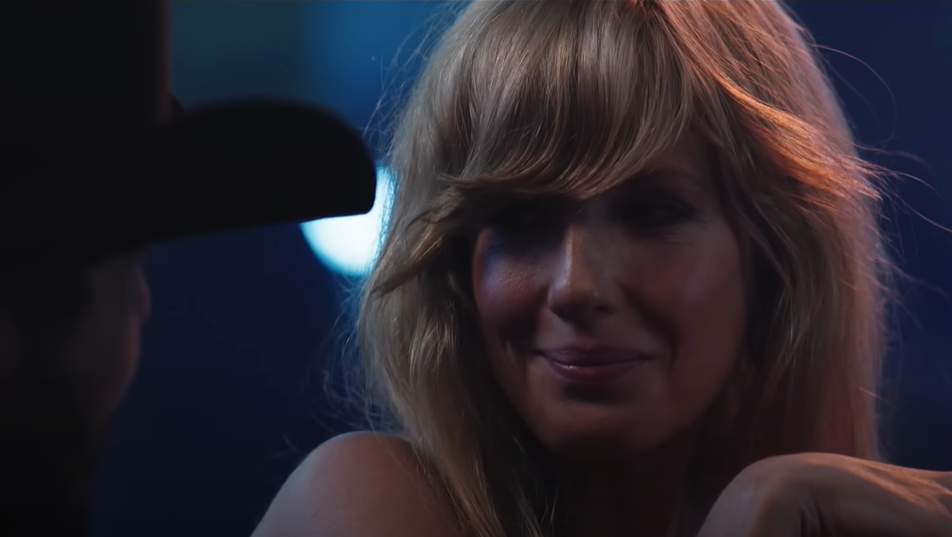
Armed with this profound reassurance, Beth, in a gesture that perfectly encapsulated her fierce independence and profound love, took the reins of their destiny. Presenting Rip with a simple ring she called an “o-ring” – representing the unending nature of their bond – she delivered a breathtaking proposal: “It means that I’m yours. It means come live your life with me. The only thing I ask is that you uplift me so I never have to live another day without you.” Her vulnerability and strength intertwined in a plea for a lifetime together. Rip’s simple, heartfelt acceptance—“I can do that”—sealed their fate.
Their union culminated in the powerful declaration: “There is no more you and I, there’s only us.” This sentiment, echoed across their most significant moments, defines the enduring allure of Beth and Rip. Their love story is messy, often brutal, but undeniably real. It is a testament to finding light in the darkest corners, to healing wounds through unwavering loyalty, and to building a future on a foundation of raw, unconditional love. As Yellowstone continues to unfold, Beth and Rip remain the indelible heart of the series, an iconic couple whose journey reminds us that true love isn’t about perfection, but about radical acceptance and the courage to face hell, hand in hand.