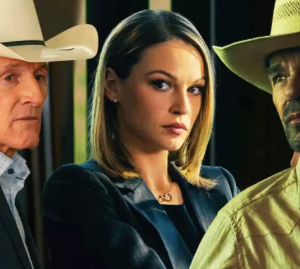
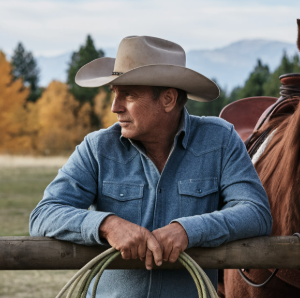
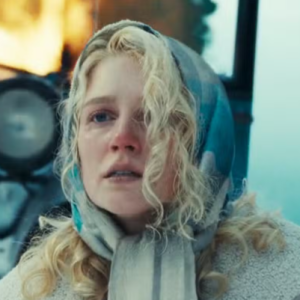
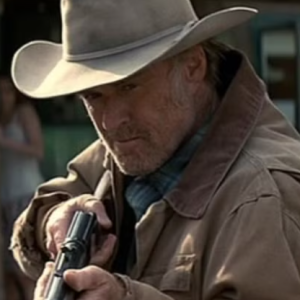
Chief Joseph Ranch, Darby, Montana – The sprawling Chief Joseph Ranch, nestled deep in Montana’s rugged Bitterroot Valley, is more than just a backdrop for Paramount Network’s hit series Yellowstone; it is, as its patriarch Kevin Costner so aptly puts it, “another character,” a silent, stoic force that anchors the sprawling, high-stakes drama. It’s from this very heart of the Dutton empire that we sit down with the formidable ensemble cast – Kevin Costner (John Dutton), Kelly Reilly (Beth Dutton), Luke Grimes (Kayce Dutton), Kelsey Asbille (Monica Dutton), and Cole Hauser (Rip Wheeler) – to delve into the making, meaning, and unparalleled impact of television’s reigning Western saga.
The Hollywood Reporter found itself immersed in the very landscape that defines Yellowstone, a landscape Costner describes as “historically a very famous valley… a lot to do with American history.” This authentic setting, discovered almost by chance, provides the visceral grounding for a show that has captivated millions, weaving a complex tapestry of family loyalty, land rights, political intrigue, and brutal violence.
Taylor Sheridan: The Modern Bard of the West
At the core of Yellowstone’s undeniable power lies the singular vision of creator Taylor Sheridan. A former actor now hailed as one of Hollywood’s most prolific and insightful storytellers, Sheridan’s mastery of the Western genre is unparalleled. Costner, a venerable titan of the Western, having famously helmed Dances with Wolves, offers a profound insight into why so few Westerns truly succeed. “They’re really hard to make,” he states, explaining that genuine Westerns transcend mere gunfights. “They’re based on the literature of how people live their life, how they spoke with each other, the danger… People had to be tough, resourceful.” He goes further, declaring the Western “our Shakespeare,” a genre demanding an “economy of language” and a deep understanding of human nature amidst harsh realities.
Sheridan, according to his cast, possesses this rare knowledge in spades. “He actually has more knowledge about it than really anybody that I know,” Costner attests. His scripts, lauded for their profound monologues and terse, meaningful dialogue – “Kayce says, ‘Yep,’ to most everything, but what it means is exactly what we said it means,” Costner observes with a chuckle – invest as much in language as they do in action. This nuanced approach has drawn a caliber of talent eager to embody his complex narratives.
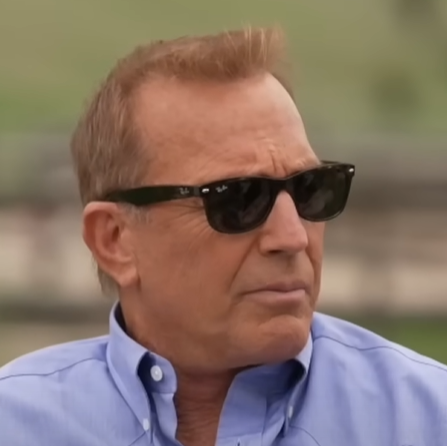
Luke Grimes recalls the familiar industry route, “Agent says there’s a script, it’s a Taylor Sheridan script.” Already a fan of his work on Sicario and Hell or High Water, Grimes was “immediately excited.” For Kelsey Asbille, the connection was even more direct, having previously worked with Sheridan on Wind River. “I’d follow him anywhere; he’s one of the great American storytellers,” she declares, describing the cast as “a little traveling circus” of Sheridan’s making.
From South London to the Savage Heart of Montana
Perhaps the most striking testament to Sheridan’s writing is Kelly Reilly’s transformative portrayal of the formidable Beth Dutton. Her crisp, British accent, a stark contrast to Beth’s gravelly Montana drawl, often surprises interviewers. “I don’t know what karma I have to be dropped into this place with these people, in this incredible role,” Reilly muses, admitting her childhood dream was theater, not American Westerns. Yet, a childhood spent watching Dallas and Dynasty with her mother in South London, cultivated a fascination with “this far away world of Americana.” Her initial instinct was to “hide my accent and or just not talk to anyone,” but the cast and crew “embraced me and taken me on.”
Cole Hauser, whose Rip Wheeler is the fierce, loyal bedrock of the Dutton ranch, brought a lifelong affinity for horses to the role. Recalling a childhood on a 150-acre ranch with a pony named Cinnamon, Hauser laughs about the gulf between his casual riding and the demanding horsemanship required for Yellowstone. “This is a whole different level though… there’s levels to the game of horsemanship,” he emphasizes, crediting the show’s wranglers and real-life cowboys like Forrie J. Smith and Jake Ream, for their invaluable tutelage during the infamous “cowboy camp” — a boot camp that, in its first year, involved a mule packing trip that “almost didn’t get us back.” This commitment to authenticity, from hat placement in the bunkhouse to complex roping techniques, infuses the show with an undeniable realism.
Character Arcs and Moral Ambiguity
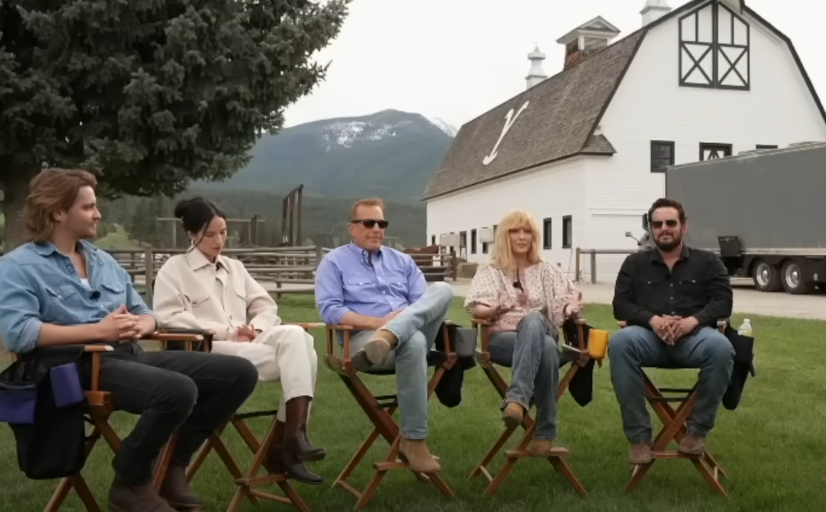
One of Yellowstone’s most compelling aspects is its embrace of moral ambiguity. The Duttons and their loyal ranch hands often engage in acts that are, by any measure, reprehensible – “murder incorporated,” as Costner wryly puts it. Yet, the audience roots for them, drawn to their complex humanity and fierce loyalty.
Cole Hauser believes this connection stems from the characters’ imperfections. “Nothing in reality is perfect… the audience… look at these two [Beth and Rip] and they go, ‘You know what, there’s something I can relate to.’” Their relationship, he says, is “a real honor” to portray, allowing them to “take risks together” and “push the envelope.”
Kelly Reilly echoes this sentiment, acknowledging Beth as a “pretty polarizing character.” She observes, “I have some people who think she’s America’s sweetheart and other people who think she’s a monster, and neither are wrong.” Reilly thrives in portraying Beth’s “light and dark,” her “total and utter devotion” to those she loves, and her equally brutal vengeance against those who cross her. This “fierceness… to live out in this place, to work in the land, is fierce, it’s brutal,” Reilly explains. “And he [Sheridan] finds the beauty and the poetry in the land and the brutality of the human condition.”
The actors confess to being as much in the dark about their characters’ fates as the audience. “There’s a healthy paranoia that somebody here knows more than the other person,” Costner jokes, adding, “I’m not used to being a passenger, but it has been a good ride.” Reilly notes that while the “soulmate” connection between Beth and Rip was clear from early scripts, their specific path forward remains a closely guarded secret. “We don’t know,” she states, reinforcing the spontaneous, life-like evolution of the story.
A Cultural Juggernaut: The Industry Catches Up
Yellowstone’s ascent has been nothing short of meteoric. The Season 4 finale alone shattered records, becoming the most-watched telecast on cable since 2017. Yet, as the cast points out, the industry’s critical recognition took longer to catch up to the show’s popular embrace. Only recently have accolades like SAG and Producers Guild nominations begun to roll in.
Costner offers a philosophical take on this delay: “It’s easy to be popular, it’s harder to be relevant.” He believes Sheridan “chose to be relevant to himself,” writing about a world he deeply understands. “We can’t discount our work just because it isn’t popular,” he asserts, underscoring that the integrity of the storytelling remains paramount regardless of awards. He charmingly recounts his own father’s initial reaction to the show, dismissing it as “a naughty show” that audiences would abandon, only to have nurses later badger him, “The nurses want to know how it ends!”
The fan engagement is palpable. Luke Grimes describes a “big shift in between season three and four,” with airports and restaurants now becoming “weird.” Kelsey Asbille recounts a moment being recognized in full Season 5 “unfit to be in a picture” makeup, a testament to the audience’s intense investment. Cole Hauser shares anecdotes of women with Rip tattoos and babies named Rip, marveling at the profound connection people feel. And Costner himself frequently fields the question, “What are you going to do with Beth?” – as if he, the fictional father, could control his fictional adult daughter.
Reilly, while grateful for the passion, finds it slightly disarming. “They’re just more disappointed that I am not Beth,” she quips, explaining her efforts to keep the character grounded and avoid turning her into a “cartoon,” even when delivering Sheridan’s famously audacious one-liners.
The Expanding Sheridan-Verse and What Lies Ahead
Yellowstone’s success has undeniably spawned a burgeoning “Sheridan-verse,” with prequels like 1883 and 1923 delving into the Dutton family’s rich history. Costner and Reilly both express appreciation for these companion stories, recognizing how they illuminate the origins of the Yellowstone Ranch and the Dutton legacy, depicting the brutal journey and even “what they took.”
As production on Season 5 continues, the cast remains tight-lipped about specific plot points, a testament to Sheridan’s tight control over the narrative. Yet, their subtle hints offer tantalizing glimpses. “We’re all still in it,” Costner confirms with a smile, assuring fans that no one has been “voted off the island.” Cole Hauser delivers a punchy tease: “It’s safe to say the foot’s on the gas, and we’re not slowing down.” Costner, ever the guardian of the show’s artistic integrity, adds, “the quality is very high.”
As Yellowstone charges into its fifth season, premiering November 13th, it continues to defy expectations, proving that a story deeply rooted in the American West can resonate globally. It is a powerful, often brutal, yet undeniably beautiful narrative that, like the Montana landscape itself, remains untamed, unpredictable, and utterly unforgettable. The Duttons, flawed and fierce, continue their fight for survival, ensuring that audiences worldwide remain spellbound by the drama unfolding under the vast, dramatic Montana sky.