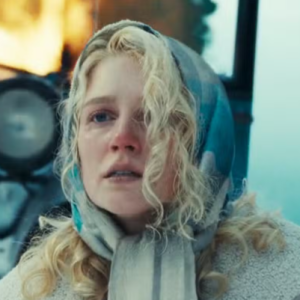
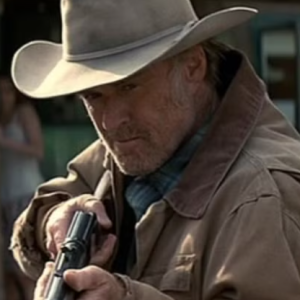
In the rugged, unforgiving world of Taylor Sheridan’s “Yellowstone,” where peril lurks behind every dusty corner and loyalty is branded into flesh, few characters have captured the hearts of millions quite like Jimmy Hurdstrom. Portrayed with an earnest, underdog charm by actor Jefferson White, Jimmy’s journey from a hapless ex-convict to a burgeoning, if still often bumbling, cowboy has been one of the series’ most compelling arcs. Yet, as White exclusively reveals, the transformative path of his character has left him with more than just acting credits – it’s left him with permanent, visceral scars, a stark reminder of the show’s grueling authenticity and his own unflinching dedication.
“It feels incredible, I feel incredibly lucky,” White beams when reflecting on “Yellowstone’s” meteoric rise to television’s number one drama. His profound gratitude for the show, which he’s been a fan of since reading the script in 2016, is palpable. Interestingly, White didn’t initially audition for Jimmy. “They originally had me auditioning for Kayce,” he reveals, referring to the Dutton family’s ex-Navy SEAL son. Recognizing that the “ultimate badass cowboy” role wasn’t quite his fit, White’s genuine obsession with the script led him to search for another character. He found Jimmy: “A sort of guy trying desperately to keep up, a guy who’s in over his head, sort of trying to survive in a world that’s very new to him.” This immediate, deep resonance prompted him to self-tape for Jimmy – a bold move that, fortunately for fans, paid off handsomely.
Jimmy’s journey has been a trial by fire, punctuated by near-fatal encounters. The explosive climax of Season 3 left the fate of multiple Duttons, and Jimmy, hanging precariously in the balance. Beth Dutton’s office detonated, Kayce faced a brutal shootout, and John Dutton was left for dead on the roadside. Amidst this carnage, Jimmy lay unresponsive after a catastrophic rodeo accident, his life flickering. “If anybody’s expendable, let’s all be honest about who’s expendable, it’s me,” White recalls his immediate, anxious thought upon reading the script. The agonizing six-month wait for Season 4 scripts, with no confirmation of his character’s survival, was a torment. “I’m just frantically texting everybody,” he admits, desperately seeking answers. His relief upon discovering Jimmy lived was immense: “Incredibly grateful to keep doing the best job I’ve ever had in my life.”
The perilous world of the Dutton Ranch demands an extraordinary level of commitment, and for White, it has manifested in enduring physical consequences. “I had never ridden a horse before ‘Yellowstone.’ I had never touched a horse before ‘Yellowstone,'” he confesses. Despite weeks of intensive training with the show’s elite team of wranglers and stunt performers, the learning curve on horseback is steep and unforgiving. White describes the process as a “lifelong pursuit,” acknowledging that even after four years, he and his equine co-stars are “still very much learning.”
While actors rarely have “the luxury of fear” when faced with demanding roles, White admits the constant physical demands of portraying a struggling cowboy have taken their toll. “Very sore, very bruised, very sort of beaten up,” he recounts. But then, he drops the exclusive revelation that truly underscores the brutal reality of the ranching world depicted on screen. “I’ve got some permanent scars,” he states, with a wry chuckle. “Just a little bit TMI, on the inside of my butt cheeks, there’s a kind of what do they call them, Rorschach inkblot of scars… that will probably never heal.”
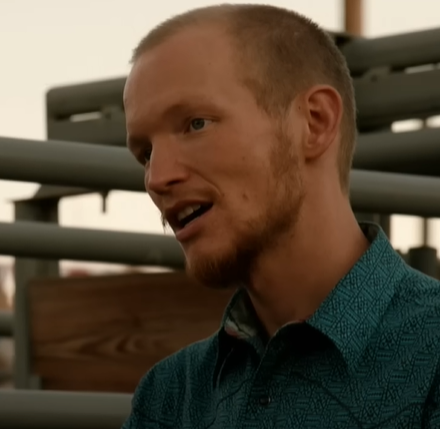
It’s a startling, unvarnished insight into the physical price paid for authenticity. These are not character makeup; they are real, lasting marks from the sheer, repetitive friction and impact of riding. White, being the “newest to riding” on the cast, with the “least experience and the least callous,” became uniquely susceptible. He playfully suggests it’s “a version of the Yellowstone brand,” a “permanent Y.” This inadvertent branding, etched onto his skin, serves as a visceral testament to his complete immersion in Jimmy’s arduous journey, an echo of the symbolic “Y” that marks the ranch’s loyal hands.
While White himself performs many of Jimmy’s riding scenes, particularly as his character has grown, the most dangerous sequences involving bucking horses are handled by his incredibly talented stunt double, Bobby Roberts. “He does the stuff they’re not quite ready to let me do yet,” White praises, emphasizing the meticulous safety protocols that the “Yellowstone” production team maintains, constantly balancing the need for frenetic, chaotic action with paramount safety.
Beyond the physical demands, Jimmy’s emotional journey has been equally complex. His vulnerability and desperate search for belonging have made him an audience surrogate, allowing viewers to experience the awe and terror of the American West alongside him. “He’s new to this world too,” White explains, “he becomes a bit of an audience stand-in.” This shared outsider status fosters a profound connection, as both character and actor learn “alongside him.”
Jimmy’s rapid attachment to women, from the headstrong Mia to the grounded Emily, also stems from this deep-seated need for acceptance. “There’s very few people in Jimmy’s life who have ever taken any interest in him,” White observes. His complicated past, marked by neglect and hardship, leaves him “starved for attention and starved for affection.” Anyone who offers genuine care quickly finds a place in Jimmy’s vulnerable heart. White articulates the nuanced difference between Jimmy’s two loves: Mia, who saw him as an idealized “rodeo cowboy” that he struggled to live up to, and Emily, who “sees him for maybe who he really is today… a hard-working ranch hand just trying to stay on the horse.” His decision in Season 4 not to send a letter to Mia, for White, was simply practical: “There’s never a good reason to text your ex.”
Season 4 marked a significant turning point for Jimmy, as he found his footing at the Four Sixes Ranch in Texas, sent there by John Dutton to learn true cowboying. “For the first time in Season 4, Jimmy sort of starts to come into himself,” White notes. This evolution was reflected even in his appearance, shedding the patchy “quote-unquote beard” for a more refined, clean-shaven look that symbolizes his newfound maturity and capability. Working alongside Taylor Sheridan, who directed all the Texas sequences, and actress Kathryn Kelly (Emily), whom he praises as “a brilliant actor,” was an “incredible journey” for White, offering him the chance to explore a new side of the Western world.
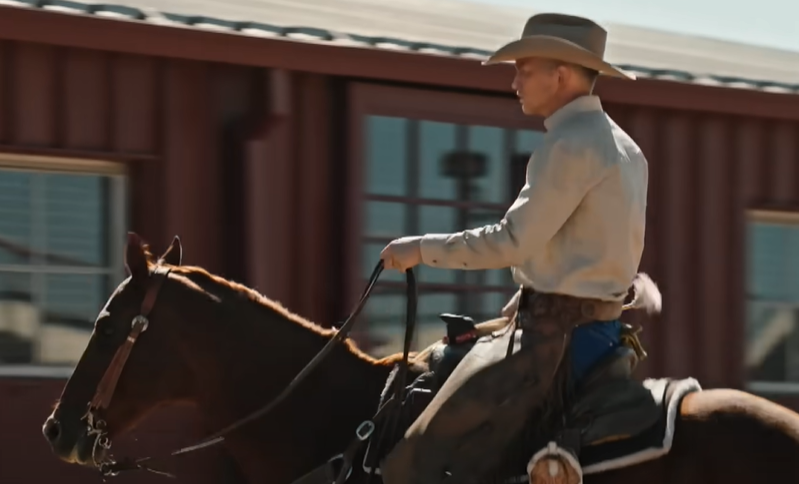
As “Yellowstone” continues its breathtaking expansion into a sprawling cinematic universe with prequels like “1883” and the upcoming “6666” spin-off, White finds himself a privileged inhabitant of this rapidly growing world. He beams with excitement for “1883,” highlighting its “bonkers” cast including Sam Elliott, Tim McGraw, Faith Hill, and Billy Bob Thornton, and Sheridan’s first foray into period storytelling. Crucially, Jimmy’s arc in Season 4 served as the audience’s introduction to the real-life 6666 Ranch, one of Texas’s oldest and largest operational cattle ranches. “I’m really excited for people to see the kind of real, gritty, not glamorous world of real-life cattle ranching,” White enthuses, setting the stage for the forthcoming spin-off.
From a scruffy, desperate outsider to a genuine, if still learning, ranch hand, Jimmy Hurdstrom’s journey is a testament to resilience, mentorship, and the transformative power of a second chance. Jefferson White’s unwavering dedication to embodying this complex character, even when it means carrying permanent scars, speaks volumes about his commitment to “Yellowstone.” As the show continues to captivate audiences, Jimmy’s “permanent Y,” etched onto White, stands as an accidental, painful, yet profound symbol of a cowboy’s true grit, and the enduring legacy of a cultural phenomenon.