Port Charles, NY – The quiet serenity of Port Charles is on the precipice of shattering, as beloved former schoolteacher Willow Tait, once a beacon of gentleness, has been irrevocably transformed by grief into a force of chilling calculation. What began as an outpouring of sorrow following a series of profound losses has metastasized into a dangerous obsession, culminating in a meticulously planned scheme that threatens to rip apart the very fabric of the Corinthos family. Exclusive “General Hospital” spoilers reveal that Willow, fueled by a terrifying conviction, is about to unleash a psychological war aimed at forcing Michael Corinthos to concede full custody of their children, Wiley and Amelia, effectively “kidnapping” his peace of mind and control over their family.
For months, the citizens of Port Charles watched Willow (Katelyn MacMullen) grapple with an unimaginable series of heartbreaks. Yet, the woman once known for her fragile strength and yearning for peace has been hollowed by loss, sharpened by grief, and consumed by an obsessive need to rewrite a life that slipped through her fingers. The shocking kidnapping of Daisy, far from being a desperate cry for help, was merely the prologue to a chilling descent into calculated madness. It was the first, terrifying manifestation of an emotional fracture that had been quietly deepening since Willow felt herself losing control over her family, her role as a mother, and her rightful place beside Michael (Chad Duell). But the raw pain of grief has now mutated into something far more insidious: an obsession not just with reclaiming what was lost, but with controlling the outcome of every thread she believes is conspiring against her.
A new, chilling darkness has taken root within Willow, born from a growing paranoia that Nina Reeves (Cynthia Watros) and Drew Cain (Cameron Mathison) are not only working together but may have become active participants in reshaping the story of her life, erasing her, one decision at a time. The whispers, the secrecy, the late-night phone calls between Drew and Nina that Michael insists are harmless—none of it sits right with Willow. In her fractured mind, these seemingly innocuous interactions don’t just suggest collaboration; they scream conspiracy. She suspects that Drew, once a trusted ally, is no longer acting in her or Michael’s best interest. Why has he suddenly taken such an intense interest in Wiley’s guardianship documentation? Why does Nina, of all people, seem more composed and confident than ever before? These consuming questions have painted a sinister outline for Willow: an agenda to reshape the Corinthos family from within, to manipulate Michael’s trust, and to systematically remove Willow from any influence over her own children.
Willow’s mind, exhausted by guilt and saturated with longing, has become the perfect environment for this twisted obsession to flourish. Every time she sees Sasha Gilmore Corbin (Sofia Mattsson) cradling Daisy, every time she watches Michael trusting Nina with even a fragment of his emotional space, she feels herself disappearing. In a world where Nina is allowed to rehabilitate her image, where Drew is admired for loyalty, where even Sasha is seen as a symbol of strength, Willow feels like a phantom—the invisible mother, the forgotten partner. But she refuses to allow that to happen again.
Her raw desperation has hardened into a meticulous strategy. Willow has begun tracking patterns: when Michael visits Nina, when Drew appears near the Corinthos property, who is listed on Wiley’s school pickup schedule. She scans documents she was never meant to see, listens through walls, and compiles observations into a chilling journal. Soon, even the most mundane interactions become steeped in suspicion. In the widening cracks between logic and fear, Willow has constructed a terrifying narrative in which everyone around her is working against her. And Michael, once the center of her world, is now the one who must be “woken up.” She no longer views him as a victim of these perceived forces but rather as a result of them—blind, manipulated, and too trusting to notice he’s standing on the edge of a precipice, pushed by those who only want control.
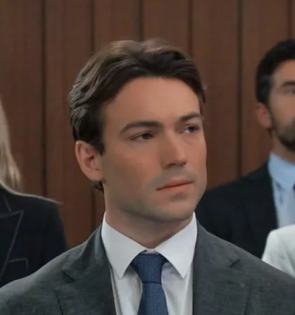
Her obsession with Michael has taken a profoundly darker turn. No longer content to watch from a distance, Willow has begun inserting herself into his life in subtle, increasingly disruptive ways. She stages chance encounters, orchestrates emotional breakdowns near the children, and leaves behind traces of Daisy’s things at his house—small, haunting reminders of a bond she believes should not have been broken. At first, Michael dismissed it as unresolved grief. But a chilling tension has built. Amelia (Ella Ramacieri) has begun to ask questions, and Wiley (Viron Weaver) expresses growing confusion. Michael now feels that familiar chill, the one that comes when something doesn’t quite make sense. He looks into Willow’s eyes and no longer sees sorrow; he sees calculation.
Meanwhile, Willow has begun writing letters she never intends to send—letters to Michael, to Nina, even to Carly (Laura Wright), spelling out her unwavering belief that they’ve stolen something from her, that they’ve rewritten a version of reality she refuses to accept. She keeps these letters in a locked drawer, rereading them in her most lucid moments, finding comfort in their truths—truths that only she seems to understand. They are her gospel, her proof that she is not crazy but surrounded by liars. Her entire worldview now pivots around one central, terrifying belief: everyone is part of a lie, and she is the only one awake enough to see it.
The temptation to act again, to stage another event, to create another shock that forces Michael to question everything, has become almost unbearable. The memory of how the first kidnapping brought his attention back, even temporarily, feeds the dark thought that if she could do it once, she could do it again, but this time better, smarter, safer. She convinces herself that it wouldn’t be about hurting Daisy; it would be about saving Michael, forcing him to confront the reality he refuses to see. But this time, the stakes are astronomically higher. If caught, it’s not just about losing custody; it’s about being seen for what she’s becoming: something far removed from the gentle mother she once was, something terrifying.
As her obsession deepens, Willow has begun stalking Nina’s schedule, watching her from afar, taking photos, documenting inconsistencies. Her internal monologue has shifted to a chilling whisper: “They took everything. So, I’m going to take it back.” She no longer fully recognizes herself in the mirror, but she believes she has clarity. Every action, every lie, every perceived betrayal—she sees it now, she feels it, and she won’t let it continue. In her eyes, Michael is being poisoned by Drew’s subtle manipulations, by Nina’s guilt-driven redemption arc, by Sasha’s maternal comfort. He doesn’t see the truth, but Willow does.
She has begun crafting a plan, not as violent as before, but far more refined—a psychological strategy to create doubt, seed conflict, isolate Michael, and ultimately, draw him back. If she can make him distrust Drew, question Nina, and pull away from Sasha, Willow believes he will gravitate back to the only place he once knew peace: her. This is no longer about love; it’s about control. It’s about reclaiming the one place in the world where she felt safe, inside a life that no longer exists.
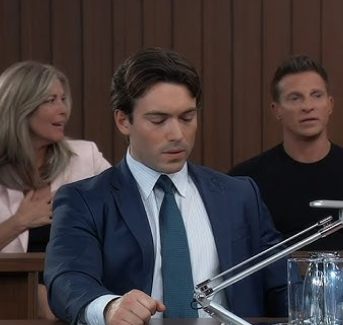
Port Charles is beginning to feel the rising pressure, this emotional war playing out beneath the surface of brunches, school pickups, and hospital visits. Michael feels his world constricting. Nina senses something watching her. Drew grows cautious. Even Sonny (Maurice Benard), seemingly distant, hears murmurs that something beneath the surface is starting to crack. Willow has become more than a grieving mother; she is now a woman possessed by belief, convinced that her pain gives her the right to correct everything that has gone wrong. But she can no longer see the line—the one between healing and harming, between protection and possession.
Willow’s actions have already transitioned from grief to danger, her love mutating into obsession. It began with subtle moves: interfering with school pickup times, confusing medical appointments, slipping into Sasha’s parenting routines with Daisy under the pretense of being helpful. Then came the insidious psychological manipulations, asking Wiley if he remembered when “mommy was still here all the time,” whispering to Amelia that “some people are trying to take you away from me.” She is planting fear in their young hearts that something or someone is trying to separate them from their mother. The children, confused and too young to process such manipulation, are starting to show signs of distress. Wiley has become withdrawn at school; Amelia cries at night when Michael isn’t around. Their worlds are destabilizing, and they don’t even know why. But Willow does, or rather, she thinks she does. She believes she’s correcting a wrong, reversing a cruelty, standing up to a conspiracy that only she can see.
With Michael continuing to lean more on Sasha, take calls from Nina, and accept Drew’s advice about custody and safety, Willow has begun to view him as a target—not in hatred, but in distorted love. She doesn’t want to hurt Michael; she wants to “wake him up.” And if waking him up requires dramatic action, she is more than willing to make it happen. Her internal narrative convinces her that Michael has become a prisoner of everyone else’s agenda, and that only she can snap him out of it. If he won’t see the truth, then maybe he needs to feel it. Maybe he needs to lose the children, even briefly, to understand what she felt when they were taken from her.
The most terrifying part is how chillingly calculated she’s become. Willow, once emotional, now acts with cold preparation. She’s planning, creating routines, practicing what she’ll say if confronted, laying groundwork for scenarios that could allow her to disappear with Wiley and Amelia just long enough, she thinks, to make Michael see what life is like without them. She’s rented a remote cabin under a false name, paid in cash, and stocked it with food, clothing, toys, and medicine. A car has been parked nearby with a burner phone inside. She has tested the GPS route twice, both times during hours when no one would notice. She has told herself she will never hurt her children, but she does not understand that emotional kidnapping is still trauma. She tells herself they’ll be fine, but doesn’t see how her version of “fine” has become twisted by her own unraveling mind.
Those closest to her are beginning to sense the shift, but no one sees the full picture yet. Michael, though disturbed by some of Willow’s recent behavior, still gives her the benefit of the doubt, believing she’s simply overwhelmed. Nina, too caught up in her own redemption arc, has no idea she’s being watched and blamed. Drew remains too distracted by Victor Cassadine’s looming threat to notice Willow’s escalating behavior. And Sasha, whose instincts could have seen through Willow’s actions, is trying too hard to offer kindness to recognize the manipulation hiding beneath it. Everyone is looking elsewhere while Willow moves silently toward a choice that could shatter them all.
But Michael is not entirely passive. He has quietly transformed into a sharp, calculating strategist. He has begun to act in silence, consulting with legal experts, rewriting custodial agreements, and restructuring the children’s daily lives to reduce Willow’s access—all under the veil of civility, knowing full well that if she senses the full extent of his maneuvering, she may retaliate in ways he cannot predict. He believes he is saving their children from the unpredictable force she’s become. He sees her emotional volatility not as sadness, but as instability; her presence not as motherly, but as invasive. And so, he doubles down, adjusting school permissions, rerouting access to medical records, and speaking to Sasha about creating a more permanent structure around the children’s lives, one that doesn’t rely on Willow’s cooperation or emotional stability.
In doing so, however, Michael has crossed a line he cannot see. His silence, his planning, his refusal to confront her directly has inadvertently created a storm of paranoia inside Willow that is growing by the hour. She now believes Michael has been turned against her by Nina, by Drew, even by Sasha, and that his efforts to protect the children are in fact efforts to erase her, to replace her with a version of family that no longer includes her at all. The pain of that belief is transforming her into someone capable of things she once would have condemned. The dynamic between them has collapsed into a cold, emotionless battle for control, where every smile masks a strategy, every conversation is a chess move, and every gesture of kindness conceals deeper motives.
The children, too young to understand, are already feeling the effects. Wiley has grown confused and anxious; Amelia clings to routine with growing fear. And yet neither Michael nor Willow is willing to step back. They both believe they are right. They both believe they are saving their children. And it is that belief—the absolute certainty of their own righteousness—that is making the situation spiral further out of control. This is no longer about custody or co-parenting; it is about power, perception, and who will be left standing when the truth finally breaks through the lies they are both spinning.
The tension coils tighter with each passing day. The children sense something but cannot name it. Michael grows more confused. Sasha begins to worry. Nina feels a presence she can’t explain. And Willow, she is calm. Too calm, because in her mind, everything is about to fall into place. But what she cannot see is that she is standing on the edge of something irreversible. One more step, one more miscalculation, and the next chapter in this twisted story won’t be about custody or heartbreak. It will be about tragedy.
The Reckoning:
The dam has broken. Willow’s weeks of operating in the shadows, justifying her actions as maternal instinct, disguising her manipulations as concern, and convincing herself that her erratic behavior was simply misunderstood love, are over. The truth is catching up to her, and with it comes a reckoning she can no longer escape. The fragile line she crossed when she orchestrated the kidnapping of Daisy was never truly addressed, and in the silence that followed, she convinced herself she was safe. But Michael has been watching. Sasha has been sensing something wasn’t right. Nina has started to notice the subtle disturbances in Wiley’s demeanor and the strange rhythms in Willow’s behavior. All the quiet alarm bells that were once ignored are now ringing loudly, and louder still are the facts finally coming to light.
A witness has stepped forward—someone who saw Willow near the park on the night of Daisy’s disappearance, someone who found a discarded toy that matched what Daisy had been playing with earlier in the day. The evidence, circumstantial at first, begins to build. Security footage is recovered. An anonymous tip leads authorities to inconsistencies in Willow’s timeline. A chilling pattern emerges—behavioral, psychological, incriminating. And finally, a warrant is issued.
The unthinkable becomes reality. Willow, once the heart of a broken but hopeful family, is now seen as a danger to her own children. She is arrested, not in dramatic fashion, but with a quiet knock at the door and a stunned silence that follows her to the station. Michael watches in disbelief, not because he didn’t expect something to happen, but because the finality of it—seeing her in handcuffs, hearing the charges read aloud—forces him to confront the agonizing possibility that the woman he once loved may never come back from this. Sasha clutches Daisy tightly, her heart breaking at the realization that this wasn’t just a desperate mother; this was someone who had lost herself completely. Nina is shaken. Drew is silent. The entire circle of people who once revolved around Willow are now watching her implode, each of them questioning how it went so far and how none of them saw it clearly enough to stop it.
But for Willow, the arrest doesn’t feel like a defeat. In her fractured state of mind, it feels like the ultimate betrayal. She believes she was set up, that Michael orchestrated her downfall to permanently sever her from her children. She sees the arrest not as justice, but as punishment for daring to fight. Even as she is processed and booked, she clings to her warped truth: that she was the only one trying to protect Wiley and Amelia from being stolen, from being erased, from being shaped into something she could no longer recognize. Her face is calm, but her mind is a storm of twisted convictions. She refuses to speak. She won’t answer questions. Her silence is her rebellion.
The shockwaves ripple quickly across Port Charles. The media begins whispering about the once-beloved schoolteacher turned maternal fugitive. Parents at Wiley’s school pull their children away from playdates. Hospital staff exchange looks in hallways, speaking in hushed tones about what might have triggered it all. But the ones hit hardest are the children. Wiley is confused. He wants to know why his mother isn’t home. He asks questions Michael doesn’t know how to answer. Amelia cries when Willow’s name is mentioned. The emotional toll begins to set in, not just for Willow, but for the entire Corinthos family. Trust is broken, lines are redrawn, and the love that once held them all together now hangs by threads that may never be strong enough to carry them back.
This arrest marks a definitive turning point. It is the collapse of illusion, the devastating confirmation that the spiral was real, the shock of watching someone so deeply loved become someone unrecognizable. It proves that grief, when left unchecked, when fed by silence, guilt, and isolation, can become something monstrous. Willow’s obsession has cost her everything—her freedom, her role as a mother, her very identity. And as she sits alone in a cell, staring at the walls that now define her world, she begins to understand that love twisted by pain can destroy far more than it can ever save. This is not just a story of a woman falling apart; it is a cautionary tale, a brutal, heartbreaking revelation that even the purest intentions, when consumed by obsession, can turn into the darkest betrayals. And for Willow, this is only the beginning of the price she will pay.