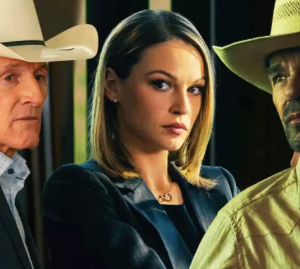
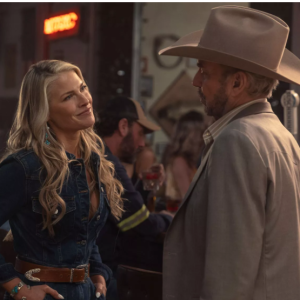
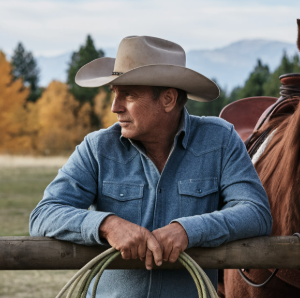
In the rugged, unforgiving world of Taylor Sheridan’s Yellowstone, where tradition clashes violently with progress, few characters have embodied this ideological battlefield as dramatically and unexpectedly as Summer Higgins. Introduced as an impassioned environmental activist, Summer’s trajectory from vociferous protester to an unlikely resident of the Dutton Ranch, and eventually, a trusted, albeit reluctant, advisor to Governor John Dutton, is a masterclass in character evolution and the raw power of clashing convictions. Her presence on the series ignited some of its most explosive confrontations and offered a vital, outside perspective on the very heart of the Dutton dynasty.
When we first encounter Summer (portrayed with compelling conviction by Piper Perabo), she is leading a fiery demonstration against industrialized animal farming, her protest bold and unapologetic, even extending to a powerful, symbolic act of public nudity. Amidst the clamor and shouts, the stoic figure of John Dutton emerges, a man whose life’s work is inextricably linked to the very industry Summer decries. Their initial exchange is a verbal sparring match, a philosophical duel that sets the stage for everything that follows. Summer, articulate and fiery, accuses men of objectifying women and brainwashing the world into hiding breasts, an ironic twist given nature’s true purpose for them. She then broadens her attack to the “state-sponsored police force that protects industrialized animal farming and the mass murder of millions of animals every year.”
John, the seasoned rancher, counters with a brutal, pragmatic truth: “You ever plow a field, Summer? To plant the quinoa or sorghum or whatever the hell it is you eat, you kill everything on the ground and under it. You kill every snake, every frog, every mouse… So I guess the only real question is, how cute does an animal have to be before you care if it dies to feed ya?” This exchange is Yellowstone at its core: a collision of urban idealism and rural reality, a stark reminder that even the most well-intentioned activism can lack a full understanding of its target.
The surprising twist comes when John, recognizing a certain integrity in her conviction, bails Summer out of jail. It’s an act of calculated strategy, not kindness. He invites her to the ranch, not to convert her, but to foster understanding. “You believe what you’re doing’s right. I disagree, but I respect it,” he states, a rare moment of grudging admiration from the patriarch. Summer, ever the skeptic, balks at the idea of getting into a pickup with a “charming white male in his 50s,” but a fragile trust is established. She steps into his world, utterly unprepared for the whirlwind that awaits her.
Her arrival at the Dutton Ranch is nothing short of an inferno, particularly her introduction to Beth Dutton. The scene crackles with immediate, visceral hostility. Beth, protective and possessive of her father, assumes the worst, confronting Summer with a knife in hand. “I’m the bitch about to stab you in the stomach,” Beth snarls, encapsulating her ferocious territorialism. The revelation that Summer is not a “hooker” but a “guest” does little to quell Beth’s rage. The infamous breakfast scene that follows is a masterclass in comedic and dramatic tension, as Summer’s strict vegan, gluten-free diet becomes a vehicle for Beth’s relentless mockery and brutal insults. “You should get tested for chlamydia, you fuckin’ hippie,” Beth snipes, a line that perfectly encapsulates the utter disdain she harbors for Summer’s perceived weakness and idealism.
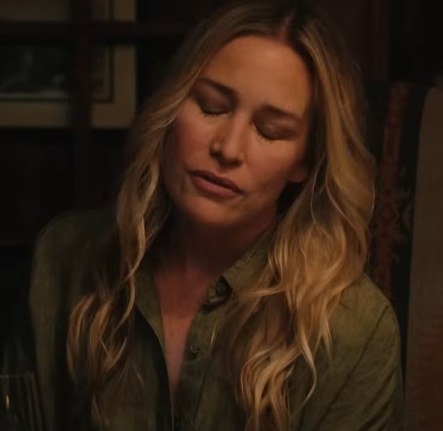
The animosity escalates quickly, culminating in a brutal, no-holds-barred physical altercation. Beth, enraged, unleashes her fury, but Summer, surprisingly, holds her own, revealing “nine years of jiu-jitsu.” This bare-knuckle brawl, set against the backdrop of the serene ranch, is a shocking, visceral display of the raw, untamed nature of the Dutton family and Summer’s unyielding spirit. It’s a symbolic battle, not just between two women, but between two wildly divergent worldviews, fought with primal aggression.
Following this violent encounter, Summer finds herself back behind bars, a harsh return to reality. Yet, the wheel of fate turns again with John Dutton’s ascension to the governorship. In a stunning power move, he grants Summer clemency, releasing her from prison. But there’s a significant catch: she’s under house arrest, and her “house” is none other than the Dutton Ranch. John needs her, not just as a symbol of his newfound political power, but as a genuine advisor, someone who can offer a perspective he desperately lacks. Summer, despite her initial protests about “shacking up” with the Governor and the prospect of living with his “bipolar sociopathic daughter,” finds herself inextricably tethered to the Duttons.
Her return to the ranch, now a mandated residence, forces a new, uncomfortable dynamic. Meal times remain a source of conflict, as Gator, the ranch cook, struggles to accommodate Summer’s vegan diet amidst a spread of venison, duck, and dove—animals she views as unjustly killed. Beth’s taunts about “the bird of peace” being served for dinner highlight the ongoing clash of their moral compasses, underscoring the constant tension that defines their shared existence.
The true turning point in Summer’s journey, and arguably her most significant contribution to the Yellowstone narrative, comes during the ranch’s annual branding. Initially horrified by the process of hot-iron branding and vaccinating calves, she observes the raw, painful reality of ranching. Her discomfort is palpable: “Oh, this is so fucking traumatizing.” Yet, under the guidance of the cowboys and the sheer necessity of the task, she finds herself reluctantly participating.
It is in the aftermath of this visceral experience, amidst the dust and the echoes of distressed calves, that a profound shift occurs within Summer. Sitting with John, she confesses, “I understand now. I understand why you brand and why you vaccinate and why you move them from one pasture to another.” It’s not an abandonment of her core beliefs, but a newfound empathy, a recognition of the brutal elegance and necessity of the Duttons’ way of life. She astutely advises John to invite more tourists to the ranch, recognizing that public understanding is the key to combating the widespread misconceptions about ranchers: “They have you pegged as a bunch of misogynist bigots who are ruining the environment, and that is not who you are.” John, visibly impressed, acknowledges her as “a very, very, very smart woman.”
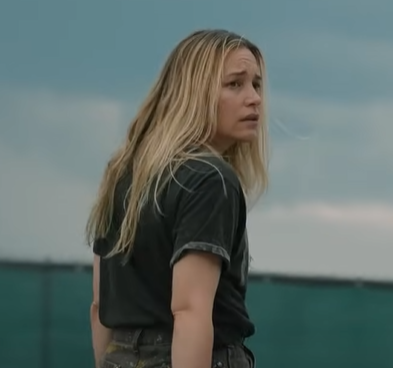
Summer Higgins’s journey on Yellowstone is a testament to the show’s willingness to challenge its own core tenets. She arrives as an antagonist, a living embodiment of everything the Duttons rail against. Yet, through shared hardship, forced proximity, and moments of genuine, if begrudging, understanding, she evolves. She pushes John Dutton, not just politically, but personally, forcing him to articulate his world in a way he rarely has to. Her character serves as a vital bridge between the urban, progressive world and the traditional, often brutal, reality of the American West. Summer Higgins is more than just a love interest or a political pawn; she is Yellowstone’s conscience, a dramatic catalyst who forces both the characters and the audience to confront the complexities of land, legacy, and survival in a rapidly changing world.