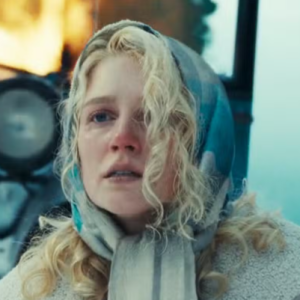
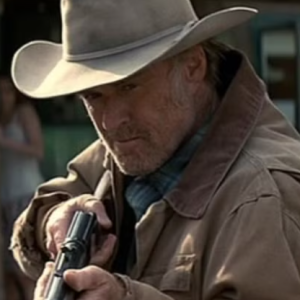
In the rugged, unforgiving landscape of Montana, where the Yellowstone Dutton Ranch stands as both a bastion and a battleground, one force of nature consistently outshines the rest: Beth Dutton. Played with an intoxicating blend of ferocity, vulnerability, and razor-sharp wit by Kelly Reilly, Beth is less a character and more a primal scream against hypocrisy, greed, and anything that threatens her family’s sacred legacy. Among her many iconic moments, few are as consistently entertaining and strategically devastating as her legendary “bar burns”—impromptu confrontations where she dissects unwitting targets with surgical precision, leaving their egos in smoldering ruins.
A compilation of these barroom verbal assaults serves as a masterclass in psychological warfare, a dramatic ballet of words choreographed to expose vulnerability and assert dominance. Each interaction, seemingly spontaneous, is deeply rooted in Beth’s character, her history, and the existential fight for the Yellowstone. It’s not just about winning an argument; it’s about establishing the terms of engagement, defining who holds the power, and protecting the last vestiges of her family’s world from the encroaching forces of modern capitalism and misplaced entitlement.
The scene opens with Beth in a striking black dress, a stark contrast to the rustic Montana setting, immediately signaling that she is an anomaly, a creature of intent. When approached by “Ted,” a slick, presumptuous man whose opening line “Didn’t expect to see a dress like that in Montana” reeks of condescension and predatory intent, Beth’s response is a chilling prelude to the storm. “Buddy, this is your one chance to leave me alone with your self-esteem intact,” she warns, a line delivered with such serene menace it should be taught in a masterclass on intimidation. Ted, predictably, dismisses it, inviting her “best shot.” And Beth, ever the obliging executioner, delivers.
Her “shot” is a forensic dismantling of his life: his unimportant real estate job, his married status and impending third child, his calculated solo trip to Montana as an excuse for “me time,” implying a hunt for extramarital dalliances. “You didn’t come here to fish. You’re hunting,” she concludes, exposing the flimsy façade of his vacation. When he indignantly asks, “Who the hell are you to judge me?” her chillingly calm reply, “I ain’t judging you buddy. I’m hunting too. Just not hunting you,” cements her as the apex predator in the room. The coup de grâce – “You look like a real soft fuck, Ted. All you city boys do” – is a brutal indictment, not just of Ted, but of an entire urban demographic she views as weak, pretentious, and a threat to the rugged authenticity she holds dear. This initial encounter establishes Beth’s modus operandi: she sees through people, identifies their weaknesses, and then exploits them without mercy, always with an underlying disdain for perceived moral failings and an unyielding loyalty to her own code.
This disdain and protective instinct quickly extend to the larger war. When a man named Dan, son of a key player in the Market Equities scheme to seize the Yellowstone land, attempts to leverage his perceived power, Beth’s response is a terrifying display of strategic sexual intimidation. “Is that how you’re gonna get back at my father, hm? You gonna try and fuck his daughter after he fucked you out of a hundred million dollar subdivision?” Dan asks, attempting to equalize the power dynamic with a crude proposition. Beth’s answer is a chilling affirmation of her own agency and desire for maximum collateral damage: “I prefer it. Where’s the fun in wrecking a single man? When I break you, I wanna know that I’m breaking generations.” This line is pure Beth, revealing her ruthless dedication to her family’s cause. She isn’t just fighting for land; she’s fighting for the very soul of the Dutton legacy, willing to unleash a scorched-earth campaign that extends across bloodlines and corporate empires. Her playful yet utterly serious flirtation, promising a transcendent experience while simultaneously threatening existential ruin, leaves Dan visibly unnerved, illustrating how Beth weaponizes every facet of her being in the relentless defense of her family.
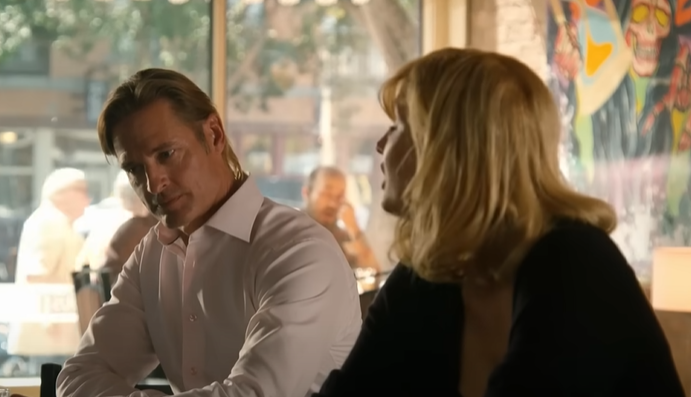
The subsequent confrontation with Alfred, the bar manager, over her smoking habit, perfectly encapsulates Beth’s refusal to be bound by conventional rules or titles. When Alfred calls her “ma’am,” she corrects him with an almost academic dissection of the term’s antiquated meaning, culminating in a darkly humorous threat: “if you call me maiden, Alfred, I’m gonna stab you in the eye with this fucking fork.” This moment isn’t just about defiance; it’s about asserting her identity as a woman unbound by societal expectations or traditional roles. She makes a scene not out of petty rebellion, but as a deliberate act of power projection, a way to control the environment and set the stage for her true purpose.
That purpose quickly becomes clear with the arrival of Roarke Morris, the charismatic, calculating CEO of Market Equities. Their barroom conversation is less a negotiation and more a verbal sparring match, a high-stakes chess game played with words. Roarke, attempting to appear relatable, discusses his passion for fly-fishing, believing it will soften Beth. Instead, she turns his hobby into a brutal metaphor for his business practices. “You don’t keep ’em when you catch ’em… You throw ’em back,” she observes, then dissects the perceived cruelty of catch-and-release fishing. “It is fascinating that the one vertebrate on this planet that doesn’t rely on pain as a survival device is the one that you like to hook in the fucking mouth.” She calls out the hypocrisy, the detached cruelty of those who inflict suffering for sport or profit, revealing the common thread between his recreational fishing and his corporate predatory behavior.
The conversation swiftly pivots to the core conflict: Market Equities shorting Schwartz & Meyer stock, which is Beth’s company, a direct assault on the Dutton financial fortress. Beth compares it to a “terrorist bombing a subway,” hurting “some people and not the people you want to hurt.” Roarke, undeterred, attempts to persuade her with the promise of “generational wealth”—five to six hundred million dollars—if the Duttons simply sell their land. He argues the land is a “relic,” an unsustainable legacy, and that true legacy is wealth.
Beth, however, remains unyielding. She agrees with Roarke’s financial logic, acknowledging the potential for immense wealth, but quickly delivers the devastating blow: “I wish to God that he would do that, but he won’t. So we fight.” The “he” is, of course, John Dutton, her father, whose unwavering commitment to the land transcends any monetary value. This revelation, that Beth, the astute financier, cannot sway her father from his deeply held principles, underscores the formidable, almost spiritual, nature of the Dutton family’s resolve. Roarke’s final warning, “You are sealing yourself into the Alamo, Beth, and these guys won’t take prisoners either,” is met with Beth’s iconic, chilling retort: “I look forward to it.”
The exchange culminates in one of Beth’s most legendary lines. When Roarke sarcastically suggests she doesn’t know what she’s up against, she fires back: “You are the trailer park, I am the tornado.” This isn’t just bravado; it’s a declaration of identity and intent. Roarke represents calculated destruction, chipping away at foundations. Beth embodies chaotic, uncontainable force, capable of leveling everything in her path. She is the destructive element that will meet his corporate strategy head-on, promising a cataclysmic confrontation that will define the very future of the Yellowstone.
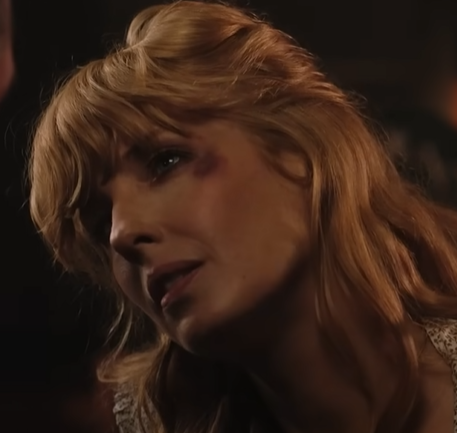
Beyond the major adversaries, Beth’s bar interactions reveal her keen observations of everyday life and her unfiltered perspective. Her advice to a woman abandoned at the bar by her husband – “Because you have all the pussy and half the money. That’s why” – is crude but startlingly insightful, a radical feminist take on power dynamics delivered with typical Beth bluntness. It’s a moment that shows she’s not just fighting corporate giants; she’s an evangelist for self-empowerment, particularly for women, in a world she perceives as inherently skewed against them.
Finally, her brutal takedown of a college professor, another “city boy” who embodies urban hypocrisy, brings her bar burns full circle. She exposes his comfortable life of lecturing about “inequity and the concentration of wealth” while simultaneously contributing to the very problem by gentrifying Montana and exploiting university loans. “Bravo you fucking hypocrite,” she sneers, summing up her contempt for those who preach virtue while living in contradiction. This encounter echoes her initial disdain for Ted, but with added layers of societal critique, highlighting the core “Yellowstone” theme of the clash between traditional rural values and encroaching urban influence.
Beth Dutton’s bar burns are more than just entertaining verbal sparring matches. They are crucial character revelations, dramatic plot drivers, and powerful thematic statements. Through these incendiary encounters, Beth solidifies her position as the Dutton family’s fiercest protector, a woman who wields words like weapons, leaving a trail of shattered egos and clear warnings in her wake. She is chaos personified, a force of nature as wild and untamed as the Montana landscape she fights to protect, and these barroom showdowns are vivid demonstrations of why she is arguably the most captivating character on “Yellowstone.”