From the desolate beauty of the Montana ranch to the gleaming towers of corporate America, Yellowstone’s third season once again placed Beth Dutton squarely in the eye of the storm. As played by the incandescent Kelly Reilly, Beth isn’t just a character; she’s a force of nature, a walking paradox of sharp-edged vulnerability and unbridled ferocity. Season 3 peeled back further layers of this complex Dutton, revealing the depth of her pain, the ferocity of her love, and the terrifying logic of her moral compass, solidifying her status as arguably the most compelling, terrifying, and utterly indispensable element of Taylor Sheridan’s modern Western epic.
The season opens with Beth immediately asserting her unique dominion. When confronted by an unassuming woman seeking reparations, Beth’s response is a classic Dutton power play, infused with her signature acidic wit: “You are the trailer park, I am the tornado.” This isn’t mere bravado; it’s a declaration of intent, a promise of devastation to anyone who dares to underestimate her or cross the Yellowstone. The exchange, seemingly innocuous, quickly devolves into a chilling revelation of Beth’s past and present. The woman’s plea for assistance for her “boy” dealing with abuse is met not with sympathy, but with a stark, brutal solution born from Beth’s own history: “My boyfriend put his head through a wall. Then I smashed a skull with an eight-pound ashtray.” It’s a jarring, visceral reminder that Beth operates outside the polite confines of society, employing violence and intimidation as readily as she breathes. Her follow-up, a deadpan “New boyfriend, big-ass ashtray,” solidifies the menacing allure of her relationship with Rip Wheeler, and the uncompromising lengths to which they will go for each other and their unconventional family.
Season 3 thrusts the Duttons into their most existential battle yet: the war against Market Equities, led by the ruthless Roarke Morris and the cunning Willa Hayes. Beth, as the family’s resident financial assassin, is their frontline general. Her understanding of corporate warfare is both sophisticated and deeply personal. She likens Market Equities’ attempt to short their stock to a terrorist bombing a subway: “It doesn’t stop the subways and it doesn’t destroy the cities the subway serves, just hurts some people and not the people you want to hurt.” But Beth’s genius lies in her ability to flip the script, to turn the attacker’s strategy against them, ensuring that the “people you want to hurt” are the ones who feel the sting. Her chilling promise, “I want to hurt you back. You’re going to try and hurt me back? Is that what you’re trying to say? Because I’ve been down this road many, many times before, buddy. And no one who tried it is alive to tell you how poorly that worked out for him,” isn’t just a threat; it’s a statement of her grim, undefeated legacy. This season further cements Beth’s role as the tactical genius and the sharpest blade in the Dutton arsenal, fearlessly engaging the financial elite in their own blood sport.
Beyond the corporate skirmishes, Beth’s journey in Season 3 delves deeper into her personal struggles and desires. We see her continued disdain for the superficiality of urban life, reflected in her wry observations about “bearded hipsters riding scooters to work” that drove her from Los Angeles. Her appreciation for the purity of Montana, and her father’s wisdom, is evident when she reflects on John’s musing about fishing being the “only noble job left.” This reinforces her connection to the land and the authentic, rugged existence that the Yellowstone embodies.
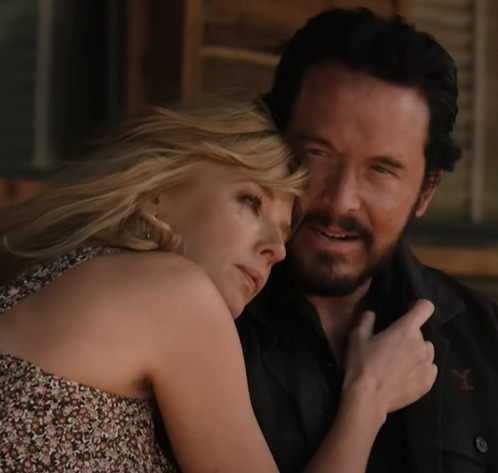
However, it’s her moments with Rip that truly allow Beth to shed her armor, even if only briefly. One of the season’s most poignant scenes unfolds on the ranch porch, with Rip observing, “In 35 years, I have never been alone on this ranch.” Beth’s response, oscillating between playful provocation (“We could take off all our clothes, we could go run naked through the field”) and profound introspection, reveals a hidden yearning. She challenges Rip, and implicitly herself, with a question that cuts to the core of her being: “Is there anything you ever wanted to do but you didn’t do because everybody would watch you, question you, and now doing it is in spite of them, and it’s about something else, and the moment you imagined it is not the moment that you are?” It’s a moment of raw vulnerability, a glimpse into the caged bird within her, constantly striving for freedom against the weight of expectation and public scrutiny. This dialogue underscores Beth’s profound sense of individuality and her refusal to be defined by external judgment, even as it hints at the sacrifices she’s made for her family and her past traumas.
But perhaps the most revealing window into Beth’s very soul comes through a chillingly eloquent monologue where she invokes the German philosopher Friedrich Nietzsche. Dismissing conventional notions of “right and wrong” or “good and evil” as irrelevant, Beth distills her entire worldview into a stark, brutal binary: “I believe in loving with your whole soul and destroying anything that wants to kill what you love. That’s it. That’s all there is.” This isn’t just a philosophy; it’s a terrifyingly consistent operating principle that explains every volatile outburst, every calculated financial maneuver, and every act of savage retribution. For Beth, morality is not a construct but a deeply personal code, fiercely guarded and violently enforced. It’s a testament to her unyielding loyalty to the Yellowstone and, more specifically, to the family that embodies it – a loyalty that transcends all legal and ethical boundaries, making her both a formidable defender and a terrifying adversary.
And then, the ultimate commitment. In a moment that could only happen between Beth and Rip, she proposes. Not with a ring or flowery words, but with a declarative “It’s settled. We’ll get married.” The simplicity is deceptive; it’s a profound culmination of their tempestuous, unconventional love story. Her definition of marriage is equally unique and utterly Beth: not a legal contract (“business”), but a sacred, public declaration of absolute unity. “Can you stand on one of those mountains in front of my family, my friends… you would tell them that there is no more you and I, there’s only us.” It’s a demand for an all-consuming, indivisible bond, a fusion of souls that matches the intensity of their individual spirits. Rip’s immediate, unwavering “I can do that” is the perfect counterpoint, solidifying their status as the show’s most compelling and enduring romantic pairing, a force unto themselves.
Season 3 of Yellowstone serves as a masterclass in character development for Beth Dutton. It showcases her as the ruthless corporate shark, the loyal daughter, the enigmatic lover, and the philosophical warrior. Her searing dialogue, her unflinching loyalty, and her chaotic brilliance make her not just a fan favorite, but the undeniable heart – and sharpest thorn – of the Dutton family. As the season ends with the Duttons under siege, Beth, battered and bloodied, remains a symbol of their fighting spirit. She is the tornado, and the trailer park of her enemies continues to feel her devastating wrath, promising even more dramatic and destructive chapters ahead for the formidable Beth Dutton.