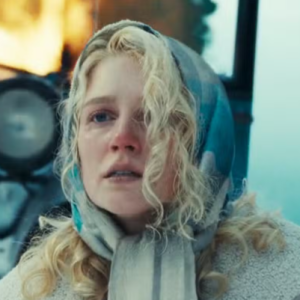
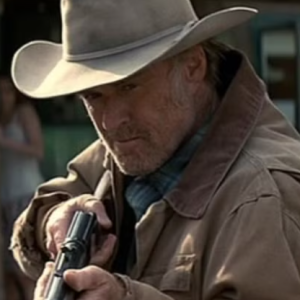
In the rugged, unforgiving tapestry of the American West, where vast landscapes meet boundless ambition, the Dutton family stands as an immovable force, inextricably bound to the land they call home. HBO’s sweeping epic, “1923,” plunges viewers into the tumultuous early 20th century, revealing the foundational struggles of the Yellowstone ranch through the eyes of its formidable patriarch, Jacob Dutton, and his equally indomitable wife, Cara. More than just a prequel, “1923” is a profound exploration of love, sacrifice, and the relentless fight for survival, anchored by the extraordinary dynamic between Jacob and Cara – a bond forged over decades of shared hardship and unwavering devotion.
Their relationship, a beacon of enduring partnership, is immediately evident in the quiet, intimate moments that punctuate the brutal realities of ranch life. We witness Jacob, a man whose body bears the marks of a life lived hard, musing on his “running dismount days” being over, his age now catching up. Cara, with a gentle smirk, quips, “It’s a long way down, this old man’s gonna climb it slow,” a playful jibe that speaks volumes of their shared history and comfort. This playful banter, even amidst the backdrop of a demanding life, underscores the deep affection and profound understanding that underpins their marriage. It’s a love that allows for vulnerability and gentle teasing, a rare oasis of tenderness in a world that constantly demands their resilience.
Their intellectual sparring is equally captivating. One morning, over the mundane act of Jacob shaving, Cara muses on the curious societal shift of women shaving their legs and arms. What begins as a seemingly trivial observation spirals into a profound commentary on human nature: “They invented a razor specifically for women when no need for one existed and then invented the need. As if selling razors to half the population wasn’t enough.” Jacob’s amused silence is met with Cara’s incisive conclusion: “It’ll be the thing that ends us. Greed will be the thing that kills us all.” This exchange isn’t merely dialogue; it’s a testament to Cara’s sharp intellect and foresight, a philosophical underpinning that subtly foreshadows the rapacious forces threatening their very way of life. It highlights Jacob’s deep respect for his wife’s wisdom, even when cloaked in what he playfully calls “utter nonsense.” Their marriage is a true partnership of minds, where conversations aren’t just listened to, but truly heard and valued.
However, the tranquility of their mornings is brutally shattered when the Duttons, including Jacob, Cara, and young Elizabeth, are ambushed on a seemingly routine trip. The sudden explosion of gunfire transforms their world, thrusting Cara into a role far beyond that of a ranch wife. As Jacob, gravely wounded, collapses, Cara’s immediate, almost instinctual response is not panic, but decisive action. She takes charge, barking orders, her hands moving with a surgeon’s precision as she desperately works to stem the bleeding. “You’re still talking. You’re still breathing,” she insists, her voice a raw testament to her refusal to surrender. Jacob, clinging to life, whispers a single, crucial directive: “Spencer must come home now. You get him home.” This command, delivered with his dying breath (or so it seems), becomes Cara’s sacred mission, a heavy mantle of responsibility placed upon her shoulders.
In the ensuing days, Cara’s fortitude is truly tested. With Jacob incapacitated, the burden of protecting the ranch falls entirely upon her. When she gathers her remaining men, they are weak, the cattle stolen, their leader seemingly lost. “You be the leader,” Jacob had urged, and Cara, a woman of deep faith, turns to God for guidance. Her immediate, heart-wrenching decision to let the remaining cattle go, rather than risk another life, showcases a profound pragmatism and compassion. “It’s only lives we can’t afford to lose,” she declares, a sentiment that directly contradicts the typical Dutton ruthlessness, yet exemplifies her distinct moral compass.
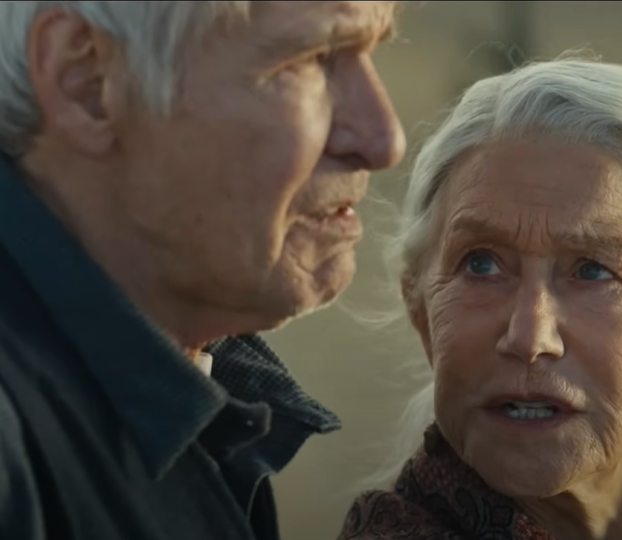
Her confrontation with the ruthless Banner Creighton, the shepherd leader responsible for the ambush, solidifies her transformation into a formidable adversary. When Banner taunts her, demanding she reveal Jacob’s true condition to the sheriff, Cara’s response is chillingly calm, yet utterly terrifying. “I’ll kill you where you fucking stand,” she states, her eyes alight with a cold fury. Banner, confident in his power, boasts of his army and money. Cara, however, unleashes a declaration that perfectly encapsulates her strength and the unique terror she can inflict: “Men kill with bullets or a noose, which is to say, men kill quick. Your fight is with me now. I kill much slower.” It’s a promise born of immense pain and unwavering resolve, a stark warning to the forces seeking to dismantle her family. This moment isn’t just about defiance; it’s about a woman stepping into the void left by her wounded husband, wielding her intellect and will as weapons as sharp as any blade.
As Jacob slowly recovers, his first thoughts turn to vengeance. He aims to join a posse, driven by a raw hunger for justice. But Cara, having endured the silent, agonizing suffering of nursing him back from the brink – “I bathed you and spoon-fed you like an infant. I wiped your ass like an infant. While I shoveled graves between unanswered prayers” – unleashes a furious, heartbreaking indictment of his pride. Her monologue is a tour de force, a raw outpouring of grief and a demand for a higher purpose. “You don’t know what it is to suffer,” she tells him, her voice trembling with barely contained rage and sorrow, referencing the profound grief of Emma and the strength of Elizabeth. She forbids him from seeking petty vengeance, knowing it would ultimately lead to his imprisonment and the loss of the ranch anyway. It is Cara who embodies the true cost of their fight, having shouldered the private agony while Jacob lay unconscious.
Yet, Jacob, ever the pragmatic visionary, articulates a counter-argument that resonates deeply within the Dutton lore. He speaks not of vengeance, but of “preservation.” He paints a vivid, haunting picture of what the relentless march of industrial “progress” has done to the wild spaces of the East: “A 13-mile island of cement with rivers of sewerage running underneath it till they dump in the bay where salmon don’t dare to swim.” He argues that men like Banner are merely the vanguard of this destruction, and his fight is for the sacred land itself, for future generations, for “their child, a child I’ll never meet.” His vow to protect the land so that when Cara is “laid to rest under the aspens, no one cuts ’em down, builds a city over you,” is a profoundly moving declaration of his ultimate purpose. It’s not just about winning a fight; it’s about preserving a legacy, a way of life, and the very soul of the land.
The conflict culminates when Banner Creighton returns to their porch, no longer with guns blazing, but with a more insidious weapon: the law. He reveals his acquisition of the surrounding lands and, most damningly, that he has paid their property taxes, setting up a legal trap that could strip them of their deed. Cara, once again, attempts to impose civility, demanding, “There will be no violence here, sir. This is our home. Our home! Have you no decency whatsoever?” Banner’s chilling reply, “Because I can. I’m a businessman. The word decent doesn’t apply to me,” perfectly encapsulates the new breed of predator they face – one who weaponizes systems, not just bullets. This final confrontation underscores the escalating stakes: it’s no longer just a turf war, but a strategic battle for the very ownership of their legacy, forcing Jacob and Cara to confront an enemy whose tactics are as ruthless as their own.
Jacob and Cara Dutton are more than just characters; they are the embodiment of the Yellowstone spirit. Their enduring love, intellectual partnership, and individual strengths, tested by unimaginable trials, solidify their place as foundational figures in the Dutton saga. Cara’s quiet wisdom and fierce protective instincts perfectly complement Jacob’s unwavering resolve and pragmatic vision. Through their story, “1923” not only delivers a gripping historical drama but also illuminates the enduring power of family, the relentless fight for one’s heritage, and the profound, often brutal, sacrifices required to protect what truly matters in the untamed heart of the West. Their legacy is not just etched in stone, but in the very soil of the Yellowstone, a testament to a love that battled against an entire world trying to tear them apart.