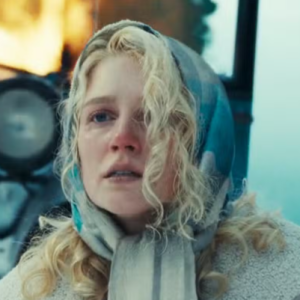
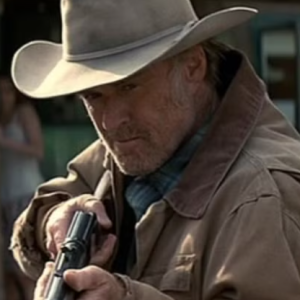
From the very first episode, Taylor Sheridan’s 1883 plunged viewers into a landscape as breathtaking as it was brutal, a vivid and unflinching depiction of the American West’s perilous expansion. Far more than just a prequel to Yellowstone, the series carved its own legend through a relentless series of confrontations, each more visceral and impactful than the last. These aren’t mere action sequences; they are crucibles, forging and breaking characters, shaping the very foundation of the Dutton family’s legacy, and painting a stark portrait of survival in a land with no laws but its own.
The journey west was, for the immigrants and their guides, a constant dance with death. Every bend in the river, every distant dust cloud, held the promise of a new threat. The show wasted no time in establishing this grim reality, with the wagon train almost immediately falling prey to desperate bandits. The chaotic opening, punctuated by gunfire and the terrified cries of the vulnerable, instantly immerses the audience in the sheer terror of the unknown. As veteran Pinkerton agent Shea Brennan grimly advises his weary charges to “shoot the horses” – a stark, pragmatic tactic to incapacitate a mounted enemy – the audience understands that conventional warfare is a luxury unavailable on this unforgiving frontier. Limited ammunition, a dozen guns against unknown numbers; these early skirmishes highlight the fragile line between life and death. Young John Dutton, barely a boy, is a silent witness to this savagery, his innocent eyes absorbing lessons that would forever define his family’s future.
But external threats were only part of the battle. The internal struggles for resources and trust within the wagon train often proved just as explosive. One of the most tense confrontations unfolded when vital supplies, particularly food and firearms, were discovered stolen from the struggling immigrants. James Dutton, the stoic patriarch of the Dutton family, steps into this maelstrom, his authority absolute and his justice swift. When he confronts the accused, the air crackles with desperation and indignation. The dialogue is sharp, cutting to the bone of survival ethics: “Get everything that was hers! Nothing was hers, it was his, and he’s a thief!” James barks, making it clear that on this trail, the line between ownership and necessity is enforced by lead and will.
This scene is a pivotal moment for Elsa Dutton, the series’ poetic, free-spirited narrator, as she witnesses her father’s unyielding nature firsthand. James’s chilling declaration – “When I speak, speak, and you don’t do what I say, you get hurt. That’s the pattern here. And it don’t stop till you do what I say” – is a brutal lesson in frontier law. It’s a moment that forces Elsa to shed another layer of her youthful naivety, understanding that compassion is a luxury in a world defined by stark consequences. The pronouncement of “If you steal, you will stay where you stole!” becomes a terrifying decree, a testament to the harsh justice required to maintain order amidst chaos. Even a brief, almost absurd, encounter where a man demands a “refund” for his misfortune on the trail is met with James’s chilling resolve: “Find your own way to Oregon. You follow us, and I’ll kill you. The same goes for you.” These exchanges underscore the profound loneliness of the journey, where self-reliance is paramount, and any perceived weakness can be exploited.
However, the most morally complex and devastating confrontation arrives later, a chilling exposé of the true brutality festering within the West: the encounter with the so-called “Wyoming stock growers association.” These self-appointed deputies, a band of vicious vigilantes, embody the ugliest side of frontier justice. Their initial questioning of the wagon train’s presence – “What’s your business out here? I could ask you the same thing” – quickly devolves into a terrifying revelation. When Shea challenges their dubious authority – “Wyoming ain’t a state. Who appointed you deputies?” – their true, monstrous nature is laid bare.
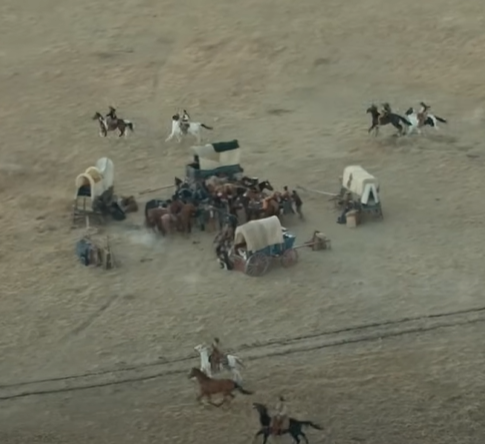
The chilling admission that they killed Native American women and children to “bait their men” sends a shiver down the spine, revealing a genocidal mindset that sickens even the hardened Shea Brennan. This is where 1883 transcends a simple Western; it forces viewers to confront the deeply uncomfortable truths of American expansion. Shea, a man carrying immense grief and a weary burden of duty, finds his moral line in the sand. His voice, usually a gravelly monotone of command, rises with a righteous fury: “You ain’t no Deputy, you ain’t no judge, you ain’t no fing jury! Them folks weren’t the thieves, you the thief! You going to die for one!” It’s a powerful declaration, a moment of unbridled heroism where Shea chooses to defend the vulnerable, even at the cost of his own life. James Dutton, ever the pragmatic strategist, aligns himself with Shea, recognizing the immediate and profound threat these men represent.
The ensuing shootout is a masterclass in chaotic, desperate action. With the vigilantes bearing down, James orders his group to “aim for the horse and never hit the rider,” a tactic for dismounting their foes, knowing the range is too great for a direct hit on the rider. The air is thick with gun smoke and the thud of hooves. It’s a moment of sheer survival, where every decision is life or death. In the midst of this chaos, Elsa Dutton, now fully transformed by the trail’s relentless education, makes a bold, selfless choice. With her father’s wagons pinned down, she spurs her horse forward, drawing the attackers’ attention, willing to sacrifice herself to give the others a chance.
This act of courage leads directly to the series’ most heart-wrenching and pivotal confrontation. Elsa, an arrow piercing her abdomen, is confronted by a Native American warrior. This is not just a physical encounter but a collision of worlds, a moment that defies easy categorization of hero and villain. The warrior speaks English, revealing he learned it from her husband. “You speak English? How can you do this? You speak English, know your people do this!” Elsa cries, a desperate plea that highlights the tragic irony of their conflict. His response, “My husband taught me,” deepens the personal nature of the encounter, revealing a shared humanity beneath the tribal and racial divides.
The warrior identifies himself as part of the Kiowa, whose families were among those massacred by the vigilantes. He recognizes Elsa’s own distinctive fighting style, taught by her Kiowa husband, Sam. The revelation that her own father is now hunting the very people who just attacked them—men who, in turn, murdered this warrior’s family—weaves a complex tapestry of vengeance and retribution that stretches across the plains. Elsa’s wound, sustained in her act of selfless bravery, becomes a tragic, indelible mark of her journey. Her final internal monologue is profoundly moving, a testament to her remarkable spirit: “I felt no pain, perhaps it was the favor of the Fates, but it didn’t hurt. I thought of pushing it through, I thought better of it. As my father would say, the one good thing about problems is there’ll still be problems later. Don’t have to deal with them right away.” It’s a poignant, almost philosophical acceptance of her fate, a testament to her transformation from an innocent girl to a hardened, yet still deeply empathetic, woman.
These confrontations in 1883 are more than just plot devices; they are the very sinew of the series, demonstrating Taylor Sheridan’s commitment to authentic, brutal storytelling. They highlight the impossible choices made on the frontier, the moral compromises, the sheer resilience of the human spirit, and the devastating cost of building a new world. They remind us that the Dutton legacy was forged not in comfort, but in relentless struggle, paid for in blood and sacrifice, establishing the deep, violent roots of what would one day become the Yellowstone ranch. In the unforgiving gauntlet of the West, every conflict was a test, and 1883 shows us, without flinching, how legends were truly made.