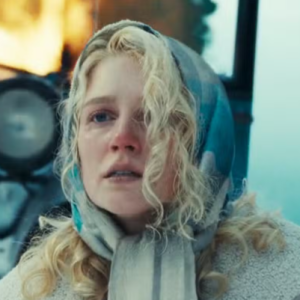
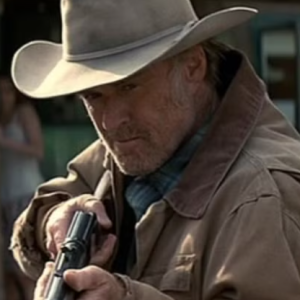
In the desolate, unforgiving landscapes that define Taylor Sheridan’s epic prequel to Yellowstone, 1923, moments of profound despair are often punctuated by raw, visceral acts of defiance. None has resonated with more chilling power and defiant hope than the recent, pivotal rescue of Teonna Rainwater (Aminah Nieves), a storyline that has bravely pulled back the curtain on one of American history’s darkest chapters: the Indian boarding schools. In a scene that crackled with tension and heart-wrenching revelation, Teonna, a young woman forged in the fires of unimaginable suffering, found an unexpected lifeline, reminding audiences that even in the deepest shadows, the human spirit, especially the Indigenous spirit, refuses to be extinguished.
From the moment Teonna Rainwater was snatched from her family and thrust into the confines of the Catholic boarding school, her storyline has been a brutal, unvarnished depiction of systemic abuse. Stripped of her name, her language, and her very identity, Teonna became a symbol of the generations of Native American children subjected to forced assimilation, cruelty, and spiritual annihilation. Her journey through the school was a relentless gauntlet of physical beatings, psychological torment, and the insidious suppression of her cultural heritage. The nuns, ostensibly figures of piety, were instead instruments of terror, enforcing a barbaric regime designed to “kill the Indian to save the man.” Teonna’s resilience, however, proved to be a force stronger than any whip or sermon.
The recent episode culminates in Teonna’s daring escape, a desperate flight into the wilderness, hunted by those who sought to break her. It is in this vulnerable, precarious state that salvation arrives in the form of Hank, a Crow tribesman whose quiet strength and profound understanding cut through the immediate danger. The encounter is not a grand, dramatic confrontation, but a subtle, deeply moving exchange, a recognition of shared heritage and unspoken pain between two souls tethered by the brutal realities of their world.
The tension, however, escalates dramatically as Teonna, scarred but unbroken, makes a chilling confession to Hank. In a voice devoid of remorse, yet thick with the trauma she endured, she recounts her final, desperate acts within the school walls: “I killed the nun who beat me. And killed the nun who raped me.” Her words hang heavy in the crisp mountain air, a stark declaration of vengeance born from unimaginable suffering. She elaborates with a chilling precision – “choked one and stabbed the other.” This is not a confession of guilt, but a declaration of survival, a visceral act of reclaiming agency in a life where it had been systematically stripped away. When Hank questions the morality of her actions, Teonna’s response is both definitive and devastating: “They did this. But say they had it coming.” This powerful line encapsulates the tragic narrative of victims turning the tables on their oppressors, a brutal justice meted out in the face of institutionalized evil.
Hank, portrayed with a quiet gravitas, absorbs Teonna’s horrifying revelations not with judgment, but with an immediate, instinctual understanding. His own existence, in a world actively trying to erase his people, grants him an innate empathy for her plight. His very name, “Hank,” becomes a small, telling detail of his character – a chosen name, outside the colonial imposition, embodying a subtle defiance. “Everybody was choosing George, Jim… nobody was choosing Hank,” he explains, a quiet testament to his individuality and refusal to conform. This subtle exchange builds an immediate, powerful bond between them, based on shared experience and mutual respect, a testament to the show’s masterful character development.
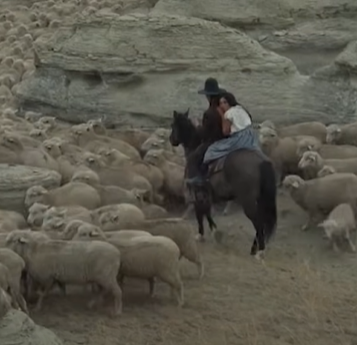
The conversation quickly shifts from the past to the perilous present and uncertain future. The government, represented by the Indian agents and the law enforcement they command, is not merely a background threat; it is an active, malevolent force hunting Teonna. Hank articulates the grim reality: “The government finds out we got him, the government’s going to take them.” This raises the stakes exponentially, transforming Teonna’s rescue into a desperate race against time and a corrupt system. The question of “Why would they take them?” from Teonna is met with the bleak, yet undeniable truth from Hank: “Why would they take you? Trouble.” Teonna is seen as a runaway, a defiant symbol, and her freedom, or even her existence outside of their control, is a challenge to their authority.
Hank offers Teonna a grim choice: return to her father, or flee to Canada. Her immediate, unwavering refusal of Canada – “No Canada. Canada’s worse” – is a profoundly impactful detail, hinting at the equally brutal and perhaps even more insidious realities of Canadian residential schools, a testament to the widespread suffering inflicted upon Indigenous communities across the continent. This choice underscores the profound desperation and limited options available to Indigenous people seeking refuge from systemic oppression in this era. The decision is made: “First we find your father. Then we find a place.” This sets them on a new, perilous journey, a quest for family and sanctuary in a world that offers little of either to those like them.
Teonna Rainwater’s storyline in 1923 is more than just a dramatic subplot; it is a vital, beating heart of the series, anchoring its historical narrative in deeply personal suffering and unwavering resilience. Aminah Nieves delivers a performance of breathtaking intensity, imbuing Teonna with a fiery spirit that refuses to be extinguished, even after enduring the most heinous of abuses. Her journey is a harrowing exploration of trauma, survival, and the fierce longing for self-determination.
The impact of this storyline on the broader 1923 narrative cannot be overstated. While the Dutton family battles economic hardship and external threats to their land, Teonna’s struggle illuminates the equally, if not more, brutal fight for cultural survival faced by Indigenous peoples. It grounds the series in a powerful historical reality, refusing to shy away from the horrific truths of American history. Teonna’s journey is a stark reminder that the fight for land, identity, and freedom is deeply intertwined for all those living on the frontier.
As Teonna and Hank embark on their perilous quest, the series continues to weave a tapestry of grit, despair, and an indomitable will to survive. Teonna’s rescue is not merely the end of one chapter of suffering, but the beginning of a new, uncertain journey towards healing and hope. Her defiant spirit, forged in the crucible of injustice, resonates as a powerful anthem of resilience, a testament to the strength of those who refuse to be broken, and a promise that even in the darkest of times, freedom, however elusive, remains a destination worth fighting for. 1923 continues to prove itself a masterclass in historical drama, daring to explore the complexities of a challenging era with unflinching honesty and profound emotional depth, leaving audiences both heartbroken and inspired.