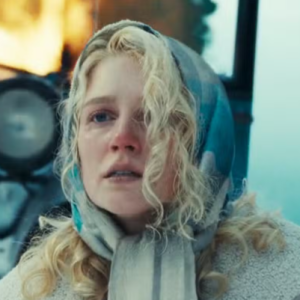
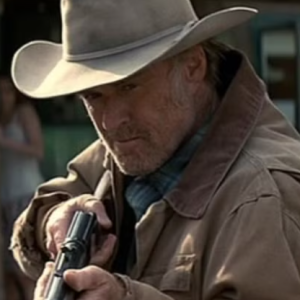
In the sprawling, sun-baked heart of Montana, where the rugged peaks meet the endless plains, the Dutton Ranch stands as both a testament to a vanishing way of life and a constant battleground for its preservation. Paramount Network’s hit series Yellowstone thrives on the brutal beauty of this landscape and the equally untamed spirits of those who call it home. Among the latest additions to this volatile ecosystem, a character whose introduction crackled with raw energy and immediate impact was Teeter. Her arrival on the Dutton Ranch was not merely the hiring of another hand; it was the arrival of a seismic force, a true maverick whose unconventional debut set the stage for a dramatic shift within the bunkhouse and offered a poignant glimpse into the soul of the Yellowstone itself.
The scene of Teeter’s recruitment is quintessential Yellowstone – a blend of blunt practicality, biting humor, and an undercurrent of the primal struggle for survival. Rip Wheeler, the ranch’s formidable enforcer and the steadfast beating heart of the Dutton operation, along with the weathered veteran Lloyd, observed her prowess with a rope. It wasn’t a display of refined technique, but rather a raw, almost feral efficiency. Her targets—wild horses, resisting with every ounce of their untamed spirit—were brought to heel with a speed and ferocity that commanded immediate respect.
“He’s gonna sell, motherfer,” Teeter declared, her voice a guttural rasp, her words an immediate challenge to conventional understanding. The initial confusion between Rip and Lloyd was palpable. “That Spanish?” Lloyd queried, a flicker of doubt crossing his experienced face. Rip, ever the pragmatist, cut through the linguistic uncertainty with an unwavering assessment of her undeniable skill: “I don’t know. I’ll tell you one thing, though. She’s a hand. Ride the hair off a horse, that’s for damn sure.” This immediate recognition of raw talent over social graces or even clear communication is a hallmark of Rip’s character, and a testament to the Dutton ranch’s brutal meritocracy.
The subsequent interaction deepened Teeter’s mystique and cemented her unforgettable persona. Her retort to Rip’s query about where she learned to cowboy – “Man, I’ve been fing balling and dragging since I could bounce. Piss off a rug” – was a verbal grenade. It wasn’t just the profanity, but the unvarnished truth of a life spent in the dirt, mastering the only language that mattered: hard work and grit. Lloyd’s revelation, “That ain’t Spanish. She’s Texian. Texan? That’s gibberish,” followed by Teeter’s explosive reaction to being called “Peter” – “Do I look like my fing name is Peter? You skunk hard motherfer!” – painted a vivid portrait of a character forged in fire. Her subsequent tirade, delivered with a rapid-fire intensity, was a masterpiece of colorful, deeply personal insults, leaving no doubt about her fiery disposition and zero tolerance for perceived disrespect. This woman was not just a hand; she was a force of nature, untamed and unapologetic.
Despite, or perhaps precisely because of, her abrasive exterior, Rip saw something invaluable. “This is the kind of girl that got drove to high school wearing a damn hockey helmet,” he mused, a wry smile playing on his lips. But his final verdict, delivered with absolute conviction, was the defining moment: “She’s going to go through the bunkhouse like wildfire. She’s perfect. Trust me.” Rip’s assessment wasn’t just about her roping skills; it was an understanding of her spirit, her tenacity, and her potential to invigorate (or perhaps ignite) the established, male-dominated bunkhouse dynamic. He recognized in Teeter a kindred, albeit wilder, spirit—someone who understood the unwritten laws of the ranch and would fight for her place within it.
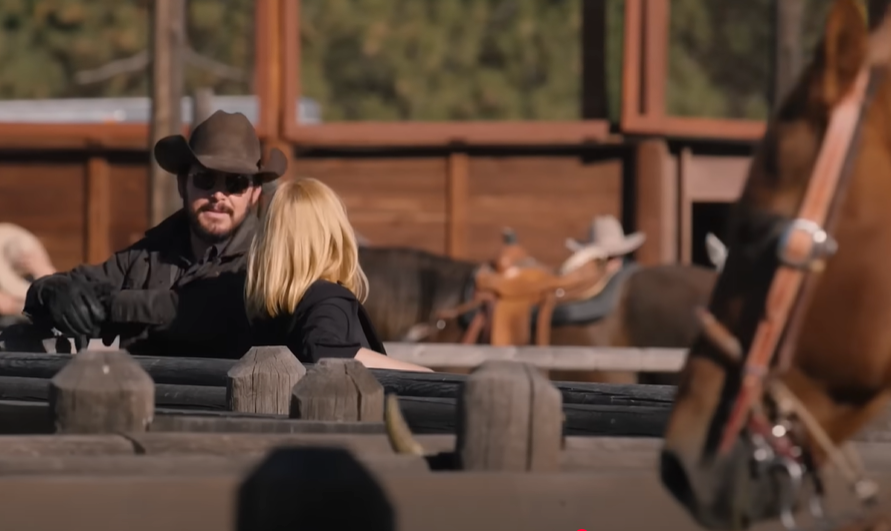
The decision to hire Teeter then led to a classic exchange between Rip and John Dutton, the patriarch whose iron will has shaped the Yellowstone’s destiny. John’s initial skepticism – “No job fair. So hiring cowgirls now?” – reflected his traditionalist viewpoint, deeply rooted in a world where men performed the heavy labor of the ranch. But Rip, ever the astute strategist and loyal son figure, had his reasons. “We’re equal opportunity here at Yellowstone,” he quipped, a sardonic twinkle in his eye, before delivering the punchline that only he could get away with: “Plus, women work twice as hard and eat half as much.”
This line, while delivered with Rip’s characteristic gruff humor, also subtly challenged John’s ingrained perceptions, showcasing Rip’s pragmatic vision for the ranch’s future. It was a moment that underscored their unique relationship—a blend of father-son affection, mutual respect, and an unspoken understanding that allowed Rip to push boundaries John might otherwise resist. John’s wry reply, “You’re a real Renaissance man, you know that?” and Rip’s playful warning, “Don’t tell anybody now,” spoke volumes about their deep bond and the rare moments of levity that punctuate the relentless struggle of the Duttons.
Beyond the immediate hiring, the episode wove in other crucial threads, illustrating the broader pressures and emotional landscapes within the Dutton family. Beth Dutton, the family’s fierce and fiercely loyal daughter, found herself grappling with her father’s deliberate inaccessibility. Her call to John, who was “up at summer camp with everyone else” (a euphemism for the annual branding trip, a sacred and grueling tradition), revealed a deeper anxiety. John’s silence, “by design,” wasn’t just about avoiding calls; it was a reflection of his constant battle against the inevitable tide of change.
“Nothing’s wrong. It’s just life always changing. The one thing he doesn’t want it to do,” John mused, his voice carrying the weight of a man burdened by the preservation of a legacy. This line encapsulates John Dutton’s core conflict throughout the series: his desperate, often violent, struggle to hold onto a world that is relentlessly evolving. Beth, with her profound understanding of her father’s soul, sensed his inner turmoil, her concern palpable even through the phone line. Their dynamic, a complex tapestry of love, conflict, and shared purpose, is a cornerstone of Yellowstone, reminding viewers that beneath the ranch’s tough exterior lie deep, often painful, family ties.
And finally, the episode brought us back to the enduring, passionate, and deeply intertwined relationship between Rip and Beth. The exchange, “We’re well past playing hard to get, don’t you think, Beth? You and me, we’re never past playing hard to get, baby,” perfectly encapsulated their unique, fiery romance. Their bond is not merely a subplot; it is a central pillar of the Yellowstone narrative, a testament to unwavering loyalty and a love forged in the crucible of shared pain and fierce devotion to the Dutton way. Even amidst the chaos of a new, wild hand joining the bunkhouse, the unbreakable connection between Rip and Beth serves as a constant, powerful undercurrent.
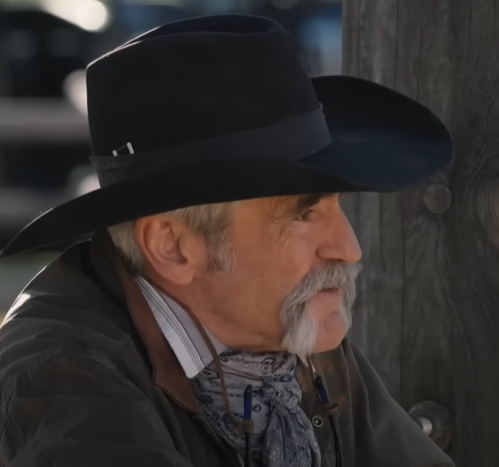
Teeter’s first day on the Dutton Ranch was more than just a job interview; it was a declaration. Her untamed spirit, her refusal to conform, and her sheer, undeniable skill made her an instant, memorable addition to the Yellowstone family. Her presence foreshadowed a shake-up in the bunkhouse hierarchy and promised a fresh dynamic that would challenge its established norms. As Yellowstone continues to explore themes of tradition, survival, and the relentless fight for a way of life, Teeter embodies the raw, indomitable spirit required to thrive in its harsh yet captivating world. Her arrival was a stark reminder that on the Dutton Ranch, character isn’t defined by politeness or pedigree, but by the grit in your boots and the fire in your soul. And for Teeter, both burned brighter than a Montana wildfire.