Holby City, renowned for its gripping medical dramas, delivered one of its most harrowing and timely episodes yet with “Supply And Demand,” a pulse-pounding narrative that saw the hospital engulfed by an unprecedented drug crisis. As a deadly new strain of heroin swept through the community, turning the emergency department into a war zone, the episode masterfully explored themes of addiction, systemic overload, and the sheer grit of healthcare professionals fighting a seemingly unwinnable battle. The return of Dr. Stevie Nash, thrust back into the fray amidst the chaos, provided a poignant human anchor to the escalating horror.
The episode opens with an immediate sense of urgency. The calm before the storm is non-existent; instead, we are plunged directly into the maelstrom. Senior staff, including a key colleague, inform a newly returning Dr. Stevie Nash of a grave development: a particularly virulent strain of heroin is circulating. “It’s chaos in here,” is the chilling welcome Stevie receives, setting the tone for what is to follow. Police intelligence points to a seized shipment from weeks prior, suggesting desperate dealers are “lacing their remaining supply” – a terrifying gamble with human lives. Initial suspicions for the lacing agents point to potent synthetic opioids like nitazenes and fentanyl, known for their extreme potency and respiratory depressant effects. Patients are already requiring far more naloxone – the opioid overdose reversal medication – than usual, a grim indicator of the drug’s strength. The true horror, however, manifests as patients experience critical respiratory arrest the moment the naloxone’s transient effects wear off, trapping the medical team in a relentless cycle of “running back-to-back infusions.”
Stevie’s return, ostensibly a phased reintroduction, immediately becomes a trial by fire. Her colleague’s protective offer to keep her “right by your side” in resus is less a gentle re-entry and more a desperate measure to bolster dwindling staff in the face of overwhelming demand. The speed at which patients are succumbing is terrifying. We witness frantic scenes of intubation and manual ventilation, an infusion rate exceeding 60% of the initial resuscitation dose highlighting the drug’s stubborn grip on its victims. The air is thick with tension, the constant whir of monitors, and the urgent directives of exhausted doctors.
Beyond the immediate patient care, the systemic cracks begin to show. Ambulance Operations Manager Jan finds herself facing an insurmountable logistical nightmare: “We haven’t got enough available ambulances to keep up with demand.” This immediate bottleneck has a cascading effect, causing the High Dependency Unit (HDU) to overflow and bed capacity across the entire hospital to reach “breaking point.” The crisis escalates to a point where declaring an internal major incident becomes unavoidable. This decision, fraught with implications for resource allocation and staff welfare, is met with initial resistance from the bureaucratic administration, personified by Siobhan. Her reluctance to acknowledge the severity (“We’re not at that point yet?”) is quickly rebuffed by Jan, who tersely asserts, “We’re miles past that point.” The eventual, albeit grudging, agreement to declare the major incident underscores the desperate situation, highlighting the often-strained relationship between frontline clinical staff and hospital management.
Amidst the respiratory crises, a new, deeply disturbing pattern emerges. One patient, admitted for an overdose, begins to bleed internally, an alarming symptom entirely uncharacteristic of opioid toxicity. Stevie, with her sharp clinical eye and innate intuition, becomes fixated on this anomaly. Observing a patient with an encapsulated haematoma around the spleen, showing signs of severe internal bleeding (tachycardic, hypotensive, rigid abdomen), she quickly activates the major haemorrhage protocol. Her mind races, connecting the dots: “What if there’s something else in the heroin that’s causing some of the OD patients to bleed internally?” She recalls another patient who vomited blood, and critically, observes INR results indicating impaired blood clotting.
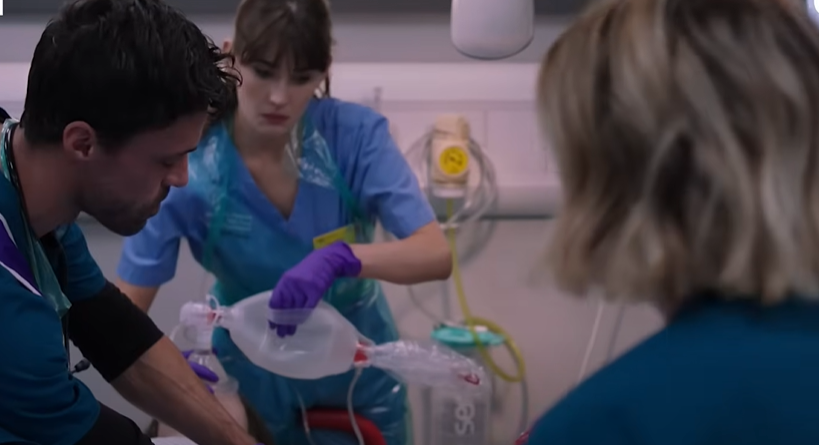
Her theory, however, is met with skepticism, particularly from a junior colleague, Jodie. The dismissive tone, attributing the internal bleeding to “unhealthy lifestyle” and scoffing at the idea that drug users would care about “green juice,” highlights a dangerous preconceived bias that often hinders crucial diagnostic breakthroughs in high-pressure environments. This momentary clash of clinical opinions, though brief, adds a layer of realistic tension to the episode, showcasing how even the most brilliant hunches can initially be sidelined by conventional wisdom or prejudice.
But Stevie, undeterred, pushes for further investigation. Her persistence pays off dramatically. The toxicology report arrives, confirming the presence of nitazenes – but also revealing the true, horrifying culprit behind the internal bleeding: warfarin. The revelation sends a shockwave through the emergency department. Warfarin, commonly known as rat poison and a powerful anticoagulant, had been inexplicably introduced into the illicit drug supply. The horrifying implication is that this lacing, whether accidental or intentional, has transformed an overdose crisis into a full-blown internal haemorrhage nightmare. The discovery not only explains the previously baffling symptoms but also provides a pathway to treatment: vitamin K and 4-factor PCC (prothrombin complex concentrate), both vital in reversing the effects of anticoagulation.
The moment of truth arrives when Jodie is confronted with the undeniable lab results. The terse, almost sheepish admission from Jodie – “I was wrong and you were right” – is a powerful vindication for Stevie. It’s a quiet but significant victory, not just for her diagnostic prowess but for her re-established confidence and authority within the department. The scene, despite the grim context, offers a rare moment of professional satisfaction for Stevie, validating her sharp instincts amidst the chaos. Her well-deserved “I was right” is delivered with a mix of relief and a touch of triumph.
As the episode draws to a close, a fragile sense of calm begins to descend. The correct treatment protocols are in place, the hospital has managed to weather the initial storm. A quiet sense of exhaustion and relief permeates the air. The patient count overnight has dropped, and critically, fewer deaths have occurred. Yet, the final moments serve as a poignant reminder of the relentless nature of their work. A colleague’s hopeful remark about a “quieter day today” is immediately and comically jinxed by Stevie. The arrival of another respiratory arrest patient, immediately following the Chief Exec’s demand for a plan, ensures that the battle, though momentarily won, is far from over.
“Supply And Demand” is a powerful testament to Casualty’s enduring relevance. It’s more than just a medical procedural; it’s a stark mirror reflecting contemporary societal challenges. By delving into the dark world of illicit drug supply and its devastating consequences, the episode not only provided thrilling drama but also shed light on the unsung heroes of the NHS, pushing themselves to the limits in the face of overwhelming odds. Stevie Nash’s journey from a hesitant returnee to a pivotal figure in solving a complex medical mystery underscored the indomitable spirit of those who dedicate their lives to saving others, even when the ‘supply and demand’ of their own resilience is pushed to its absolute breaking point.