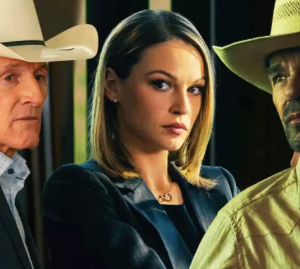
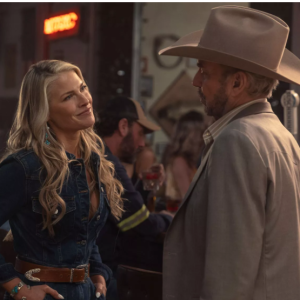
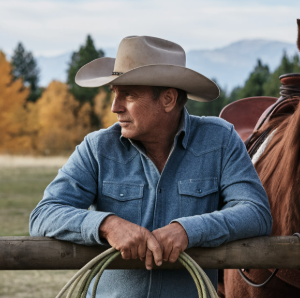
From the scorched plains of Africa to the unforgiving mountains of Montana, Taylor Sheridan’s “1923” has detonated onto screens with an explosive force, pulling viewers into the brutal, beautiful, and profoundly challenging world of the Dutton family’s ancestors. The highly anticipated prequel to “Yellowstone,” this saga chronicles a pivotal generation of the Duttons, showcasing their relentless fight to carve out and protect their empire in a nascent America reeling from war, economic hardship, and the ceaseless march of progress. The first three episodes are not merely an introduction; they are a baptism by fire, drenched in the blood of adversaries, the sweat of desperate labor, and the burgeoning passion of an unexpected romance.
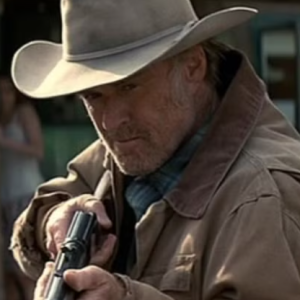
The series immediately plunges us into the heart of the conflict that defines the Dutton legacy: the relentless struggle for land. Patriarch Jacob Dutton (Harrison Ford), a titan of industry and unwavering guardian of his family’s vast cattle ranch, finds himself locked in a deadly game of chess with Banner Creighton (Jerome Flynn), a Scottish immigrant and ambitious sheep herder. Their clash is not merely a dispute over grazing rights; it is a fundamental collision of ideologies. Creighton, representing the desperate, landless masses, articulates their grievance with fiery conviction: “We are all bunched together here, fighting for every blade of grass, while you have a whole mountain range to yourself! You have the land, you have the lease, you have everything!”
Jacob’s response is as stark and unyielding as the Montana landscape itself: “I have what my family fought for. You want to fight me for it too? I didn’t think so. If you wanted more land, you should have leased more.” This exchange sets the stage for the violent escalation that inevitably follows. Sheridan masterfully articulates Jacob’s philosophy on the perpetual human struggle for dominance – a chillingly pragmatic view born from generations of hard-won battles. “Someday you’re gonna run this place and for your son to someday run at too, you gotta understand what this ranch’s greatest enemy is,” Jacob imparts to a young, impressionable John Dutton. “It’s not wolves or droughts or blizzards or Texas fever. It’s other men. Man will choose to take what you built rather than try and build it for himself.” This core belief fuels Jacob’s ruthless resolve, illustrated when he lets a few of Banner’s men escape, not out of mercy, but out of calculation: “I gave those men a chance, ’cause I wanted them to tell the world what happened when they crossed me.” This uncompromising vision of survival, where “Your enemies have gotta be so terrified that their fear is greater than their greed,” paints a grim, yet compelling, portrait of the Duttons’ enduring power.
Miles away, across continents, a different kind of battle rages within Spencer Dutton (Brandon Sklenar), Jacob’s nephew and a veteran haunted by the horrors of the Great War. Spencer hunts man-eating predators in Africa, a dangerous existence that serves as both penance and escape. He is the “American war hero who hunts the man-eaters,” a legend whispered across the land, credited with dispatching the “man-eater of the Kalahari, the man-eater of Sabi and the man-eaters of Tsavo,” though he dismisses the latter as he “was five when they killed the man-eaters of Tsavo.” His life is a stark, solitary pursuit of the edge, a search for the only feeling that can truly stir his numbed soul: “Because dying is the most alive you’ll ever feel.”
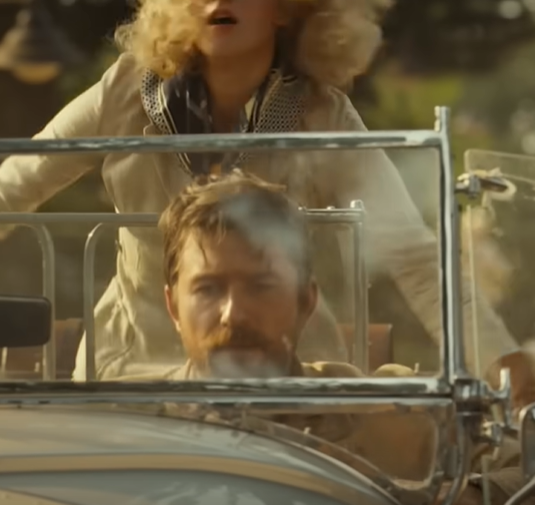
It is into this grim existence that Alexandra (Julia Schlaepfer) bursts, a fiery, intelligent, and fiercely independent British socialite. Drawn to Spencer’s raw intensity, she challenges his isolation with playful audacity and an undeniable spark. “You’re famous in case you were unaware,” she teases, her curiosity piqued by his reputation. Her fascination is not just idle curiosity; it’s a deliberate choice. When asked if she believes everything she hears, she retorts, “Only when I want it to be true.” And what she wants to be true is the romance of it all, a concept Spencer dismisses, yet one that she wholeheartedly embraces. Their whirlwind courtship is a captivating counterpoint to the violence unfolding in Montana. From their first encounter, where Alexandra abandons her fiancé to join Spencer’s perilous journey, to their whimsical discussion about nicknames (“Alexandra’s just too long. Just in general.” “Well, if there’s a lion, don’t even use my name, just say ‘lion.’”) and her immediate, playful demand for a proposal, their chemistry is palpable. Spencer, ever direct, delivers a “demand” rather than a question, and to his surprise, she accepts: “I’ll marry you.” Their love story, blooming amidst the wild beauty and inherent dangers of Africa, offers a fragile beacon of hope and passion in a world defined by struggle.
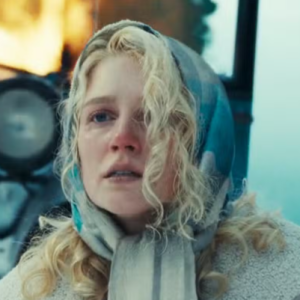
However, the darkness of the era extends beyond the ranch and the jungles. In a searing and emotionally charged storyline, the series unveils the systemic brutality inflicted upon Native American children in government-run boarding schools. Teonna Rainwater (Aminah Nieves), a defiant young girl, endures relentless physical and psychological abuse at the hands of sadistic nuns, notably Sister Mary (Jennifer Ehle). In a chilling scene, Teonna is mercilessly beaten for failing to recall the exact process of rendering tallow and obtaining lye for soap, details from a lecture meant to strip her of her heritage and forcibly assimilate her. “What is from ashes?” “The alkaline.” “Alkali? How do you get alkali?” the ruler smacks, the repetitive sound echoing the relentless cruelty. When she resorts to speaking her Native language, the punishment escalates, a horrific symbol of the colonizers’ attempts to erase indigenous culture: “You will not speak that godless, filth-”
These harrowing scenes serve as a stark reminder of the historical injustices that underpin the American narrative, adding a profound layer of depth and tragedy to the series. Teonna’s resilience, her quiet defiance in the face of unspeakable cruelty, emerges as a powerful testament to the enduring spirit of her people, setting the stage for her own fight for survival and identity.
The narrative threads, though seemingly disparate, converge in a cataclysmic fashion. The escalating conflict between Jacob Dutton and Banner Creighton reaches a bloody crescendo. A meticulously planned ambush orchestrated by Creighton and his enraged men descends upon the Dutton ranch, turning the idyllic landscape into a warzone. The rapid-fire gunshots, the frantic scramble for cover, and the cries of pain culminate in a brutal assault that leaves the Dutton family reeling. John Dutton (Darren Mann) is fatally wounded, a devastating blow that rocks the family to its core. Jacob himself is left gravely injured, his formidable strength shattered, his legacy hanging by a thread. The immediate aftermath is a desperate race against time, as Cara Dutton (Helen Mirren), Jacob’s steadfast wife, frantically tends to his wounds, barking orders amidst the chaos: “Press these against the wounds, it’ll stop the bleeding. Press hard.”
The attack leaves the Duttons decimated and vulnerable, facing an existential threat unlike any before. In his weakened state, Jacob, his voice a ragged whisper, utters the most crucial command of all: “Spencer must come home now. Get him home. Now, get him home.” This desperate plea echoes across the oceans, reaching Spencer in Africa through a grim letter penned by Cara. “Spencer, your brother has been killed. By the time you receive this letter, I suppose your uncle has been killed as well. Your nephew has been wounded. This ranch and your legacy are in peril. War has descended upon this place and your family. Whatever war you fight within yourself must wait. You must come home and fight this one.”
These words, delivered with a somber weight, mark a turning point, not just for Spencer, but for the entire Dutton dynasty. The first three episodes of “1923” masterfully establish a world teetering on the brink, a family fighting for its very existence against external threats and internal demons. The raw portrayal of violence, the tender bloom of an unlikely romance, and the profound historical echoes of struggle and survival combine to create a compelling and utterly unmissable cinematic experience. “1923” is more than just a prequel; it is a powerful, standalone epic that solidifies the Dutton saga as one of television’s most enduring and impactful narratives. The stage is set for a monumental battle, and the audience is left breathless, eagerly anticipating Spencer’s journey home and the fight for the soul of the Yellowstone ranch.