“Casualty,” the BBC’s long-running medical drama, has always been synonymous with high-octane emergencies and deeply human stories. But few episodes have gripped viewers quite like the harrowing ordeal that unfolded recently, an incident that transformed a routine road traffic collision into a desperate race against time. The shocking abduction of baby Tom plunged Holby City into a frantic search, leaving viewers on the edge of their seats, questioning who could commit such a heinous act and why. This isn’t just about treating injuries; it’s about confronting the darkest corners of human desperation, loss, and the lengths to which grief can push an individual, showcasing the profound emotional toll on both victims and the dedicated emergency services.
The Initial Nightmare: A Parent’s Worst Fear Realized
The episode opened with a chilling scene – the cacophony of a car crash, shattered glass, twisted metal, and the heart-wrenching sound of a baby’s cries cutting through the chaos. Paramedics Dixie Dixon and Iain Dean, familiar faces of calm in crisis, arrived on the scene, immediately assessing the damage. Their focus quickly honed in on Claire Huniford, the severely injured driver, trapped amidst the wreckage. Claire’s pleas weren’t for herself, but for her infant son, Tom. “Tom! Where’s Tom?” she gasped, her voice raw with terror, a question that sent a collective shiver down the spine of every viewer. The baby, a mere four months old, was nowhere to be found.
The horrifying realization dawned swiftly: this wasn’t just a crash; it was a crime. The initial search yielded nothing, confirming the paramedics’ gravest fears. An abduction. As the police were called in, the gravity of the situation escalated exponentially. Detective Inspector Collier explained the critical concept of “golden hours” – the crucial first few hours in a child abduction case, where the chances of recovery are highest. Claire’s husband, Peter Huniford, arrived, his face a mask of disbelief and agony as he absorbed the nightmare unfolding before him. The media was alerted, a desperate plea for public assistance launched, transforming a private tragedy into a public crisis. Holby City Hospital released a statement confirming Claire’s stable condition, but the statement was overshadowed by the chilling silence surrounding baby Tom’s whereabouts.
The Unfolding Mystery: Shades of Suspicion and Serendipity
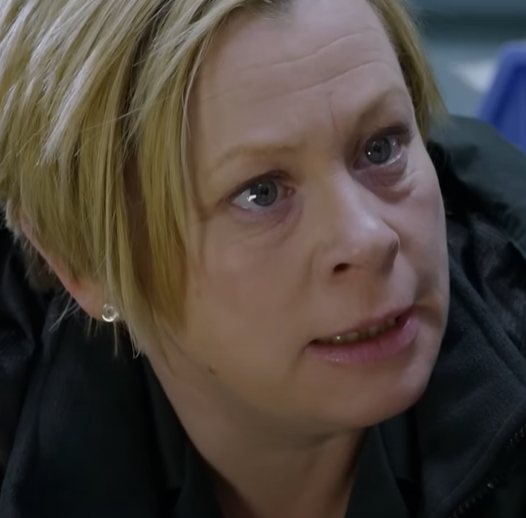
Amidst the frantic search, the narrative artfully wove in seemingly innocuous subplots that would prove crucial. An elderly neighbour, Maeve, appeared, seemingly offering comfort and baked goods. Yet, her presence subtly injected a note of unease. Her sharp, almost accusatory comment about Peter – “Cold eyes. The father! I wouldn’t be surprised if there was more to him than meets the eye” – initially painted him in a suspicious light, diverting attention and adding another layer of complexity to an already tangled web. This momentary misdirection expertly played on audience expectations, showing how quickly suspicion can shift in a crisis.
The plot thickened when Maeve herself suffered an accident, prompting another urgent call for Dixie and Iain. While attending to Maeve, who had fallen, Dixie discovered that Maeve had lost her keys. A search led them to Maeve’s neighbour, Susie, who happened to be at home. It was here, in Susie’s seemingly ordinary house, that the first significant clue surfaced. Dixie, seeking Maeve’s keys, found them on Susie’s coffee table. But more importantly, she found a baby. A beautiful, seemingly well-cared-for baby girl, “Katie,” whom Susie claimed was her own, remarking on her resemblance to her husband.
Iain, however, possessed a sharp intuition that belied his calm demeanour. He noticed a detail that sparked a flicker of doubt: a doctor’s appointment card for a fertility consultant, Dr. Phillips, on Susie’s fridge. Why would a woman who clearly had a baby need to see a fertility specialist? He voiced his concerns to Dixie, who, initially swamped with the deluge of calls related to the abduction, was hesitant to pursue what seemed like a trivial lead. Yet, Iain’s persistence, his insistence that “maybe you should check it out,” proved to be the pivotal turning point, forcing Dixie to consider the impossible.
The Shocking Revelation: A Mother’s Desperate Act
The true horror of the situation unfurled with a gut-wrenching twist. As Dixie pressed the police to investigate the fertility clinic lead, Maeve, recovering in the ambulance, made a chilling observation about Susie’s baby. When asked about Susie’s “Katie,” Maeve’s seemingly innocent reply transformed into a devastating confession: “Poor little mite. What a tragedy.” It was the innocuous detail of the baby being dressed as a girl that finally clicked for Maeve. She had been at Susie’s house. She had seen the baby. And in that moment, she realized the truth. The baby Maeve had seen was not a girl named Katie; it was Tom, dressed differently to conceal his identity. The sheer audacity and tragic simplicity of the disguise sent shockwaves through the emergency team. The missing baby, the subject of a nationwide search, had been right under their noses.

The revelation hit Dixie like a physical blow. Her earlier dismissiveness turned to grim determination. With Maeve’s crucial testimony, the pieces clicked into place. The “Katie” Susie proudly showed off, the fertility clinic appointment, the “cold eyes” comment about Peter – it all twisted into a desperate narrative of a mother’s unimaginable grief. The clock was ticking, and now they knew exactly who had Tom.
The Abductor’s Tragedy: A Cry for Understanding
The chase led Dixie and Iain to a hotel, where Susie had sought refuge with baby Tom. The confrontation was not a typical police standoff; it was a heart-rending exploration of profound human suffering. Dixie, renowned for her empathetic approach, appealed to Susie not as an abductor, but as a woman in pain, attempting to forge a connection through shared humanity.
Susie, cornered and broken, finally revealed the devastating truth that underpinned her desperate act. Her own daughter, Katie, had died just six weeks prior. After 15 years of gruelling IVF cycles, four operations, and a lifetime of yearning, Katie was born prematurely at 23 weeks, so tiny she “fit in the palm of my hand,” only to be lost. Her life had been a cruel cycle of hope and crushing disappointment, culminating in the ultimate heartbreak. In her profound grief, Susie had taken Tom, not out of malice, but from a desperate, fractured maternal instinct, a futile attempt to fill an unfillable void. “I know he’s not mine,” she whispered, tears streaming down her face, “I’m just not ready to give him back.”
Dixie, a veteran of countless tragedies, understood. She had witnessed raw grief in all its forms. She knew this wasn’t an act of evil, but a desperate cry from a woman consumed by loss. “You’ve lost a baby,” Dixie said, her voice gentle yet firm, her eyes meeting Susie’s. “You know what that feels like. I know you’re not a bad person. I know you wouldn’t wish that on anyone.” It was a plea rooted in shared humanity, a moment of profound empathy that transcended the crime. Susie, faced with Dixie’s understanding, and hearing Tom’s cries for his true mother, finally relented, bringing the harrowing ordeal to a fragile close.
A Bittersweet Resolution and Lingering Questions
The safe return of baby Tom was met with a flurry of relief and a media circus outside the hotel. Claire and Peter were reunited with their son, a moment of overwhelming joy after unimaginable anguish. But the episode left a lasting impact, delving far deeper than a simple happy ending. It was a stark reminder of the fragile line between sanity and desperation, and the complex psychological toll of profound loss.
This episode of “Casualty” was a masterclass in dramatic storytelling, balancing the urgency of an emergency with a deeply poignant character study. It forced viewers to confront uncomfortable truths about grief, challenging them to find empathy even in the face of a terrifying crime. The performances were raw and powerful, particularly in Susie’s portrayal, which humanized an act that could easily have been painted in purely villainous strokes. As Holby City returns to its everyday emergencies, the memory of baby Tom’s abduction, and the tragic circumstances that led to it, will undoubtedly linger, a testament to “Casualty”‘s enduring ability to tell stories that are as emotionally resonant as they are dramatically thrilling. It’s a stark reminder that sometimes, the greatest emergencies are not physical, but deeply, tragically human.