Yellowstone Ranch, Montana – As the dust settles on another tumultuous season of Taylor Sheridan’s acclaimed Yellowstone saga, the raw, unvarnished truths laid bare on screen continue to resonate with millions. Beyond the sweeping landscapes and visceral confrontations, the heart of the series lies in its complex characters and the seismic shifts that define their lives. Insights from the cast, often shared in the intimate setting of “Stories from the Bunkhouse,” offer a fascinating glimpse into the creative process and the profound impact of Season 3’s pivotal moments. From the arrival of ominous new threats to the devastating revelation that redefined a family, Yellowstone pushed its boundaries, proving why it remains a television phenomenon.
Season 3 opened with a palpable shift in the familiar rhythm of the Dutton ranch, particularly within the rough-and-tumble bunkhouse. The introduction of Clint and Wade, two shadowy figures whose presence instantly signaled trouble, ratcheted up the tension. The cast vividly recalled the immediate sense of unease these antagonists brought, especially compared to previous adversaries. As one actor remarked, “You meet bad guys in the bar… you know they’re not cool. These guys just have a different tone about ’em because you don’t know definitively how far they’re willing to go. They’re really dark.” This chilling uncertainty was compounded by actor Boots Southerland’s portrayal of Wade, a character so inherently “colorful” that even Yellowstone veteran Forrie J. Smith (Lloyd) reportedly vouched for his genuine, unsettling charisma. Their initial fence-line confrontation with the ranch hands, punctuated by Wade’s menacing threats, served as an immediate harbinger of the escalating violence to come, necessitating the swift and decisive intervention of Rip Wheeler.
Rip, the loyal, formidable enforcer of the Dutton empire, remains the undisputed alpha of the bunkhouse. His very presence commands respect, a dynamic acutely felt by his fellow actors. One cast member comically described his conscious effort to lower his voice around Cole Hauser, who embodies Rip, “just sort of legitimize myself in his eyes.” This humorous anecdote underscores the inherent power dynamic Hauser brings to the character, a quiet, almost primal authority that demands deference. Rip’s position at the “top of the pecking order” is not merely narrative; it’s a living, breathing force on set. The playful confession, “I mean all the (beep) that Cole Hauser does, I can do better than him. But you learn over time to pay him the respect of pretending you can,” speaks volumes about the palpable intensity Cole Hauser brings to Rip, making him both revered and feared, a protector who also casts a long, formidable shadow.
Beyond the intricate character dynamics, Yellowstone has consistently delivered breathtaking cinematic moments that blur the lines between television and film. Season 3 raised the bar with an unprecedented sequence: hundreds of horses being run across vast, untouched landscapes. The actors themselves expressed awe at the sheer scale and authenticity of the scene, highlighting that it wasn’t a product of special effects. “I don’t think it’s been captured on film that many horses being run… at all. In that kind of ‘scape,” one actor reflected. The production’s commitment to capturing genuine, practical effects, with actors performing their own daring stunts, is a testament to Sheridan’s vision. Navigating an environment with hundreds of thundering horses, a distinct challenge compared to herding cattle, tested the cast’s equestrian skills and reaffirmed the show’s dedication to gritty realism. This “phenomenal” experience, as described by the cast, elevated the series’ already stunning visual signature.
The bunkhouse itself underwent a fascinating transformation with the arrival of Mia (Eden Brolin) and Teeter (Jennifer Landon), two barrel racers whose wild, uninhibited energy shook the masculine equilibrium. For Eden Brolin, joining the show was a unique experience as a self-professed fan. “I got to go onto these sets that I had been only seeing on TV,” she shared, recalling the surreal experience of stepping into the iconic Yellowstone barn and bunkhouse. Both actresses described straightforward audition processes, with Jennifer Landon initially auditioning for Teeter and securing the role of Mia later, before ultimately embodying the inimitable Teeter.
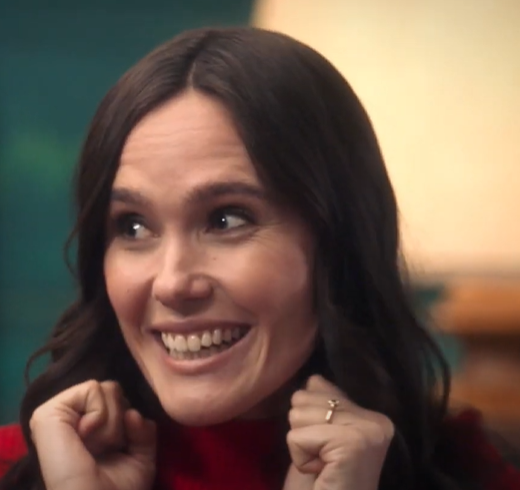
Their characters brought not only fresh dynamics but also budding romances. Teeter’s burgeoning connection with Colby introduced a surprisingly tender, humorous element amidst the ranch’s usual stoicism. Mia’s relationship with Jimmy, however, was framed with a comedic, “profound disappointment” by Eden Brolin, a lighthearted nod to the character’s less-than-ideal romantic entanglement. The barrel racers’ “wild, carefree, irreverent energy” juxtaposed against the serious, disciplined bunkhouse culture created a compelling friction. As one actor aptly put it, it “makes for a really interesting dynamic.” The cast further illuminated the implied culture behind barrel racers, describing them as “rock stars” of the rodeo circuit, living a transient life of “bad judgment” and seeking fun wherever they could – even in a hot-bunking ranch house. This authenticity, rooted in Jennifer Landon’s own Texas upbringing and familiarity with ranch life, added another layer of lived experience to the roles.
Jimmy Hurdstrom, the formerly hapless greenhorn, continued his evolution in Season 3, facing physical and emotional challenges that pushed him to his limits. A highlight for the cast was witnessing Jimmy’s growth, particularly in his rodeo scenes. Despite initial nervousness about riding, actor Jefferson White’s commitment paid off, culminating in impressive flag-bearing sequences that left his colleagues in awe. White himself recounted the pressure of “getting that light” and performing immediately, a testament to the fast-paced, high-stakes nature of filming Yellowstone. His character’s journey of self-discovery also led to more vulnerable, and at times hilariously uncomfortable, moments, such as the infamous hospital scene questioning his “pecker.” The cast playfully revealed that the promise of such “naughty scenes,” including a memorable glimpse of White’s bare posterior, was a running joke for accepting their roles – a testament to the show’s audacious storytelling and the cast’s dedication to pushing boundaries.
Perhaps the most impactful revelation of Season 3, however, centered on the long-simmering, vitriolic hatred between Beth and Jamie Dutton. For three seasons, their bitter animosity had been a dark cloud over the Dutton family, leaving audiences to wonder what unspeakable act could justify Beth’s relentless torment. The cast openly discussed Taylor Sheridan’s delicate tightrope walk in crafting this plot point: “The hardest part for Taylor in that was to pick something that you could understand the level of the vitriol that she has. But also that he wouldn’t be killed by John Dutton.” The reveal – that Jamie, in an attempt to protect the family and the “brand,” had consented to a hysterectomy during Beth’s abortion, rendering her infertile – was nothing short of devastating.
This gut-wrenching truth profoundly recontextualized their entire relationship. As one cast member observed, “when we finally read that script… all of a sudden it all just clicked. It humanizes Beth.” No longer merely the “angry one,” Beth’s character gained immense depth, her fierce exterior revealed as a shield against unimaginable pain. Kelly Reilly’s performance, already lauded for its complexity, resonated with even greater poignancy with this newfound context. The revelation also shifted perceptions of Jamie. Previously seen as a weak, manipulative antagonist, the audience suddenly confronted his own “shame and guilt” – a boy who made a terrible, irreversible decision, believing he was acting for the greater good. His poignant plea, “If hating me keeps you from hating yourself, I’ll be there for you, Beth,” took on a new, heartbreaking significance.
The conflict between protecting “the family” and “the brand” at the cost of individual lives and personal integrity emerged as a central, tragic theme. Jamie’s actions, however misguided, stemmed from this flawed Dutton philosophy. The revelation allowed viewers to revisit past confrontations, understanding the deeper emotional currents driving their arguments and the profound, unacknowledged trauma they both carried. “You want to go back and revisit these moments. This is what they were both fighting against and fighting for,” a cast member noted, highlighting the nuanced layers the twist brought. Beth’s cutting indictment, “I love how people think that word [family] entitles them to absolution from the people who’s lives they ruin,” perfectly encapsulated the personal cost of their family’s ruthless adherence to power.
Season 3 of Yellowstone was a masterclass in deepening character arcs and delivering shattering emotional blows. Through gripping new threats, the raw beauty of its action sequences, and the seismic personal revelations that redefined its core relationships, the series continued to prove its exceptional storytelling prowess. As the Dutton family navigates a future forever altered by these truths, the echoes of Season 3’s most impactful moments will undoubtedly resonate, promising even more dramatic and engaging chapters ahead.