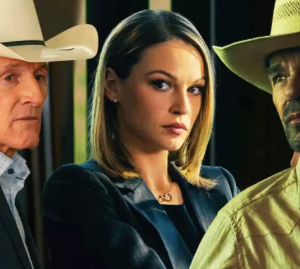
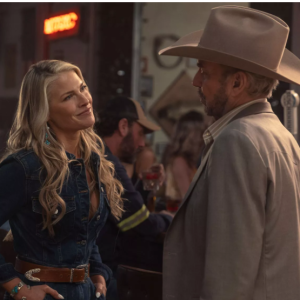
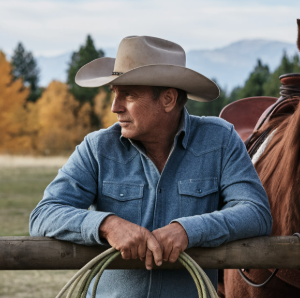
In the demanding and often unforgiving landscape of Hollywood, few actors are willing to risk their careers for deeply held personal convictions. Yet, Neal McDonough, recognized for his intense portrayal of Malcolm Beck in the hit series Yellowstone, recently revealed the extraordinary price he paid for upholding a profound personal boundary: his refusal of on-screen kisses with anyone other than his wife. This decision, rooted in a commitment to his marriage, led to a dramatic and financially devastating period where the industry “turned on him,” leaving him jobless and stripped of his professional identity.
McDonough’s candid revelation emerged during an interview on the Nothing Left Unsaid podcast, where the veteran actor, now 59, delved into his marriage to Ruve McDonough and how it profoundly influenced his professional life. “I’d always had in my contracts that I wouldn’t kiss another woman on screen,” he disclosed to the podcast hosts. This wasn’t a demand imposed by his wife, Ruve, whom he married in 2003 and with whom he shares five children; it was a personal code he felt compelled to uphold. “My wife didn’t have any problem with it – it was me, really, who had a problem with it,” he clarified, emphasizing the deeply personal nature of his boundary.
Despite the clarity of his stance and his unwavering commitment to his craft, Hollywood, it seemed, was ill-equipped to accommodate such a unique ethical stance. “When I wouldn’t do it… they couldn’t understand,” McDonough recounted. The repercussions were immediate and severe. “Hollywood just completely turned on me, and they wouldn’t let me be part of the show anymore.” This was a comprehensive professional exile. For two grueling years, McDonough found himself virtually unemployable. The actor described this time as a period where he “lost everything you could possibly imagine.” The losses weren’t merely financial or material; they extended to his very essence. “Not just houses [and] material things, but your swagger, your cool, who you are, your identity – everything,” he profoundly stated. For a lifelong actor, the void left by the absence of work was immense. “My identity was an actor, and a really good one,” he reflected, highlighting the profound psychological toll of being denied the opportunity to practice his profession. This period of enforced idleness plunged him into a “big, ugly tailspin,” shaking his self-confidence and leaving his purpose adrift.
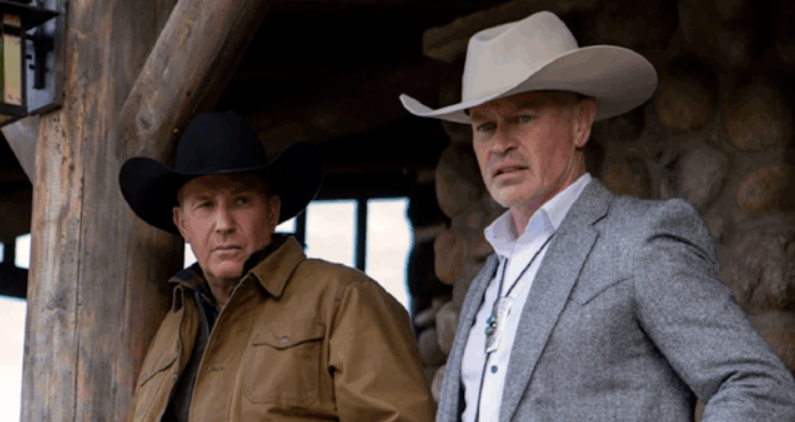
Against this backdrop of personal and professional turmoil, McDonough’s impactful role as Malcolm Beck in Yellowstone materialized. Starring in six episodes of Yellowstone’s second season in 2019, including pivotal installments, McDonough embodied one of the most formidable antagonists the Dutton family has ever faced. Malcolm Beck, along with his brother Teal, represented a new breed of ruthless, corporatized villainy, aiming to seize control of the Dutton ranch through any means necessary. His chilling portrayal of a calculating, morally bankrupt businessman, operating outside conventional law and order, captivated audiences and significantly escalated the stakes for John Dutton and his family. The intensity and visceral nature of McDonough’s performance as Beck cemented him as a memorable presence, despite his brief tenure.
The irony of an actor like McDonough, who meticulously upholds personal integrity, portraying a character as morally devoid as Malcolm Beck in Yellowstone is striking. The show itself is a sprawling saga rooted in themes of family loyalty, tradition, and the constant struggle to preserve a way of life against external forces. The Duttons, for all their flaws, are driven by an unwavering commitment to their legacy. McDonough’s personal battle for integrity, though entirely separate from the fictional narratives of Yellowstone, echoes the underlying theme of fighting to preserve one’s core values against a powerful, demanding world. While the Duttons battle land developers and rival ranchers, McDonough battled the unspoken expectations and pressures of the entertainment industry. Both narratives underscore the cost of standing firm on principles when facing overwhelming opposition.
Hollywood often operates under unique conventions, particularly regarding intimate scenes. Actors are frequently expected to transcend personal boundaries for the sake of artistic authenticity, and the refusal to do so can be perceived as unprofessional or a hindrance to production. McDonough’s experience underscores the immense pressure on performers to conform to industry norms, regardless of individual moral or religious convictions. His decision, while deeply personal, became a professional crucible, testing his resolve and demonstrating the industry’s often inflexible approach to non-conformity. In a world where personal and professional lines often blur, McDonough stood as an anomaly, choosing his vows over potential stardom.
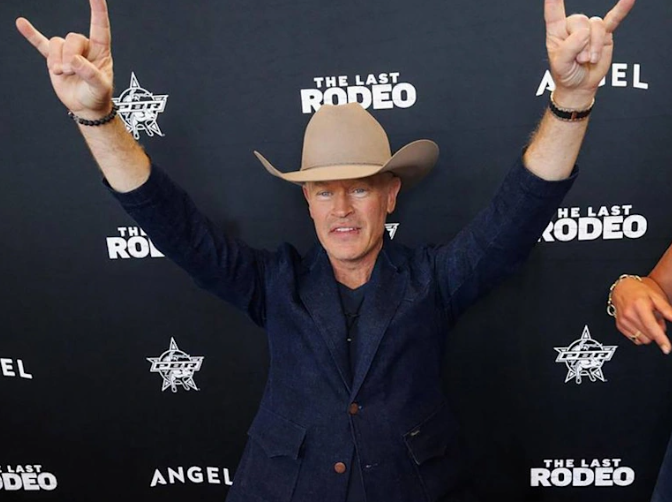
Despite the severe setback, McDonough’s talent and resilience eventually allowed him to navigate back into the industry. His career boasts an impressive filmography beyond Yellowstone, including roles in Star Trek: First Contact, Red 2, and Guns & Moses. He also delivered a compelling performance as Lynn ‘Buck’ Compton in HBO’s Band of Brothers, further showcasing his versatility. More recently, McDonough has continued acting and ventured into new creative territories, taking on the role of Joe Wainwright in The Last Rodeo, where he also received a writing credit. Significantly, his wife, Ruve, starred alongside him in the movie, a testament to their enduring partnership and the strength of the bond that, ironically, became a flashpoint in his career.
Neal McDonough’s journey serves as a powerful testament to the enduring human spirit and the profound cost of unwavering conviction. Born in Boston, with his South African-born wife having a background in modeling, their shared life became the foundation for a stand few in Hollywood would dare to take. His story transcends the entertainment industry, resonating as a universal narrative about integrity, sacrifice, and the often-unseen battles individuals face when their personal values clash with professional demands. While his time as Malcolm Beck terrorized the Duttons on screen, off screen, Neal McDonough fought a different battle, one that ultimately reinforced his identity not just as a “really good actor,” but as a man of profound principle, demonstrating that true success is measured not by what one gains, but by what one refuses to compromise.