Since its explosive debut, Yellowstone has captivated audiences worldwide, transforming the rugged landscapes of Montana into a battleground for land, legacy, and survival. More than just a neo-western, the Paramount Network phenomenon has etched itself into the cultural zeitgeist through its raw, often brutal, and deeply personal moments that define the Dutton family’s relentless fight to preserve their empire. From tense confrontations with encroaching adversaries to the visceral bonds forged in the fires of loyalty and violence, these fan-favorite scenes encapsulate the very essence of what makes Yellowstone an undeniable powerhouse.
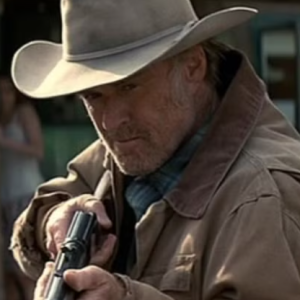
At the heart of the Yellowstone saga lies John Dutton’s unwavering, almost primal, connection to his land. One of the series’ most iconic early confrontations sees John, patriarch of the largest ranch in the United States, facing off against encroaching trespassers. With a quiet, simmering fury, he surveys the damaged fence, a symbol of violated boundaries. The trespassers, seemingly oblivious to the gravity of their actions, are met with John’s chilling declaration: “You see that fence? That’s mine. That fing fence down there? That’s mine too. Everything this side of that mountain, all the way over to here, mine too. You’re trespassing.” When one of the men, through an interpreter, suggests it’s “wrong for one man to own all this” and that he “should share it with all the people,” John’s response becomes the Dutton family credo: “Yeah, this is America. We don’t share land.” This exchange isn’t merely about property; it’s a foundational statement of the Dutton philosophy, a stark reminder that their claim to this vast empire is absolute, earned through generations of blood, sweat, and a willingness to defend it by any means necessary. It sets the stage for every subsequent conflict, underscoring the relentless fight for preservation against a world eager to dismantle their heritage.
The defense of this land often comes at a steep price, demanding actions that push the boundaries of legality and morality. Rip Wheeler, John’s loyal enforcer and the Yellowstone’s unwavering protector, is central to these grim realities. In a chilling post-mortem scene, Rip stands with John, meticulously examining the site where bodies have been found. The sheriff’s presence looms, a subtle yet potent threat of accountability. Rip calmly, almost casually, attributes the deaths to self-defense, a narrative instantly accepted and defended by John, despite the obvious discrepancies. “I have no idea why you wouldn’t want to go ahead and disguise that,” Rip asserts with a straight face, his loyalty unwavering, his composure unsettling. This moment, showcasing the family’s concerted effort to obscure the truth and protect their own, vividly illustrates the deep, often dark, bond between John and Rip. It’s a testament to Rip’s absolute devotion, his willingness to do whatever is necessary to keep the ranch, and its secrets, intact. The sheriff’s grudging acceptance, laced with thinly veiled suspicion, (“I just pulled two dead bodies out of that canyon and I ain’t taking your muscle’s word about what happened”) highlights the fragile truce between the Duttons and the law, a tension that constantly simmers beneath the surface.
The external pressures on the Yellowstone are relentless, manifesting in the ambitious schemes of developers like Dan Jenkins and the sovereign aspirations of Thomas Rainwater, Chief of the Broken Rock Indian Reservation. A pivotal moment of shifting alliances occurs when Jenkins, reeling from the mysterious slaughter of his cattle, confronts the Duttons. He initially blames them, only to discover the insidious hand of the Beck Brothers, a far more sinister threat. His desperate plea to John, “I didn’t kill your fing cattle. The Beck Brothers did it… they did it ’cause you’re building the biggest fing casino outside of Las Vegas right up against my goddamn fence,” signals a reluctant truce. Jenkins recognizes the existential threat the Becks pose, leading to the formation of an unlikely, pragmatic alliance between him, John, and eventually, Rainwater. This intricate dance of power and survival underscores the volatile political landscape surrounding the ranch, where yesterday’s enemies become today’s uneasy partners in the face of a common, greater evil. It’s a reminder that on Yellowstone, survival often demands the most uncomfortable of bedfellows.
No character embodies the Dutton family’s fierce, unyielding spirit quite like Beth Dutton. Her confrontations are legendary, and one particularly memorable instance sees her defending her sister-in-law, Monica, and Monica’s son, Tate, from a predatory store clerk. When the clerk attempts to intimidate Monica, accusing her of shoplifting, Beth steps in, a force of nature. “I went to high school with you,” Beth declares, her voice laced with venom, “and you, you babysat her husband. On her driver’s license, her last name was Long. I doubt that’s gonna save you, buddy.” This moment, charged with Beth’s explosive rage and her unwavering protectiveness of her family, quickly escalates. She verbally eviscerates the clerk, reminding her of a humiliating past (“I remember when you gave out hand jobs for lunch money, Veronica!”) before ultimately ensuring Monica and Tate’s freedom and leaving a trail of shattered dignity in her wake. Beth’s volatile nature is a double-edged sword; while it frequently leads her into trouble, it also serves as an impenetrable shield for those she loves, showcasing her as both a destructive force and a fiercely loyal guardian.
Rip Wheeler’s interactions with outsiders frequently escalate into classic Yellowstone confrontations, none more illustrative than his encounter with tourists on what they mistakenly believe to be National Park land. When a “pink-haired hick” woman challenges his authority, dismissing his badge as “livestock agent” and scoffing at the “Dutton Ranch” sign, Rip’s patience, always thin, snaps. “That badge says livestock agent, that’s right… you got a problem, bh?” he growls, escalating the situation from a verbal spat to a primal display of dominance. The tension is palpable as the tourists, initially defiant, slowly realize the true nature of the man before them. Rip’s quiet, menacing question, “Which one of these fers is the boss of you?” followed by his demand for the perceived leader to “get up,” solidifies his authority. “I’m gonna give you one last chance,” Rip states, his voice low and dangerous. “You leave now, or you’ll never leave. I’ll bury you where you fing stand.” This scene perfectly encapsulates the inherent tension between the traditional, fiercely private world of the ranch and the encroaching modern world of tourism and perceived public access. It’s a stark reminder that on the Yellowstone, respect is earned, often through intimidation, and boundaries are absolute.
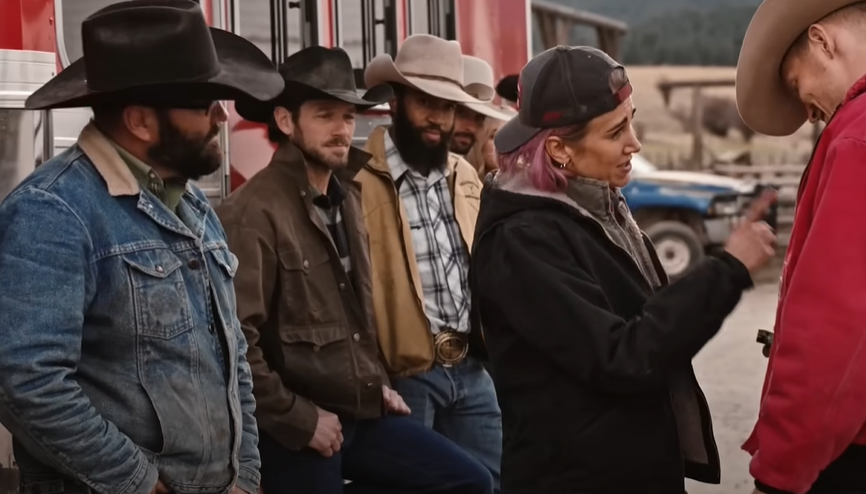
Beyond the high-stakes battles for land and survival, Yellowstone offers poignant glimpses into the unique camaraderie and rugged charm of the bunkhouse, a world governed by its own code and traditions. Moments of philosophical reflection, often laced with dry wit, provide essential character depth. The cowboys’ discussion about “Carrie Kelly Spurs” and “Bob May saddles” (“Cool s ain’t cheap and cheap s ain’t cool”) highlights their dedication to authentic cowboy gear, revealing their pride in their craft and culture. The lighthearted banter around music, particularly the choice of a single song for a desert island scenario, offers a rare moment of levity amidst the constant threat of violence. Lloyd’s profound declaration that he’d choose Sturgill Simpson’s “Turtles All the Way Down,” and “lay buck ass naked on the sand, listen to that song, pray the rescue boat never finds me,” speaks to the soulful, reflective side of these hardened men. These seemingly small moments are crucial, providing a humanizing counterpoint to the relentless drama and showcasing the rich, nuanced lives of the men who work the Yellowstone.
The journey of Jimmy Hurdstram, from a hapless, accident-prone ranch hand to a burgeoning cowboy, is a testament to the Yellowstone’s transformative power and John Dutton’s complex mentorship. After Jimmy is repeatedly bucked off a horse, prompting concerns about the horse’s suitability, John makes a surprising decision. Instead of sending the animal to the slaughterhouse, John proclaims, “He bucked hard enough for me,” revealing a rare moment of empathy and a desire to give both the horse and, by extension, Jimmy, a chance. Later, when Jimmy prepares to leave for Texas, John offers him heartfelt advice, a blend of wisdom and gruff affection. “You always have a place here, all right?” John tells him, cementing Jimmy’s place within the Yellowstone family. The emotional farewells from Rip (“Cowboys don’t say goodbye, they say see you later, ’til we’re in that fing dirt. We say goodbyes then.”) and Lloyd (“Don’t ever hit me like you hit her”), signify the deep bonds Jimmy has forged. Jimmy’s departure, marked by poignant goodbyes and the promise of a future, symbolizes growth, the cyclical nature of life on the ranch, and the enduring influence of the Duttons, even on those who eventually leave their direct employ.
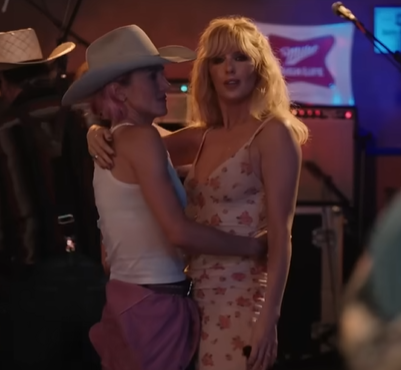
And then there’s Beth Dutton, whose fiery spirit often lands her in the eye of a storm she herself creates. In a chaotic bar fight, Beth springs to Lloyd’s defense, escalating an already tense situation into full-blown pandemonium. When a woman gets too close, Beth retaliates with a brutal bottle to the head, showcasing her unbridled rage and willingness to engage in extreme violence to protect her own. The subsequent arrest, despite Beth’s defiant posture and the sheriff’s obvious reluctance (“It’s your problem now”), is a stark reminder that even the Duttons are not entirely above the law, especially when their actions spill beyond the ranch’s boundaries. “You have the right to remain silent…” the officer begins, only for Beth to retort with a venomous “You fing kidding me?” Her defiant, unrepentant glare as she’s led away (“I hope you die in there, you fing s!”) perfectly encapsulates her unyielding, unapologetic nature, leaving a trail of destruction and consequences in her wake. This moment solidifies Beth’s reputation as a force to be reckoned with, albeit one whose actions frequently invite trouble.
These meticulously crafted scenes, spanning fierce land disputes to intimate bunkhouse moments and explosive displays of loyalty, are why Yellowstone resonates so deeply with its audience. They explore themes of family loyalty, the corrupting influence of power, and the enduring, often brutal, beauty of the American West. As Yellowstone continues to dominate the cultural landscape, these fan-favorite moments serve as potent reminders of why the Duttons’ saga remains so compelling, a visceral journey into the heart of a family fighting to preserve its legacy against all odds.