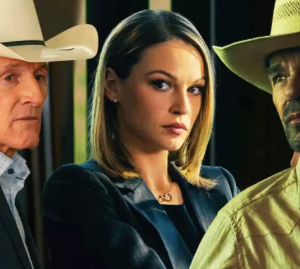
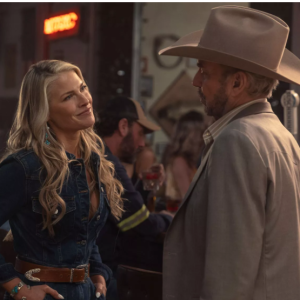
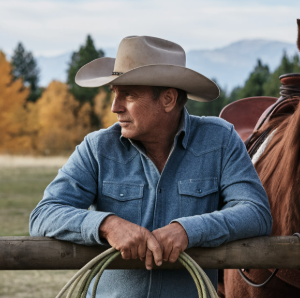
The critically acclaimed series Yellowstone has captivated audiences with its sprawling Western drama, intricate family dynamics, and the relentless struggle for power and land. At its heart, the show explores the complexities of loyalty, legacy, and the brutal realities of maintaining a vast ranching empire in modern Montana. While much of its success is attributed to compelling storytelling and nuanced performances, a significant part of the viewer experience revolves around the deeply polarizing characters who evoke strong reactions – from fervent admiration to outright frustration. For every fan favorite like Rip Wheeler, there exists a character whose actions or development have left audiences scratching their heads or, more often, openly annoyed. This exploration delves into some of Yellowstone’s most debated personalities, examining why they sometimes grate on viewers while simultaneously remaining integral to the show’s dramatic fabric.
Perhaps no character embodies this love-to-hate dynamic more than the patriarch himself, John Dutton III. Initially presented as a stoic, honorable figure fighting to preserve his family’s legacy, John’s character arc has seen him descend into increasingly infuriating territory for many viewers. Brilliant portrayed by Kevin Costner, John often masks his true nature behind a veneer of pseudo-nostalgia and pride for the ranch. However, his actions frequently expose a cruel selfishness, a stubborn refusal to adapt, and a willingness to endanger his own family for the sake of his land. He consistently mistreats his children, particularly his adopted son Jamie, and often justifies his morally ambiguous decisions with a self-righteousness that becomes increasingly difficult to tolerate. John’s inability or unwillingness to truly redeem himself, instead seemingly worsening throughout the seasons, has transformed him from a fan favorite into a source of constant irritation for many, even as his struggle remains the central pillar of the narrative. His hypocritical stance on morality and his relentless pursuit of power, often at the expense of genuine human connection, highlight the tragic flaws within the Dutton dynasty he so desperately tries to protect.
Beth Dutton, John’s only daughter and wife to Rip Wheeler, is another character who lives in the extremes of audience perception. She is undeniably a morally ambiguous figure, eliciting either intense love or profound hate. Beth’s brand of chaos is both her signature and her most frustrating trait. Her over-the-top insults, manipulative schemes, and unbridled aggression often push the boundaries of what is dramatically acceptable, leading to moments that are genuinely difficult to watch. Yet, paradoxically, the series would feel undeniably empty without her incendiary presence. Her growth throughout the seasons, though often sporadic, reveals layers of deep-seated trauma and fierce loyalty. While her methods are often deplorable, her actions are frequently driven by an unwavering devotion to her father and the ranch, and a profound, albeit twisted, love for those within her inner circle. Her sharp wit, brutal honesty, and unexpected moments of vulnerability are crucial counterpoints to her destructive tendencies, making her a frustrating yet utterly indispensable force within the Yellowstone universe.
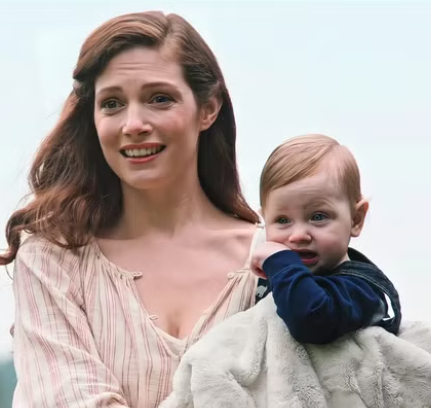
Jamie Dutton, John’s adopted son and the family’s lawyer and political figure, represents perhaps the most frustrating character development in the series. Jamie’s journey could have been a compelling exploration of a character pushed to villainy by circumstance and a father’s relentless disapproval. Instead, his arc has been widely criticized for being convoluted and uncommitted. Jamie perpetually appears as a pathetic figure burdened by profound daddy issues, oscillating between desperately seeking his father’s approval and rebelling against him, never fully committing to either redemption or outright villainy. His storylines, tangled with ex-girlfriends, a rediscovered biological father, and political ambitions, often feel muddled, preventing him from evolving into either a fleshed-out antagonist or a sympathetic anti-hero. This uncommitted portrayal leaves audiences with a character who perpetually wallows in his own misery and poor decisions, rather than one who inspires either fear or empathy.
Monica Long-Dutton, Kayce’s wife, is arguably one of the most universally disliked characters. Often perceived as whiny, overly intense, and a disruptive force to the traditional Western dynamic, Monica’s storylines frequently diverge from the ranching shenanigans that many viewers tune in for. As she pursues her own path as a professor and explores a life beyond the Dutton family, her narrative often feels at odds with the show’s core appeal. While her perspective offers a crucial moral counterpoint to the Duttons’ ruthlessness, and her struggles highlight the clash between Native American heritage and settler-colonialism, her perpetual state of distress and her often-passive aggressive confrontations with ranch life have made her a consistent source of viewer frustration. Her reluctance to fully embrace or understand the Dutton world, despite being married into it, often positions her as an outsider whose complaints, while sometimes valid, become repetitive.
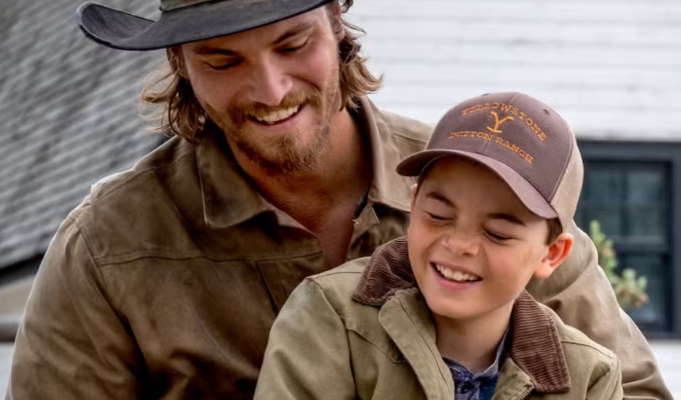
Beyond the core family, several peripheral characters have also drawn significant ire. Tate Dutton, Kayce and Monica’s only son and John Dutton’s sole grandson, has been criticized for being underdeveloped, functioning more as a plot device than a fully realized character. Despite his critical role as the Dutton legacy’s sole male heir, Tate rarely demonstrates agency or a developed personality beyond serving as a catalyst for teary-eyed scenes designed to show the “soft side” of John or Kayce. His lack of personal friends or interests outside the immediate family, and his seemingly indifferent reaction to significant family events, reduce him to little more than a prop, leaving audiences frustrated by the missed opportunity for a meaningful future generation storyline.
Summer Higgins, an environmental activist introduced in the fourth season, quickly overstayed her welcome for many viewers. Her portrayal as an activist protesting the Duttons’ industrialized farming practices was widely seen as a poor representation of environmental advocacy, lacking intelligence, common sense, and moral strength. Her character often seemed to exist solely to highlight John Dutton’s pragmatism, with her arguments often coming across as naive or ill-informed. Her eventual romantic involvement with John and her petty feud with Beth felt contrived, serving primarily as a mechanism for drama rather than contributing meaningfully to the narrative or offering a nuanced perspective on the environmental conflict.
Similarly, Travis Wheatley, played by Yellowstone co-creator Taylor Sheridan, has drawn criticism as an idealized “self-insert.” Despite appearing only a handful of times, Travis is presented as an impossibly brilliant, handsome, and talented cowboy who effortlessly saves the ranch on multiple occasions. This perceived perfection, coupled with his limited but impactful appearances, has irked viewers who see him as an unrealistic and overly convenient deus ex machina, rather than an organic part of the world.
Other characters, like Walker and Mia, while more secondary, have also contributed to viewer frustration. Walker, initially brought to the ranch against his will, never develops beyond a pseudo-bohemian cowboy who occasionally plays his guitar. His storylines are often perceived as dull, lacking stakes, and his forced presence raises questions about the Duttons’ ethics. Mia, a rodeo barrel racer and Jimmy’s girlfriend, created problematic dynamics on the ranch and made questionable decisions, most notably pushing Jimmy back into rodeo despite his injuries and abandoning him when he left for the 6666 ranch. Her significant screen time, despite being a rather unpleasant and secondary character, became a point of contention for many viewers.
In conclusion, while Yellowstone thrives on its high stakes and dramatic confrontations, a significant part of its audience engagement comes from the characters who evoke strong negative reactions. Whether it’s the maddening hypocrisy of John Dutton, the chaotic brilliance of Beth, or the perpetually stunted development of Jamie, these characters, despite their annoying qualities, are undeniably integral to the show’s rich tapestry. Their flaws and frustrating choices fuel the drama, drive the plot forward, and ultimately contribute to Yellowstone’s unique appeal, proving that sometimes, the characters viewers love to hate are precisely the ones that keep them coming back for more.