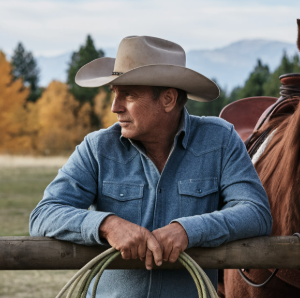
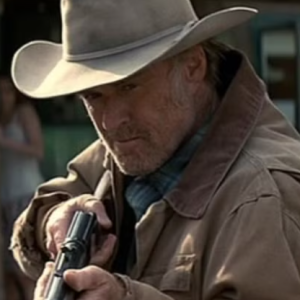
The television landscape was profoundly reshaped by the acclaimed series Yellowstone, largely due to the formidable presence of Kevin Costner as its central patriarch, John Dutton III. His portrayal of the embattled rancher, fiercely protecting his family’s ancestral land, became synonymous with the show’s gritty appeal and its exploration of American West identity. Thus, the unexpected shift in the narrative for Yellowstone Season 5, Part 2, which had to proceed without its lead, ignited widespread speculation and concern among its dedicated fanbase. The question looming large was how the series would address the absence of a character so integral to its very fabric.
For months leading up to the premiere of the final episodes, theories abounded regarding John Dutton’s fate. Some viewers braced for a tragic end, anticipating his death, while others hoped for a less definitive conclusion, perhaps his character simply moving away from the state. The ultimate resolution, however, brought many viewers’ worst fears to fruition: John Dutton III was indeed confirmed to be dead within the Yellowstone universe. This narrative choice proved highly controversial and deeply disappointing for a significant portion of the audience, who felt robbed of a proper send-off for a character they had invested so much in over five seasons. The abruptness of his departure, necessitated by Costner’s exit from the series, left many feeling that John’s story arc remained incomplete and unsatisfying, especially given his central role in the ongoing battles for the Dutton Ranch.
John Dutton III was more than just a character; he was the stoic, often morally complex, heart of Yellowstone. His unwavering commitment to his land, his family, and his legacy drove the series’ primary conflicts, pitting him against land developers, Native American tribes, and political adversaries. His internal struggles, his relationships with his children—Beth, Kayce, and Jamie—and his relentless pursuit of justice (often on his own terms) formed the bedrock of the show’s dramatic tension. Without him, the power vacuum at the Yellowstone Dutton Ranch is immense, forcing the remaining characters to navigate treacherous new territory, both literally and metaphorically. The absence of the patriarch not only alters the dynamics among the Dutton siblings but also fundamentally shifts the show’s core premise, leaving fans to wonder how the saga of land, power, and family will conclude without its central figurehead.
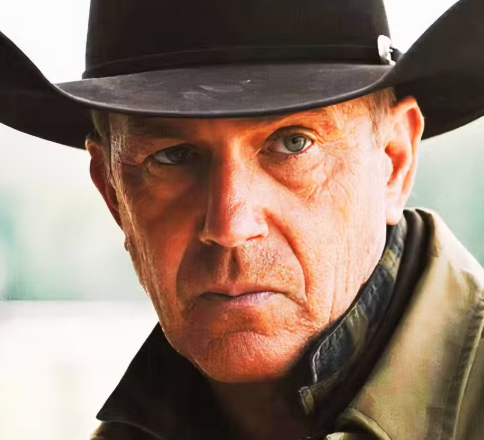
Compounding this narrative void, news emerged that Kevin Costner would indeed be returning to the broader “Yellowstone” franchise, though not to the Taylor Sheridan-helmed drama that made him a global television icon. Instead, Costner would embark on a new venture, starring in and hosting a three-part docuseries titled Yellowstone to Yosemite with Kevin Costner. This project, which premiered on Fox Nation, presented Costner in a familiar, yet distinct, role: exploring the majestic American wilderness. In this docuseries, Costner serves as both host and executive producer, guiding viewers on a journey that traces the historic path taken by President Theodore Roosevelt and environmental pioneer John Muir during their seminal 1903 expedition through Yosemite National Park. This expedition was a pivotal moment in American conservation history, highlighting the beauty and fragility of the nation’s natural treasures and laying groundwork for the National Park System.
Costner’s deep involvement in Yellowstone to Yosemite powerfully underscores his personal connection to the themes of American heritage, the preservation of wild spaces, and the legacy of the American West. It highlights his genuine passion for the very landscapes and historical narratives that the Yellowstone series loosely evokes. However, for many viewers, this new endeavor, while exciting in its own right, only intensified the sense of loss surrounding John Dutton III’s untimely demise. It served as a poignant reminder of “what could have been”—the continuation of a compelling character arc helmed by an actor who clearly shares an affinity for the subject matter. The irony of Costner returning to a project with “Yellowstone” in its title, yet remaining detached from the fictional narrative of John Dutton, felt particularly bittersweet. It suggested that while Costner’s broader interests align with the spirit of the American West, the specific trajectory of the Dutton family saga ultimately diverged from his vision.
The thematic parallels between Costner’s two “Yellowstones” are striking, despite their vastly different formats. Both explore the profound human connection to the land, the challenges of preserving natural beauty against encroaching modernization, and the enduring legacy that individuals strive to leave behind. In Yellowstone the series, John Dutton III fights tooth and nail to protect his ranch, a symbol of American independence and tradition, against a myriad of external pressures. In Yellowstone to Yosemite, Costner delves into the real-world history of conservation, celebrating the foresight of figures like Roosevelt and Muir who championed the protection of unparalleled natural wonders for future generations. This shared reverence for the land and its history forms a compelling, if somewhat melancholic, bridge between Costner’s fictional past and his current factual exploration.

Ultimately, Kevin Costner’s departure from the main Yellowstone series and the subsequent fate of John Dutton III represent a significant turning point for the hugely popular franchise. While the show must now navigate a future without its central figure, Costner’s continued engagement with the American West through projects like Yellowstone to Yosemite demonstrates his enduring personal and professional commitment to these rich narratives. It’s a bittersweet reality for fans: they may no longer witness John Dutton III riding across his beloved ranch, but they can still experience Kevin Costner’s profound connection to the spirit of Yellowstone, albeit on a different, yet equally captivating, frontier. The legacy of John Dutton III, though concluded abruptly, will undoubtedly continue to cast a long shadow over the future of the Dutton family and the broader Yellowstone universe, forever linked to the indelible performance of Kevin Costner.