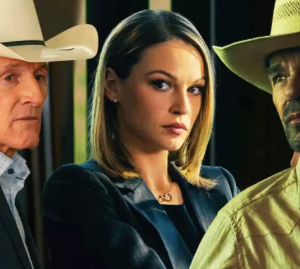
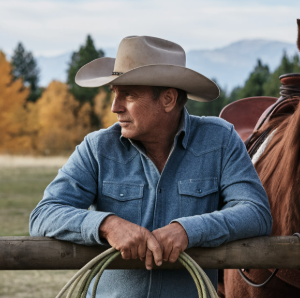
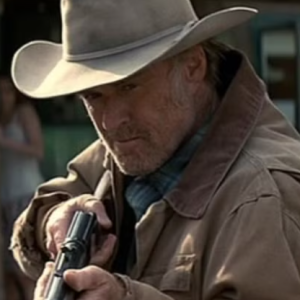
Recent discussions surrounding the highly anticipated final installment of Taylor Sheridan’s acclaimed drama, Yellowstone, have brought actor Kevin Costner’s perspective on the series’ conclusion into sharp focus. Costner, who has portrayed the iconic patriarch John Dutton for five seasons, recently addressed the future of the show and his character during an appearance at CinemaCon in Las Vegas. His comments shed light on the creative complexities and personal hopes surrounding the saga’s approaching end.
Costner confirmed that Yellowstone’s fifth and final season is slated to hit Paramount+ in November, following a significant delay attributed to industry-wide strikes and, notably, reported creative differences between the actor and the show’s creator. Despite these challenges, Costner expressed a clear desire to see John Dutton’s story through to its conclusion. “I’d like to be able to do it but we haven’t been able to,” he stated, alluding to the ongoing negotiations and scheduling conflicts. “I thought I was going to make seven [seasons] but right now we’re at five. So how it works out — I hope it does — but they’ve got a lot of different shows going on. Maybe it will. Maybe this will circle back to me. If it does and I feel really comfortable with [it], I’d love to do it.” This sentiment underscores the personal investment Costner has in a role that has profoundly shaped his recent career, even amidst the backdrop of swirling rumors and behind-the-scenes tensions.
When pressed about his own vision for John Dutton’s ultimate fate, Costner acknowledged that the narrative reins ultimately lie with Sheridan, the show’s visionary creator. “Well, you know, he needs to be proactive in what happens and I’ve kind of had my own fantasy how it might be,” Costner revealed. “But that’s Taylor’s thing. I said as much to him a while back. I had thoughts how it could happen, but we just have to see.” This glimpse into Costner’s private reflections highlights the collaborative, yet distinct, artistic processes at play in crafting a series of Yellowstone’s magnitude. It also fuels speculation among fans regarding the direction the final episodes might take for a character whose very existence is intertwined with the fate of the Yellowstone Dutton Ranch.

John Dutton stands as the unyielding, often morally ambiguous, heart of the Yellowstone narrative. A sixth-generation rancher, his life is a ceaseless battle to protect his family’s vast land holdings from external forces—developers, indigenous communities, and politicians—and internal strife. He embodies the complex struggle between tradition and progress, loyalty and ruthlessness. As the patriarch, his decisions, sacrifices, and unwavering resolve have shaped the destinies of his children—the fiercely loyal but volatile Beth, the conflicted and often estranged Kayce, and the perpetually scheming Jamie. The emotional core of Yellowstone largely resides in John’s efforts to preserve his family’s legacy, even as the world around him threatens to dismantle everything he holds dear.
Season 5 Part 1 left John Dutton in a precarious position, grappling with the complexities of his unexpected governorship while simultaneously fighting to maintain control over the ranch. His tenure as governor has been fraught with political maneuvering, ethical compromises, and the constant threat of impeachment, largely fueled by Jamie’s relentless ambition. The fragile peace with the Broken Rock Indian Reservation, led by Chief Thomas Rainwater, remains tenuous, always on the verge of erupting into full-blown conflict over land rights and resources. Meanwhile, the internal family dynamics are as fractured as ever, with Beth and Jamie’s bitter feud reaching boiling point, and Kayce torn between his loyalty to his family and his desire for a simpler life with Monica and Tate.
Given Costner’s ambiguous stance on his return and the show’s impending conclusion, the potential fates for John Dutton are manifold and intensely debated among the fandom. If Costner does return for a significant arc, one plausible outcome could see John making the ultimate sacrifice to secure the ranch’s future, perhaps in a dramatic confrontation with Market Equities or a final, devastating showdown with Jamie. Such a heroic, self-sacrificing end would align with the Western archetype of the aging gunslinger making one last stand, cementing his legacy at the cost of his own life. This could involve him orchestrating a complex legal maneuver, striking a desperate deal, or even engaging in a violent defense of his property that leaves him mortally wounded.

Alternatively, should Costner’s role be limited or non-existent, Taylor Sheridan would be forced to craft a narrative that either gracefully writes John Dutton out of the story—perhaps through an off-screen death, an implied retreat, or a symbolic passing of the torch—or shifts the focus entirely to other characters. An off-screen death might feel anticlimactic for such a central figure, but could be framed as a natural consequence of his lifestyle or his battles, leaving his children to navigate the fallout and determine the ranch’s future without his direct guidance. A “passing of the torch” scenario could involve John formally ceding control to Beth or Kayce, allowing them to carry the narrative forward while he retreats from the spotlight, though this seems less likely given John’s stubborn nature.
The broader themes of Yellowstone also point towards potential conclusions for John. The series has consistently explored the brutal realities of land ownership, the corrupting influence of power, and the cyclical nature of violence. John Dutton’s journey could culminate in a realization that the fight is unwinnable, leading to a profound shift in his philosophy or a desperate, all-or-nothing gambit. His “fantasy” for the ending, as mentioned by Costner, could involve a resolution that prioritizes the land above all else, perhaps even sacrificing the family name or individual lives to ensure the ranch’s eternal preservation as wilderness or a protected entity.
The conclusion of Yellowstone with John Dutton at its core is not merely about tying up loose ends; it’s about defining the legacy of a character who has become synonymous with a particular vision of American rugged individualism and the fading frontier. His final arc will dictate whether the Dutton family ultimately triumphs, loses everything, or finds a new, perhaps more sustainable, way of existence. The unresolved tension with Jamie, the future of the ranch amidst modern development, and the personal destinies of Beth and Kayce all hinge on how John’s story is resolved.
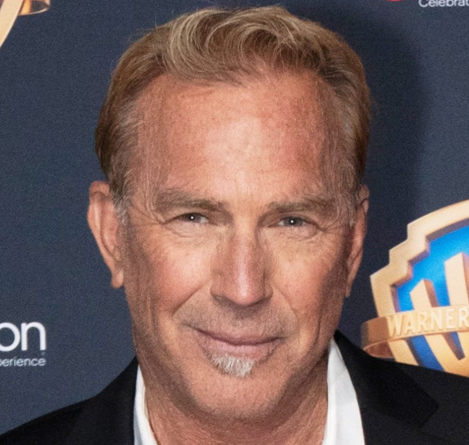
Ultimately, fans eagerly await the final season not just for the resolution of its intricate plotlines, but for the culmination of John Dutton’s complex journey. Costner’s desire for a fulfilling conclusion, even as he acknowledges the ultimate creative control of Taylor Sheridan, highlights the critical importance of delivering a resonant farewell for a character who has become a cultural touchstone. Whether through sacrifice, a quiet retirement, or a desperate, last stand, John Dutton’s exit will undoubtedly leave an indelible mark on the landscape of modern television and the enduring mythology of the American West. The challenge for Sheridan and the Yellowstone team is to craft an ending that honors the character’s legacy while providing a satisfying, dramatic, and emotionally resonant conclusion to one of the most compelling sagas of our time.