Taylor Sheridan, a filmmaker renowned for his authentic portrayals of the American West, envisioned a sprawling saga that would redefine the modern Western genre. From its genesis, “Yellowstone” was conceived not merely as a television show, but as an ambitious exploration of a timeless American landscape, its contested ownership, and the complex family dynamics tethered to it. Sheridan’s personal journey, marked by a desire to escape the confines of Hollywood, deeply influenced the very fabric of his magnum opus. Having spent years navigating the acting world in Los Angeles, he harbored a profound longing to tell a story rooted in the expansive, rugged beauty of the mountain states, a terrain he knew intimately from his upbringing in Texas and subsequent travels. This yearning for authenticity, for a setting that breathed the spirit of the true West, became the bedrock upon which “Yellowstone” would eventually be built.
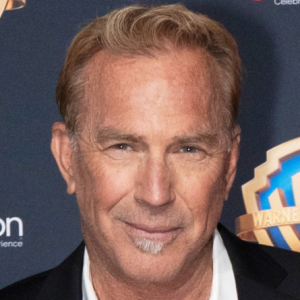
To bring such a grand vision to life, Sheridan understood the necessity of aligning with a major network, one with the financial might and reach to support a production of this scale. His initial pitch found a home at HBO, a network synonymous with prestige television. The collaboration began, and the project, destined to become “Yellowstone,” started to take shape under their developmental guidance. However, a pivotal point of contention emerged regarding the casting of the central character, the formidable patriarch John Dutton. While Sheridan himself envisioned Kevin Costner in the role, HBO executives had a different icon in mind: Robert Redford. “If you can get us Robert Redford, we’ll greenlight the pilot,” Sheridan recounted years later, highlighting the network’s unwavering preference.
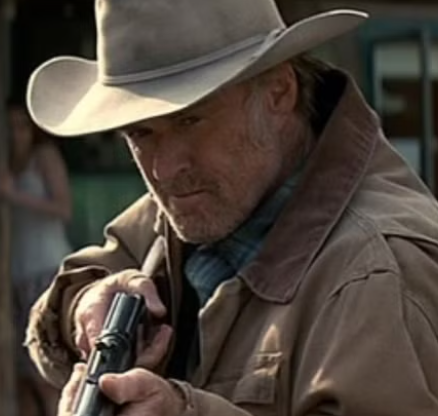
This insistence on Redford, and the subsequent turn of events, would become one of the most significant “what-ifs” in recent television history. Remarkably, after Sheridan managed to secure Redford’s interest in the project, HBO, in a perplexing reversal, clarified that they were seeking a “Robert Redford type” rather than the legend himself. This decision, in retrospect, appears to be a colossal miscalculation. Robert Redford, a cinematic titan whose career is deeply intertwined with the Western genre—from classics like “Butch Cassidy and the Sundance Kid” to more contemporary roles—possessed an inherent gravitas and rugged authenticity that would have seamlessly embodied John Dutton. His gruff charisma, intense gaze, and profound understanding of the American landscape would have brought a unique, perhaps even more stoic, dimension to the character. While Kevin Costner ultimately delivered a phenomenal, career-defining performance, making John Dutton indelibly his own, the speculative possibility of Redford’s portrayal remains a fascinating road not taken, a testament to the differing visions for the show’s lead.
Despite the initial promise, “Yellowstone” did not find its home at HBO. Through a highly unusual concession, HBO executive Michael Lombardo, who reportedly recognized the project’s potential, returned the rights to Sheridan before departing the network. This act, atypical for a network known for tightly holding onto its intellectual property, inadvertently paved the way for another powerhouse to seize an unparalleled opportunity. It was Paramount Network that ultimately recognized the inherent value and widespread appeal of Sheridan’s concept, embracing “Yellowstone” and positioning it as the cornerstone of their push into prestige television.
This was a transformative moment for Paramount. “Yellowstone” single-handedly elevated the network’s standing, establishing its credibility as a serious contender in the competitive landscape of high-quality, narrative-driven drama. The show’s ability to resonate across diverse demographics, appealing to viewers from various backgrounds, demonstrated its broad cultural impact. It provided a powerful platform for Sheridan’s unique storytelling prowess, allowing him to fully realize his ambitious vision.
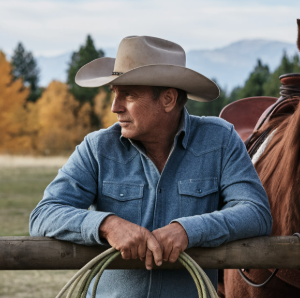
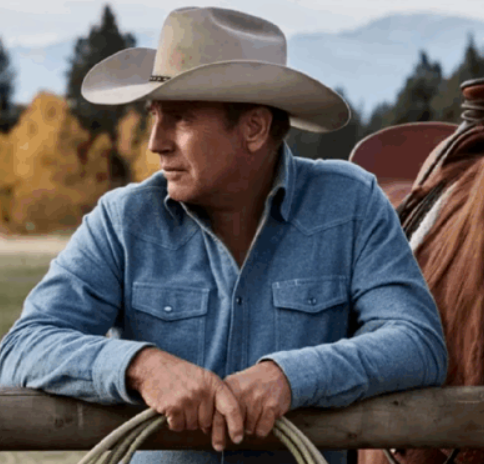
“Yellowstone” delves deep into the complex, often violent, world of the Dutton family, owners of the largest contiguous ranch in the United States. At its core, the series is a visceral exploration of the American West, not as a romanticized ideal, but as a battleground where tradition clashes with modernity, where the untamed wilderness meets the relentless march of development. John Dutton, impeccably portrayed by Kevin Costner, stands as the unwavering patriarch, a man defined by his unwavering commitment to his land and legacy. His character is a rich tapestry of contradictions: fiercely protective yet deeply flawed, a loving father struggling to connect with his children, and a pragmatic leader willing to employ any means necessary to safeguard his empire.
The narrative arc of “Yellowstone” is driven by a constant barrage of threats to the ranch. These come from all directions: ruthless land developers eager to acquire the Duttons’ vast property for urban expansion, the encroaching boundaries of the nearby Broken Rock Indian Reservation seeking to reclaim ancestral lands, and political adversaries wielding influence and legislation against the family. The show expertly weaves together high-stakes legal battles, tense standoffs, and explosive acts of violence, all underpinned by the raw, untamed beauty of Montana. The iconic “brand” worn by members of the ranch’s loyal foreman, Rip Wheeler, and others, symbolizes an unbreakable oath, a dark pact of loyalty and sacrifice, highlighting the extreme measures taken to protect the Dutton way of life.
Beyond the external conflicts, the series masterfully portrays the intricate and often tumultuous internal dynamics of the Dutton family. Beth Dutton, fiercely intelligent and unapologetically ruthless, serves as her father’s most formidable enforcer, her loyalty matched only by her capacity for destruction. Kayce Dutton, a former Navy SEAL torn between his family’s ranching legacy and his own desire for a simpler life, constantly navigates the moral ambiguities inherent in his lineage. Jamie Dutton, the ambitious and often resentful attorney, struggles to find his place within the family’s shadow, frequently becoming an unwitting pawn or an active antagonist. These complex relationships, fraught with love, betrayal, resentment, and an unbreakable, albeit strained, bond, provide the emotional core that grounds the series amidst its larger-than-life conflicts.
The immense success of “Yellowstone” was not confined to a single series. Its cultural impact and dedicated fanbase quickly propelled it into a sprawling media franchise, a testament to Taylor Sheridan’s unparalleled storytelling vision. The series spawned multiple acclaimed prequels, including “1883,” which explores the Dutton family’s arduous journey westward and the origins of their Montana ranch, and “1923,” starring Harrison Ford and Helen Mirren, depicting the family’s struggles during the Prohibition era and the Great Depression. These spin-offs not only deepened the lore of the Dutton universe but also further solidified Paramount’s position as a major player in the prestige television landscape. Additional spin-offs, such as “6666” (focusing on the legendary Four Sixes Ranch) and “1944,” continue to expand this captivating narrative world, demonstrating the show’s enduring appeal and the insatiable demand for stories set within Sheridan’s meticulously crafted American West.
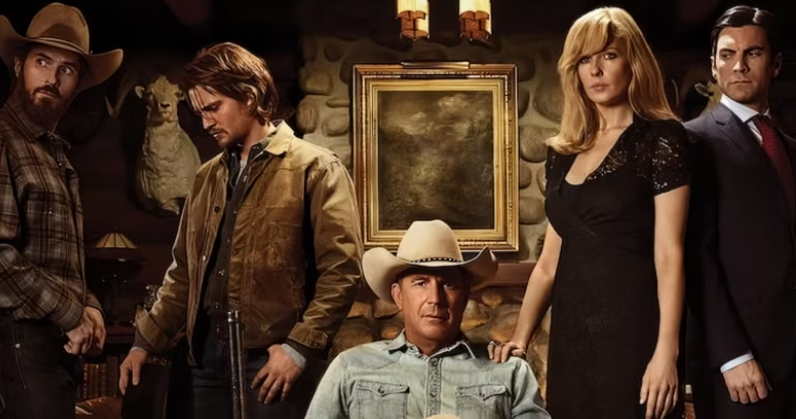
In hindsight, HBO’s decision to pass on “Yellowstone” stands as one of the great missed opportunities in modern television. What they perceived as a gamble, or perhaps a show that didn’t fit their precise mold, became a phenomenon that almost single-handedly launched a rival network into the upper echelons of prestige drama. Taylor Sheridan’s uncompromising vision, combined with Kevin Costner’s iconic portrayal of John Dutton, created a series that resonated deeply with audiences, tapping into enduring American themes of land, family, power, and identity. The Dutton saga, with its intricate plots, compelling characters, and breathtaking Western landscapes, has not only cemented its place in popular culture but has also redefined the modern Western, proving that stories rooted in tradition can captivate a global audience and build an entire, expansive universe.