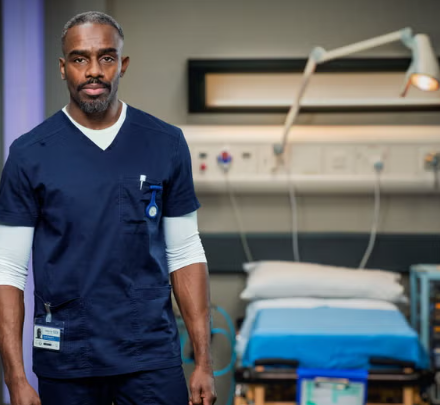
In the dynamic world of long-running television dramas, evolution is not just a creative choice but a necessity for survival. “Casualty,” the venerable BBC medical series, is no stranger to significant cast and character shifts, a reality recently underscored by comments from star Charles Venn, who portrays paramedic Jacob Masters. Venn’s assertion that “the show must go on” encapsulates the resilient spirit of the production, especially as his character navigates profound changes within the Holby City ambulance service. These developments highlight the continuous reinvention required to keep narratives fresh and compelling for a dedicated audience.
The immediate catalyst for Jacob’s altered professional life stems from the secondment of fellow paramedics Iain Dean and Teddy Gowan to the Hazardous Area Response Team (HART). This strategic narrative move has created a vacuum, compelling Jacob to forge closer working relationships with his remaining colleagues, particularly Jan and newcomer Indie. Venn articulated the initial strangeness of this new dynamic, acknowledging the shift in departmental focus. For a character like Jacob, who has been a pillar of the paramedic team for years, adapting to a new core group is not merely a procedural adjustment but a personal one, reshaping his day-to-day interactions and responsibilities on screen.
Central to this evolving dynamic is Jacob’s relationship with Indie, played by the talented Naomi Wakszlak. Charles Venn spoke warmly of Wakszlak’s rapid integration into the team, describing her as an actress who “hit the ground running.” He detailed how Jacob’s interactions with Indie have developed a unique flavour, almost viewing her as a “little sister” and adopting a “fatherly role” when she seeks support or guidance. This nuanced portrayal of mentorship and care enriches Jacob’s character, demonstrating his capacity for deeper personal connections beyond the high-stakes demands of his job. Both Venn and Wakszlak have consciously embraced and accentuated these moments of genuine connection, striving to imbue them with authenticity. This commitment to depicting strong interpersonal bonds reinforces the overarching theme of camaraderie and a “family-esque environment” within the Holby City emergency services, a vital element that resonates deeply with viewers and forms the emotional core of the series. Such relationships are crucial in grounding the dramatic medical storylines, providing a human anchor in the face of constant crises.
The necessity for these new dynamics has been further amplified by a poignant departure from the paramedic team. During a recent episode, Teddy Gowan, portrayed by Milo Clarke, officially stepped down from his role. This was not a sudden decision but the culmination of a long-running storyline involving Teddy’s heart condition. Viewers will recall that in a 2022 episode, Teddy was diagnosed with an Atrial Septal Defect (ASD), a congenital heart defect, which subsequently required surgery. At the time of his initial diagnosis, his mother, Gaynor, had urged him to leave the demanding profession of a paramedic, fearing for his health. However, Teddy, driven by a profound commitment to his work and colleagues, chose to remain with Jan at Holby City Hospital. Despite his best efforts to manage his symptoms, the relentless stress and physical demands of the job ultimately triggered complications, forcing him to make the difficult decision to prioritize his health. Teddy’s exit serves as a powerful reminder of the immense toll that frontline emergency work can take on individuals, a theme that “Casualty” consistently explores with sensitivity and realism. His storyline added a layer of vulnerability to the paramedic team, underscoring the personal sacrifices often made in the pursuit of saving lives.
Venn’s phrase, “the show must go on,” serves as a mantra for any series with “Casualty’s” longevity. With over three decades on air, the drama has seen countless characters come and go, each departure opening doors for new narratives and character development. These changes, while sometimes bittersweet for long-time viewers, are essential to prevent stagnation and ensure the series remains relevant and engaging. The constant influx of new talent and the evolution of existing characters allow for fresh perspectives and innovative storylines, reflecting the ever-changing landscape of modern healthcare and emergency services. It is this adaptability that has allowed “Casualty” to maintain its position as a cornerstone of Saturday night television for so many years, continually refreshing its narrative without losing its fundamental identity.
The camaraderie that Venn champions on screen appears to extend behind the scenes as well. A recent social media post from Sarah Seggari, who plays Rida Amaan, showed cast members, including Venn and Clarke, sharing a meal together off-set. Such glimpses into the cast’s real-life bonds underscore the authentic relationships that underpin the on-screen chemistry, contributing to the believable portrayal of a tight-knit professional family navigating high-pressure situations. This sense of unity, both fictional and factual, is invaluable in a show that often deals with intense emotional content.
As “Casualty” continues its run, it remains a fixture on BBC One, airing on Saturday nights, with episodes available first on BBC iPlayer. Recent scheduling adjustments, including an upcoming break, mean that viewers will need to anticipate the next episode’s return on August 2. Such pauses in transmission are common for long-running series and often build anticipation, allowing fans to reflect on recent developments before diving back into the next chapter of Holby’s dramatic events. These scheduling patterns are part of the broader ecosystem of broadcast television, where strategic breaks can sometimes reignite viewer interest and create momentum for returning storylines.
In essence, the ongoing shifts within “Casualty” are a testament to its enduring vitality. Charles Venn’s pragmatic outlook reflects a deep understanding of what it takes for a show of its calibre to thrive. By embracing new character dynamics, navigating emotionally charged departures, and continually developing its core relationships, “Casualty” ensures that the story of Holby City’s dedicated emergency workers continues to resonate, adapting to challenges while steadfastly affirming that, indeed, the show must always go on.