Yellowstone has consistently walked a tightrope of controversy, both within its dramatic narratives and, at times, off-screen with its high-profile cast and internal disputes. These contentious moments have profoundly shaped character relationships, unveiled hidden histories, rallied audience support for some characters, and sparked judgment or calls for redemption for others. Across its many episodes, the series has delivered intense and often shocking events, pushing boundaries even for its most hardened characters.
From its very first moments, “Yellowstone” signaled its uncompromising nature. The pilot episode depicted John Dutton’s heartbreaking decision to euthanize his severely injured horse after a horrific road accident. While an act of mercy, this immediate display of putting an animal down set a stark, controversial tone, particularly for a show centered on ranching life, instantly challenging audience expectations. More recently, the speculation surrounding John Dutton’s potential on-screen demise became a significant point of contention. Triggered by Kevin Costner’s announced departure from the series, widespread theories about how the patriarch would exit the narrative emerged, leading to a polarizing debate among fans—some found the concept of his death shocking, while others saw it as an inevitable or even necessary conclusion to a major chapter in the Dutton family saga, despite John’s frequent role as an antagonist to his own kin and allies.
The series has also unflinchingly addressed systemic injustices, particularly through its Native American characters. Monica Dutton, wife of Kayce Dutton and a central Native American figure, found herself embroiled in a deeply unsettling incident when she was racially profiled and accused of theft in a boutique. The scene escalated to a humiliating strip search by police, only to be interrupted by Beth Dutton’s timely arrival. Beth’s subsequent destructive rampage through the store, while a defiant act of solidarity, underscored Monica’s somber observation that “Doing it to her doesn’t undo what she did to me,” highlighting the painful reality of racial bias and the difficulty of truly rectifying such injustices. Monica later faced another terrifying ordeal when she was violently attacked by a man who chased and choked her, an event that could have seen her written off the show. Her rescue by Mo and Thomas Rainwater exposed a disturbing pattern of violence against Indigenous women in the area, powerfully emphasizing the prevalent struggle for justice.
Jamie Dutton’s moral descent, marked by two brutal murders, stands out as a focal point of the show’s dark side. His first act of ultimate violence involved the cold-blooded strangulation of journalist Sarah Nguyen. Fearing exposure over incriminating conversations about the Duttons, Jamie succumbed to desperation, a chilling act intensified by his repeated, regretful “I’m sorry” as he committed the deed. This established Jamie as a character driven to protect himself and his family at all costs, embodying a twisted version of Dutton survival instinct. His second murder, the killing of his biological father, Garrett Randall, was a calculated act coerced by Beth after Garrett plotted against the ranch. This “him or his father” ultimatum pushed Jamie to a shocking point-blank execution, further solidifying his self-preservation instincts. The subsequent scene at the infamous “Train Station,” where Beth filmed Jamie dumping Garrett’s body, sealed his fate under her lifelong blackmail, irrevocably widening the chasm between the siblings.
The Dutton family’s enduring feuds and the extreme lengths they go to protect their legacy have yielded some of the series’ most visceral and controversial moments. The kidnapping of young Tate Dutton by a white supremacist group, orchestrated by the Duttons’ rivals Malcolm and Teal Beck, pushed the narrative into truly harrowing territory. While the episode delivered satisfying retribution against the culprits, particularly Kayce’s brutal killing of Teal Beck, the gut-wrenching sight of a traumatized, shaven-headed Tate struggling to recognize his father was a deeply uncomfortable reminder of the horrific consequences of merciless conflicts on innocent lives. The show also explored the rigid, almost cult-like loyalty demanded by the ranch through the brand. Wade Morrow’s ultimate betrayal—aligning with a real estate company to seize Yellowstone land—was met with brutal, uncompromising justice by John Dutton and his ranch hands, a stark example of the severe penalties for those who violate the ranch’s sacred bond.
Perhaps the most profoundly controversial and shocking revelation involved Beth and Jamie’s fractured past. A flashback exposed the tragic truth behind Beth’s deep-seated hatred for her adopted brother: as teenagers, Jamie accompanied a pregnant Beth to an Indian Health Service clinic for an abortion. Unbeknownst to Beth, the clinic’s policy required sterilization for all patients undergoing the procedure. Jamie, desperate to avoid the publicity of a larger clinic like Planned Parenthood, gave his consent, irrevocably robbing Beth of the choice to bear children in the future—a devastating betrayal compounded by the later revelation that Rip Wheeler was the father. This agonizing secret not only explained Beth’s venomous resentment but also highlighted the complex and often dark history of medical practices within marginalized communities.
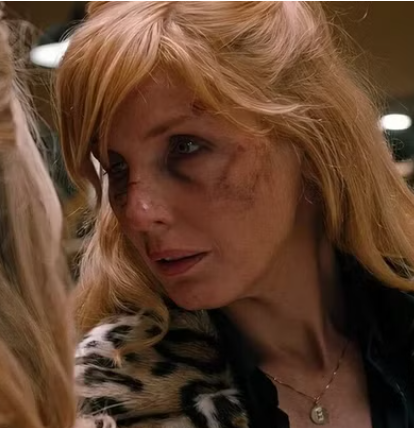
Finally, the sheer brutality of Beth Dutton’s confrontation with Malcolm Beck’s men stands as one of the series’ most difficult and defining moments. After Malcolm himself failed to intimidate Beth, his goons attacked her and her assistant in her office, binding them, beating them unconscious, and threatening sexual assault. Beth’s unwavering defiance in the face of such overwhelming violence, her refusal to yield or beg, showcased her incredible strength of will. The brutal aftermath, evident in her visible injuries throughout the rest of the season, served as a stark, indelible reminder that the Duttons’ rivalries could escalate to unimaginable levels of personal devastation, illustrating the true cost of their relentless fight for survival.