In the sprawling, high-stakes drama that is Taylor Sheridan’s “Yellowstone,” battles are rarely confined to the dusty arenas of the rodeo or the harsh realities of the Montana wilderness. Often, the most brutal and defining confrontations unfold in glass-walled boardrooms and plush corporate offices, where words are wielded like sharpened knives and financial maneuverings dictate the fate of empires. Few scenes encapsulate this brutal reality as powerfully as the searing showdown between Beth Dutton (Kelly Reilly) and Market Equities CEO Willa Hayes (Karen Pittman) – a masterclass in corporate warfare, personal vendetta, and the unyielding spirit of “Yellowstone.”
The confrontation, pivotal in its implications for the Dutton family’s embattled ranch, wasn’t merely a verbal spar; it was a dramatic crescendo built on seasons of relentless pressure and Beth Dutton’s unwavering, often morally ambiguous, commitment to protecting her family’s legacy. Beth, the financial titan of the Dutton empire, has long served as the family’s economic shield, capable of both orchestrating intricate hostile takeovers and dismantling corporate adversaries with ruthless efficiency. Her opponent, Willa Hayes, represented the faceless, insatiable greed of Market Equities – a multi-billion-dollar corporation intent on developing the entire Paradise Valley, with the Yellowstone Dutton Ranch standing as the ultimate, immovable obstacle.
The stage was set by Beth’s seemingly triumphant, yet ultimately sacrificial, maneuver to thwart Market Equities’ initial attempts at a direct takeover. Having used her corporate acumen to consolidate power within Schwartz & Meyer, the very firm she worked for, Beth had launched a series of aggressive counter-attacks, costing Market Equities billions and sending shockwaves through the financial world. It appeared, for a fleeting moment, that Beth had cornered the corporate behemoth. However, in the cutthroat world of finance, every victory is often a prelude to a deeper, more treacherous trap.
The scene opens with a chilling shift in power dynamics. Beth, walking into what was once unequivocally her sanctuary – her office at Schwartz & Meyer – finds it brazenly occupied by Willa Hayes. The deliberate violation of Beth’s personal and professional space immediately signals a reversal of fortune. Willa, coolly ensconced behind Beth’s former desk, eyes gleaming with predatory satisfaction, delivers the first verbal jab, a calculated attempt to assert dominance: “That’s my desk. Not anymore. It’s my desk now. My computer. My office furniture. My office.” The air is thick with tension, each word a gauntlet thrown down, challenging Beth to react.
Willa, attempting to weaponize the very essence of the Dutton world against Beth, then leans into a fabricated, folksy wisdom: “What’s that saying cowboys use? F with a bull and you get the horns.” It’s a transparent effort to appropriate the rugged, authentic lexicon of the West, a world Beth inhabits with an innate fierceness, but one Willa can only mimic. Beth, ever the shrewd analyst of human behavior, cuts through the pretense with characteristic disdain: “Bet you practiced saying that in front of the mirror for an hour.” This retort not only dismisses Willa’s attempt at intimidation but also highlights Beth’s strategic foresight. She prepares for everything, anticipates every possible outcome, a stark contrast to Willa’s seemingly spontaneous, yet clearly rehearsed, jab. Beth’s conviction resonates: “Every possible outcome leads to me sitting right here.”
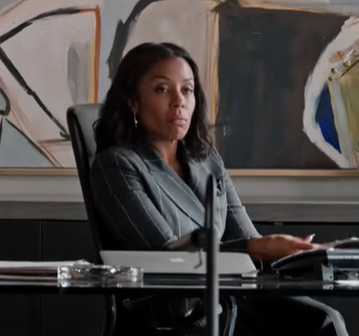
It is Beth’s subsequent metaphor, however, that truly elevates the scene into an iconic moment of “Yellowstone.” Drawing upon one of American history’s most enduring symbols of valiant, doomed defiance, Beth declares: “When you find yourself standing on the wall of the Alamo, Willa, the outcome has already been decided. The only thing left to do is to kill as much as you can before they kill you.” This isn’t merely a statement of grim resignation; it’s a profound encapsulation of Beth’s strategy and, more broadly, the Dutton family’s ethos. Beth knew the full extent of Market Equities’ power, knew that a direct, sustained financial war against a conglomerate of that scale was unwinnable in the long run. Her “Alamo” strategy was to inflict maximum damage, to make the victory so costly for her enemy that it would be a Pyrrhic one. The billions she cost Market Equities’ shareholders were not an accident; they were the “kills” she amassed before her inevitable “defeat.” It reveals a deep, almost self-sacrificial layer to Beth’s character – her willingness to burn herself and her professional life to the ground if it means weakening the enemy that threatens her family.
Willa, acknowledging Beth’s brutal effectiveness (“You certainly got your kills. Little fer cost my shareholders billions”), then delivers the fatal blow. The consequence of Beth’s strategic onslaught isn’t Willa’s personal defeat, but a restructuring that reconfigures the entire playing field: “But now, as a result, my shareholders are majority owners of Schwartz & Meyer. And you, you’re fired.” The sheer audacity of the move—Market Equities leveraging the financial damage Beth inflicted to acquire control of her own company—is a testament to the ruthless, often circular, nature of high finance. Beth’s world, her professional identity, collapses around her.
The corporate victory, however, isn’t enough for Willa. She presses her advantage, twisting the knife by bringing the conflict back to its primal source: the land. “Thank you for all that land around your father’s ranch,” Willa purrs, her voice dripping with condescension. “We have big plans for this valley.” The threat, now explicit, strikes at the very heart of the Duttons’ existence. To add insult to injury, Willa extends a humiliating offer: “After the sting of this phase, you should give me a call. You could do very well working for me when all this is over.” It’s an ultimate power play, a gesture meant to strip Beth of her pride, her independence, and her very identity.
But Beth Dutton is not a woman easily broken. Even in apparent defeat, her spirit remains defiantly intact. Her response to Willa’s taunt is an iconic moment of raw, unfiltered Beth: “When all this is over, I’m gonna hang your diploma above my toilet in my guest house.” The line is delivered with a calm, chilling intensity, a promise of future retribution rather than a lament of present loss. It’s Beth’s signature move – a refusal to be intimidated, a contemptuous dismissal of corporate credentials, and a powerful assertion that true worth lies beyond titles and degrees. It strips Willa of her perceived intellectual superiority, reducing her academic achievements to a bathroom decoration, a symbol of ultimate disrespect. This is not about professional failure for Beth; it’s about a deeply personal slight that demands vengeance.
Willa, clearly unnerved by Beth’s unflinching defiance, attempts to regain control, advising Beth to “let the sting fade.” But Beth’s final words, delivered with a quiet, menacing conviction, seal Willa Hayes’s fate and set the stage for future, more brutal battles: “This thing never fades with me. It is a painful lesson, and one you’re about to learn.” It is a vow, a promise of an unyielding, relentless pursuit of retribution. For Beth, losing a battle is merely a strategic retreat, a chance to recalibrate and unleash a more devastating attack. The “sting” of defeat, far from fading, becomes a festering wound, fueling her relentless drive for vengeance. This isn’t a simple corporate firing; it’s the genesis of a deeply personal vendetta that will undoubtedly escalate the war for the Yellowstone.
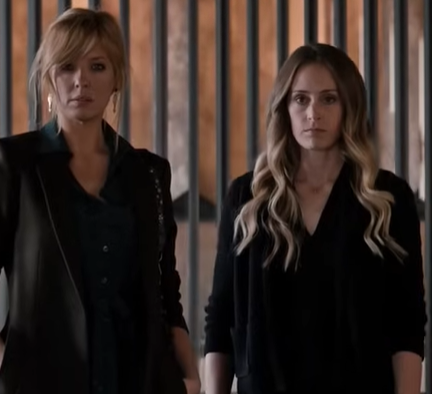
The Beth and Willa showdown is a masterclass in character, conflict, and consequence. It stripped Beth of her corporate armor, yet forged her into an even more formidable weapon for her family. It transformed a purely financial conflict into an intensely personal war, making the future of the Yellowstone Dutton Ranch even more precarious, and the stakes for its defenders impossibly high. As “Yellowstone” continues to captivate audiences, this memorable toe-to-toe remains a powerful testament to the show’s capacity for high-octane drama, unforgettable dialogue, and characters whose scars, both visible and invisible, never truly fade. The lesson Beth promises Willa? The Yellowstone never forgets, and its defenders, especially Beth Dutton, never forgive.