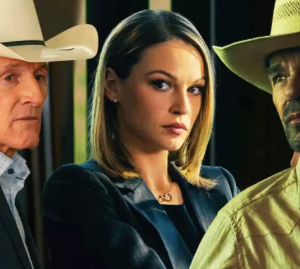
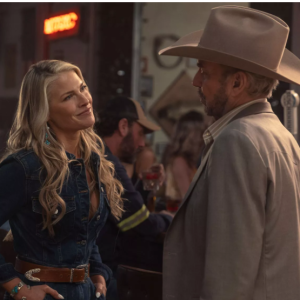
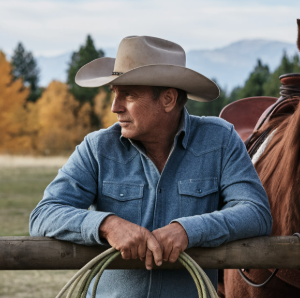
Los Angeles, CA – Few shows capture the raw, untamed spirit of the American West quite like Taylor Sheridan’s neo-western epic, Yellowstone. Beyond the sprawling landscapes and high-stakes family drama, a fan-favorite segment, “Stories from the Bunkhouse,” offers a revealing, often uproarious, peek behind the curtain. In a particularly candid installment, the cast — Rip Wheeler (Cole Hauser), Jimmy Hurdstram (Jefferson White), and Lloyd Pierce (Forrie J. Smith), among others — pull back the curtain on some of the series’ most unforgettable moments, dissecting everything from equine bodily fluids to the unyielding loyalty forged by the Yellowstone brand. What emerges is a vibrant tapestry of character introspection, on-set camaraderie, and a testament to the show’s unwavering commitment to authenticity, no matter how wild.
The episode opens with an immediate plunge into the visceral realities of ranch life, as the cast revisits Jimmy Hurdstram’s infamous, cringe-inducing, yet undeniably memorable, encounter with a stallion. White, reflecting on the scene where Jimmy is tasked with collecting horse semen, articulates the stark contrast between the romanticized myth of the cowboy and its often-unfiltered truth. “This world is like incredibly majestic, mythic in scope, beautiful, dignified,” White muses, before adding the blunt reality: “And it’s also gross sometimes. It’s also like down and dirty work.” The scene, executed in a single take, was a masterclass in committed performance, pushing Jimmy – and by extension, White – into an entirely new realm of discomfort. It wasn’t just a moment for shock value; it underscored the grim, unsentimental tasks that are part and parcel of a working ranch, a gritty authenticity that Yellowstone consistently delivers. White’s deadpan delivery of the now-iconic line, “I just jacked off a horse,” scripted as it was, became an instant classic, cementing Jimmy’s status as the ranch’s perpetually out-of-water, yet resilient, everyman. This sequence served as a powerful reminder that while the show’s narrative is grand, its foundation is built on the unvarnished realities of the land and its creatures.
From the hilariously gross to the deeply symbolic, the discussion pivots to one of the most poignant moments of defiance and loyalty: Teeter’s (Jennifer Landon) dramatic return to the bunkhouse after being summarily fired by John Dutton. Her dismissal, stemming from John’s edict to remove all women from the bunkhouse, initially seemed absolute. However, Teeter’s unyielding spirit, coupled with the revelation of her Yellowstone brand, served as a powerful counter-argument. The brand, often portrayed as a mark of ownership and sacrifice, is declared to be “for life,” an unbreakable bond. Yet, Teeter’s arbitrary dismissal flew in the face of this sacred covenant. The cast dissects the emotional weight of Teeter’s defiant plea, a display of courage rarely seen. Her simple act of returning, gear in hand, underscored the profound meaning the Yellowstone family holds for her. John’s subsequent realization that all his branded ranch hands had been marked, not just the men, was a moment of profound recognition, forcing him to confront the true meaning of his own tradition. Teeter, a wild card who embraces Rip with uncharacteristic abandon (a move the cast humorously agrees few dare with Cole Hauser), embodies the raw, untamed spirit of the ranch hand, her loyalty deeper than any decree. Her reinstatement wasn’t just a plot point; it was a reaffirmation of the brand’s enduring power and the Duttons’ evolving understanding of their unconventional family.
The conversation then veers into dark, comedic territory, exploring the shockingly high mortality rate of Beth Dutton’s personal assistants. The cast plays a grim game: “More or Less Deadly than Being Beth’s Assistant?” From stealing Lloyd’s girlfriend (less deadly, despite the knife to the chest) to going fishing with Roarke (significantly less deadly, even with the snake-in-a-cooler surprise), Beth’s orbit emerges as the most perilous place on the ranch. Even the inherently dangerous sport of rodeo, which has left Jimmy with two broken backs, pales in comparison to the existential threat of working for Beth. This morbid humor highlights Beth’s chaotic, explosion-prone existence and the constant danger that stalks the Dutton family. It’s a testament to the show’s ability to inject levity into its darkest corners, using gallows humor to emphasize the high stakes of Yellowstone life. The running gag not only provides comedic relief but subtly reinforces Beth’s status as a force of nature, her influence capable of causing both immense destruction and staunch protection.
The focus shifts to a moment of profound character growth and humility: Lloyd’s symbolic act of trading his treasured belt buckle for a new guitar for Walker, an apology following their brutal bunkhouse brawl. The cast members delve into the quiet power of this cowboy code of conduct – replacing what’s broken, offering atonement through action, not just words. Lloyd’s decision, they argue, wasn’t just about making amends with Walker; it was a deeper apology to John and Rip for the embarrassment and disruption he caused, and a realization that his pride wasn’t worth losing his place at the Yellowstone. This act of self-sacrifice, trading a symbol of his identity for peace, was a pivotal moment for Lloyd, showcasing his enduring loyalty to the ranch and his chosen family over personal vendetta. It was a poignant display of a hardened man making a difficult, yet necessary, choice, solidifying his role as the ranch’s grizzled, albeit occasionally misguided, elder statesman.
Amidst the high drama and deep character dives, the bunkhouse discussion also finds space for lighter, more whimsical explorations of character. Jimmy’s surprisingly active dating life becomes a topic of amused bewilderment for the cast. Despite his awkward charm and frequent mishaps, Jimmy has managed to navigate three girlfriends in as many seasons, a feat that eludes many of his more outwardly “cowboy” counterparts. The cast humorously attributes his success to an undefinable “tractor beam” quality, a testament to Jefferson White’s endearing portrayal. The humor extends to Ryan’s (Ian Bohen) imaginary dating profile, complete with team roping photos, a badge, and a Ryan Bingham song as his anthem – a playful nod to the actor’s real-life musical career and the quintessential cowboy image. These lighter moments provide crucial breathing room within the show’s intense narrative, reminding audiences that even amidst life-or-death struggles, the human element of connection and quirky personality remains.
Finally, the episode circles back to the absurdist humor introduced by Jimmy’s initial horse encounter, as the cast playfully imagines “Jimmy for Governor.” Campaign slogans range from the transparently crude (“I’m as transparent as my butt”) to the medically inspired (“Montana needs a suppository; I’m doctoring our budget, like I doctored that cow”). The absurdity is punctuated by a callback to the infamous horse scene, highlighting the challenge of political aspirations when one’s past includes such, shall we say, unconventional medical procedures. This segment brilliantly encapsulates Yellowstone’s unique blend of the profound and the ridiculous, where a character can be subjected to the most intense physical and emotional trials, yet still be the subject of a hilarious, if ill-advised, political fantasy.
“Stories from the Bunkhouse” serves as an invaluable companion piece to Yellowstone, offering not just behind-the-scenes anecdotes but a deeper, more intimate understanding of the characters and the show’s underlying themes. It’s a space where the cast’s genuine camaraderie shines, adding an extra layer of authenticity to the already immersive world of the Dutton Ranch. By dissecting scenes from the viscerally shocking to the profoundly symbolic, the segments reaffirm Yellowstone’s status as a drama that dares to explore the full spectrum of life on the last vestiges of the American frontier – a world where loyalty is branded, danger lurks in every shadow, and even the most uncomfortable truths are faced with a cowboy’s unflinching gaze.