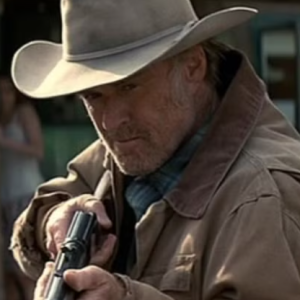
From the untamed wilds of Montana to the sun-baked plains of Africa, Taylor Sheridan’s “1923” has plunged audiences headfirst into a world where survival is a daily battle and loyalty is etched in blood. As a pivotal chapter in the “Yellowstone” saga, this prequel series masterfully intertwines the harsh realities of the early 20th century with the deeply personal struggles of the Dutton family. It’s a narrative punctuated by relentless adversity, where the line between justice and vengeance blurs, and every decision carries the weight of life and death.
The series is a tapestry woven with intense confrontations, each serving as a crucible for its characters, forging their resolve or exposing their vulnerabilities. From fierce disputes over dwindling resources to life-threatening encounters with both man and beast, “1923” never shies away from the brutal, dramatic core of its narrative. Paramount+ has delivered a cinematic experience where the very air crackles with tension, making every stand-off, every verbal spar, and every act of violence resonate with profound impact. Let’s delve into some of the most unforgettable and defining confrontations that have shaped this gripping season.
The War for Grass: Jacob Dutton vs. the Sheepherders
At the heart of the Duttons’ enduring struggle is the relentless defense of their land. The vast Montana wilderness, seemingly endless, is in fact a finite resource, especially during a devastating drought. This scarcity ignites one of the series’ earliest and most visceral clashes: the ranchers versus the encroaching sheep herders. Jacob Dutton, the indomitable patriarch, embodies the unwavering spirit of the Yellowstone, facing down a defiant shepherd whose flock threatens to decimate the precious grass needed for the Dutton cattle.
“Membership does not mean ignore the rules,” Jacob warns, his voice a low rumble of authority. The shepherd, driven by desperation, retorts with the bleak truth: “Locust ate everybody’s grass. We’re all suffering.” This exchange encapsulates the era’s brutal economics and the zero-sum game of survival. When the shepherd suggests taking his flock higher, away from the prime grazing land, the grim reality of the frontier is laid bare: “Then it’s bears killing them instead of cowboys.” This blunt assessment hints at the omnipresent danger that lurks just beyond the reach of human conflict.
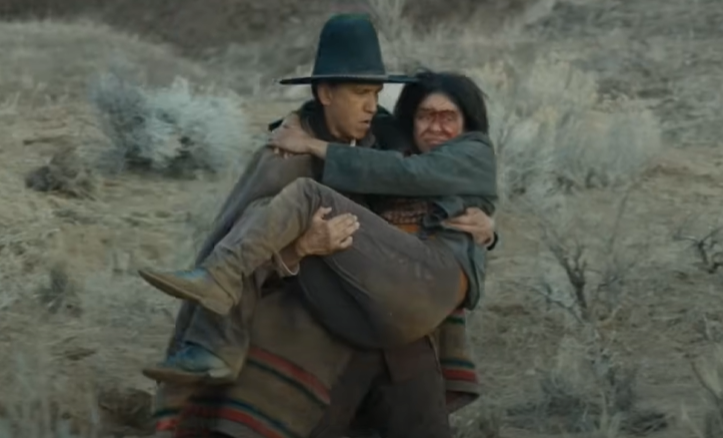
Jacob’s final, chilling warning – “Graze another man’s lease again and I’ll have your whole flock. And I’m a man of my word” – sets the stage for the inevitable escalation. True to his word, when the herders trespass again, Jacob and his loyal cowboys launch a decisive, brutal roundup. The scene culminates in the terrifying image of Jacob, rope in hand, confronting the defiant shepherds. “It’s the 20th century and you’re gonna hang us?” one demands, incredulous. Jacob’s silent, hardened gaze speaks volumes, a testament to his Old West justice. Though no one is hanged, the sheep are driven to starvation, their horses taken, and a stark message is sent: on the Yellowstone, Jacob Dutton’s word is law, enforced with an iron will. This confrontation isn’t just about land; it’s about establishing dominance in a world where law is often a distant concept, and might makes right.
The Unconventional Agent: Elizabeth Dutton’s Steel Beneath the Silk
While Jacob battles external threats, Elizabeth Dutton, his formidable wife, navigates the equally treacherous waters of societal expectations. Her pursuit of a livestock agent position, a role traditionally held by men, leads to a masterclass in challenging patriarchal norms. In an interview with a skeptical official, Elizabeth refuses to be patronized or dismissed.
“What the hell does a woman know about law enforcement?” the man sneers, expecting deference. Elizabeth’s response is a sharp, disarming blow: “Absolutely nothing. But I know men.” Her piercing gaze and unyielding demeanor dismantle his assumptions, revealing her profound understanding of human nature and her own unshakeable resolve. She flips the script, assessing him as much as he assesses her, noting his failure to maintain composure under her scrutiny.
Her self-possession is striking. When he attempts to assert his authority, Elizabeth’s quiet strength shines through, proving her more than capable of handling the demands of a profession that demands grit and an unshakeable will. “I’m afraid you lack temperament this job requires,” she coolly states, dismissing him with the same condescension he initially offered her. This confrontation, though devoid of physical violence, is a powerful assertion of a woman’s capability in a man’s world. Elizabeth’s sharp intellect and unwavering confidence redefine what it means to lead and protect the Dutton legacy, demonstrating that strength comes in many forms, and hers is undeniably potent.
Shadows of the Serengeti: Spencer Dutton’s Wounds, Visible and Invisible
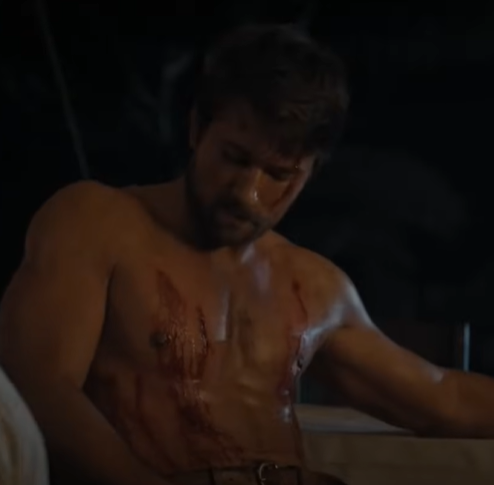
Half a world away, in the treacherous landscapes of Africa, Spencer Dutton, the WWI veteran haunted by his past, faces a different kind of predator. A brutal leopard attack leaves him severely wounded, bleeding out in the wilderness. This harrowing incident not only tests his physical endurance but also forces a raw, emotional confrontation with Alexandra, the woman who has unexpectedly entered his life.
As Alexandra meticulously cleans his gruesome wounds, their conversation delves into the deep psychological scars Spencer carries. “Sorry about my friend,” she offers, mistaking his brooding silence for guilt over his comrade’s death in the attack. Spencer’s pained correction cuts to the core of his trauma: “Which friend? The one who died for you?” The revelation that there were two leopards, and that Spencer’s friend fell due to a tactical error rooted in a misjudgment of the situation, brings a painful surge of regret. His terse, almost agonized insistence on her repeating the apology, despite his knowledge of her innocence in the matter, reflects a man grappling with profound survivor’s guilt.
Alexandra’s persistent, empathetic questioning eventually breaks through his hardened exterior. Her genuine sorrow for “his loss,” and then for “his family’s loss – his wife, his children,” finally elicits a grudging “I’m sorry” from Spencer. This isn’t just an apology; it’s a moment of shared grief, a fragile bridge built between two souls burdened by tragedy. His final, chilling words – “The only reason I’m not killing you right now is because I need a ride to Nairobi in the morning” – underscore the raw, untamed nature of his pain and the dangerous intensity of his character. This confrontation reveals Spencer’s internal battle with his demons, painting him not just as a fearless hunter, but as a man desperately seeking peace, even as violence continues to stalk his every step.
Vengeance vs. Justice: Elizabeth’s Fierce Defense of Jacob
The Dutton Ranch becomes a battleground of morality following a bloody shootout that leaves multiple men dead. Sheriff McDowell arrives, determined to hold Jacob accountable, but it is Elizabeth who stands as the family’s immovable rock, confronting not just the law, but Jacob’s own thirst for vengeance.
“God’s sakes, Jacob, you’re a damn lawman. You know how bad this looks?” the Sheriff implores. But Jacob, scarred and furious, is driven by a primal need for retribution. Elizabeth, however, rises to a powerful, almost biblical, defense of her husband and the ranch’s future. “How dare you give your back to me after all I’ve given to you?” she challenges Jacob, her voice trembling with barely contained fury and anguish. She accuses him of seeking not justice, but something “more petty than that. It’s vengeance.”
Her monologue is a tour de force, revealing the hidden depths of her suffering and resilience. She reminds Jacob of her unwavering support during his near-death experience, how she “bathed you and spoon-fed you like an infant,” while also “shoveling graves” and “sifting through prayers.” The profound agony of losing her own daughter, Emma, is laid bare: “Emma… she suffered her way into the hole I dug her.” She confronts Jacob’s myopic view of his own pain, emphasizing the profound emotional toll on the entire family, especially on herself and young Jack, who also suffered immense loss. Elizabeth’s words are a desperate plea for her family to rise above the cycle of violence, demanding that Jacob consider the future of the ranch and the soul of their legacy. This confrontation is less about external threats and more about the internal moral compass of the Dutton family, guided by Elizabeth’s unwavering strength and wisdom.
Teonna’s Rebellion: A Fight for Soul and Survival
Far from the ranch, Teonna Rainwater’s harrowing journey embodies the brutal oppression faced by Indigenous peoples during this era. Her defiance against the cruelties of the government-run boarding school leads to a series of escalating, life-or-death confrontations. When the sadistic Sister Mary delivers a savage beating, Teonna unleashes a terrifying, righteous fury, murdering her tormentor.
Her escape marks the beginning of a relentless chase, transforming her into a hunted animal. Pursued by zealous priests determined to recapture her, Teonna’s flight across the desolate landscape is a testament to her unyielding will to survive. She navigates treacherous terrain, her spirit unbroken despite constant peril. The confrontation with Father Wilcock, her former teacher, is particularly chilling. He expresses concern, but Teonna sees through his facade, recognizing him as an extension of the same oppressive system.
Her escape from capture, brutal and desperate, culminates in a final, visceral act of self-preservation against the pursuing priests. This entire arc highlights the deep-seated injustices, the systematic attempts to strip away identity and culture, and the extraordinary courage required to resist. Teonna’s confrontations are not merely about physical survival; they are about preserving her spirit, her heritage, and her very soul in the face of an existential threat. Her journey is a visceral, poignant reminder of the fierce fight for freedom and the indomitable spirit of those who refuse to be broken.
Honor, Deceit, and Defiance: Spencer Dutton’s Shipboard Duel
As Spencer makes his journey back to Montana, a seemingly trivial insult escalates into a dramatic shipboard duel against Arthur, a fellow passenger. Spencer, ever the reluctant warrior, initially attempts to de-escalate, but Arthur’s aggressive nature and desire for a public spectacle leave him no choice. This confrontation, initially one of honor, quickly devolves into a testament to deceit and a showcase of Alexandra’s unwavering loyalty.
Spencer, with his formidable combat experience, disarms Arthur swiftly. However, as Spencer extends a hand of peace, Arthur, consumed by pride and cowardice, pulls a hidden pistol, attempting to murder an unarmed man. It’s a moment of shocking betrayal, demonstrating the depths of Arthur’s dishonor.
It is Alexandra, however, who delivers the most impactful blow. Despite the captain’s stern commands and the rigid protocols of the ship, she fearlessly steps forward, confronting the captain with the truth. “My husband threw down his sword! Arthur pulled a pistol on an unarmed man!” she declares, her voice ringing with conviction. Even when threatened with confinement, she stands her ground, demanding justice. Her powerful insistence on Spencer’s honor, her willingness to risk everything, and her defiant gaze toward the captain solidify her as a force to be reckoned with. She forces the captain’s hand, as even Arthur’s own friend, shaken by the blatant dishonor, corroborates her testimony. This confrontation is a microcosm of the entire series: a brutal world where honor is fleeting, justice is fought for, and true strength lies in standing up for what is right, even against overwhelming authority.
The Enduring Legacy of Conflict
“1923” has masterfully crafted a narrative where conflict is not just plot device, but the very essence of existence. Each confrontation, whether a fight for land, a battle against societal norms, a struggle against inner demons, or a desperate act of self-prespreservation, has served to deepen our understanding of these characters and the harsh world they inhabit. The series is a testament to the indomitable spirit of the Duttons and those whose lives intersect with theirs, proving that in a brutal era, survival is earned through blood, sweat, and an unyielding will. As the dust settles on these explosive encounters, one truth remains clear: the legacy of the Dutton family is built on the fires of conflict, and the fight for their land, their family, and their future is far from over.