The enduring BBC medical drama Casualty, a staple of British television since 1986, is poised for a significant and controversial transformation. Fans of the long-running series have been left reeling by the announcement of a second major location shift, which will see the fictional city of Holby — currently depicted as a west of England setting, though filmed in Cardiff — officially rooted in Wales. This move, slated for as late as 2029, aims to enhance authenticity and reflect the reality of the Welsh National Health Service (NHS), but it has sparked widespread concern among its devoted viewership, with many predicting dire consequences for the show.
For decades, Casualty has captivated audiences with its high-stakes emergency room drama, intricate character arcs, and a consistent, if fictionalized, geographical grounding. Initially filmed in Bristol until 2011, the production then moved to Cardiff’s BBC Roath Lock Studios. This initial relocation was a strategic decision by the BBC, intended to boost television production within Wales. Despite the physical move of production, the narrative remained nominally set in a fictional English city, maintaining a degree of continuity for its characters and established storylines. The current proposed change, however, goes much further: it seeks to fundamentally alter the show’s fictional setting to align with its actual filming location.
The BBC has issued an invitation to tender, a public document soliciting bids from potential suppliers for various goods and services related to the show’s production. This document, which surfaced on social media, explicitly outlines the corporation’s new editorial vision. It states, “We are asking tenderers to include authentic representation of Wales and reflect the reality of the Welsh NHS.” While emphasizing that this is “not about radical change of the show,” the document acknowledges a “core change” that will involve a “new fictional hospital based in Wales.” The successful bidder will be tasked with demonstrating how to “incorporate Welsh portrayal and maintain familiarity at the same time.” This directive highlights a delicate balancing act for the production team: to authentically embed the show within a Welsh context without alienating its long-standing audience or drastically altering the core essence of what makes Casualty so popular.

This strategic shift is reportedly being pursued in anticipation of Casualty’s 40th anniversary in September 2026, suggesting a desire to revitalise and re-contextualise the series for a new era. The intention is for the majority of the show’s established characters to make the move from Holby to the new Welsh location, with new Welsh characters being introduced to complement the existing ensemble. However, the five-year lead time until the proposed 2029 transition allows for significant changes and developments in the interim, giving the creative team ample opportunity to weave this narrative evolution into existing storylines.
Despite the BBC’s emphasis on authenticity and continuity, the fan reaction has been largely negative, bordering on outrage. Many long-time viewers have drawn immediate comparisons to the BBC’s highly contentious decision to relocate the school drama Waterloo Road from Rochdale, England, to Greenock, Scotland. That move, which also sought to inject regional flavour and production opportunities, was met with considerable backlash and is widely perceived by fans as having contributed to a decline in the show’s popularity and overall quality, ultimately leading to its initial cancellation (it was later revived with a new cast and setting).
The sentiment among Casualty fans echoes these past concerns. On social media platforms, one viewer lamented, “Ridiculous to expect us to believe that an entire hospital staff would relocate!” Another pointedly remarked, “I really don’t see the point in this? It’ll be its downfall. They tried to do the same with Waterloo Road and no one liked it.” The frustration stems from a perceived disregard for the show’s established identity and the loyalty of its audience. As one critical fan articulated, “They’ve Waterloo Road-ed Casualty! Regional quotas eh? I’m no expert, but wouldn’t it be better to make dramas in those regions alongside existing ones instead of changing existing dramas to fit a region?” This perspective highlights a common critique of such relocation strategies: the feeling that existing, beloved series are being retrofitted to meet broader BBC regionalization targets, rather than cultivating new, organically developed dramas in those areas. Another fan simply stated that the decision “manages to insult Casualty’s audience,” encapsulating the feeling of betrayal felt by many.
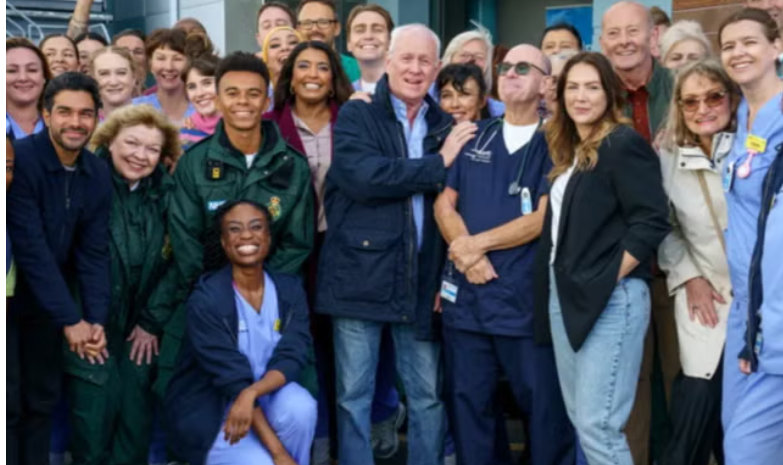
The core of the fan resistance lies in the deep-seated connection viewers form with a show’s setting. While the hospital itself is fictional, its nominal location – whether Bristol or “Holby, West of England” – has provided a stable backdrop against which decades of emotional and dramatic narratives have unfolded. Changing this fundamental element, even if the physical filming location remains the same, forces viewers to recalibrate their understanding of the show’s world. The belief that an entire hospital staff would uproot and move collectively to a new country (albeit within the UK) stretches the boundaries of dramatic license for many, potentially undermining the very “authenticity” the BBC seeks to achieve.
Furthermore, integrating the specific realities of the Welsh NHS will present unique narrative challenges. While all NHS trusts share commonalities, each has distinct operational procedures, funding models, and regional health challenges. Casualty’s writers will need to carefully research and incorporate these nuances without turning the show into a documentary or alienating viewers unfamiliar with the Welsh healthcare system. The success will hinge on how seamlessly these new elements are woven into the fabric of the existing drama, ensuring that the focus remains on compelling character-driven stories and medical emergencies rather than purely on the geographical context.
This move also aligns with a broader strategy by the BBC and other broadcasters to decentralize production and foster creative hubs across the UK. By anchoring shows like Casualty more firmly within specific regions, the aim is to stimulate local economies, create jobs outside of London, and offer a more diverse representation of British life on screen. While admirable in its intent, the execution of such strategies on long-running, nationally beloved dramas often proves fraught with difficulty. The risk is always that in seeking to serve a wider geographical remit, the essential character and appeal of the show are diluted.
Ultimately, Casualty’s journey to becoming explicitly Welsh will be a litmus test for the BBC’s regionalization efforts and for the resilience of long-running dramas in adapting to new directives. While the practicalities of filming in Cardiff have been in place for over a decade, the narrative shift represents a significant reimagining of the show’s identity. The success of this transition will depend on the creative team’s ability to delicately balance the mandate for Welsh authenticity with the need to retain the show’s familiar charm, compelling medical narratives, and the deep emotional connection its characters have forged with audiences over nearly four decades. For now, the future of Holby City Hospital, and its staff, remains a subject of intense debate and anxious anticipation among its loyal viewership.