In a heart-stopping episode that left viewers on the edge of their seats, Holby City ED was plunged into terrifying chaos as a desperate father, Mick, escalated a custody dispute into a full-blown hostage crisis. The nail-biting installment saw beloved characters pushed to their limits, culminating in an act of profound sacrifice that will forever echo through the corridors of Casualty, proving once again why this medical drama remains a titan of British television.
The harrowing events unfolded against the backdrop of a custody battle for young Connor, son of the troubled Mick. Known to authorities for a string of petty thefts and minor dealings, Mick’s world, however flawed, revolved around his son. He had already endured the profound trauma of Connor’s mother tragically dying of an overdose when the boy was just two years old. The latest development in Connor’s care plan – a court order to send him to live with his aunt in New Jersey – proved to be the unbearable breaking point for a father already teetering on the brink. What some detached observers might have seen as a pragmatic “option” for the child, Mick perceived as the ultimate betrayal, a permanent severing of the last bond he truly cherished, a system he believed was stealing his son from him.
The fateful day began with a charged, public confrontation between Mick and Connor’s social worker outside the emergency department. Consumed by a potent cocktail of grief, fear, and perceived injustice, Mick’s desperation quickly spiralled out of control. “Move out of that way!” he bellowed, his voice raw with anguish and a lifetime of perceived slights, as he confronted the social worker, attempting to block her path. In a terrifying turn of events, a struggle ensued, and a firearm – presumably Mick’s – discharged. The unthinkable happened: young Connor, caught in the crossfire, was shot. An intervening officer, or “Caller,” who had bravely tried to de-escalate the situation, was also hit, their urgent pleas to “Drop your phone!” abruptly cut short by the sudden, shocking violence.
The once-bustling Emergency Department instantly became a scene of terror. Panicked shouts of “Somebody call an ambulance!” pierced the air, replaced moments later by Mick’s chilling, desperate command: “Stay back! Stay back! I will shoot!” With his son bleeding out on the cold floor and his world collapsing around him, Mick seized control, herding terrified staff and innocent patients into a treatment bay. The social worker, his initial target, lay gravely wounded, her dressing soaked through with blood, her life rapidly ebbing away. Inside the impromptu prison, every second felt like an eternity, the air thick with unspoken fear and the acrid scent of disinfectant mixed with despair. The medical team, ever professional despite the extreme duress, pleaded for access to their patients. “Her heart rate’s going up… she needs a blood transfusion,” a medic urged, their voices strained with urgency, but Mick was deaf to their pleas, lost in his own torment. “You’re going to be responsible for someone’s death,” he was warned, a chilling prophecy hanging in the suffocating air. His eyes, wide and bloodshot, darted between the medical equipment and the faces of those trying to help, seeing not allies but agents of a system he believed had already taken so much from him.
Yet, it was the voice of nursing legend Charlie Fairhead, a character synonymous with the heart and soul of Holby ED, that cut through Mick’s rage with a devastating, raw honesty. “What would you know about it?” Mick spat, dismissing their attempts at empathy as hollow platitudes. Charlie’s response was a gut-wrenching, unexpected revelation that silenced the room. “I’ve got a son that I would also do anything for. And right now he is upstairs in oncology. That’s right. He’s got cancer.” The confession stunned everyone, casting a new light on Charlie’s own quiet suffering. Charlie, his voice thick with a pain few could fathom, connected with Mick’s paternal anguish on the deepest level, yet simultaneously shamed him for his actions. “Not my fault,” Mick weakly protested, still clinging to his victimhood, but Charlie countered, his voice rising with a controlled fury, “No, but it’s your fault that I’m stuck here and I can’t get to him… You’re not thinking about Connor. All you’re thinking about is yourself!” It was a brutal, necessary truth, delivered by a man who understood loss intimately, a man whose own life had been ravaged by grief.
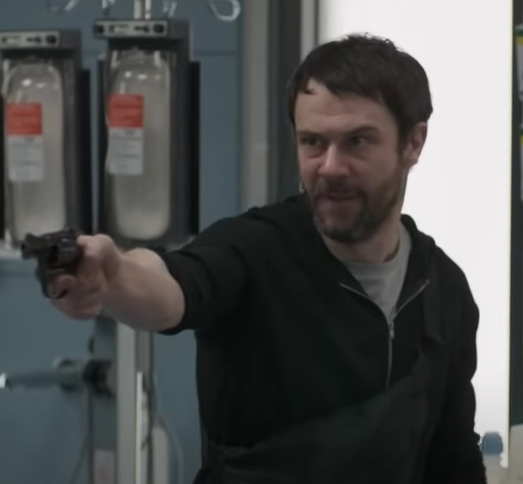
As the emotional standoff intensified, Connor’s young life hung by the thinnest of threads. The medical team’s desperate whispers grew louder, each one a stark report on the boy’s deteriorating condition: “Sat 92. He’s very tachy. He could arrest at any minute!” His breathing grew ragged, shallow gasps betraying the internal damage, his skin acquiring an alarming pallor as the seconds ticked by, each one a step closer to the precipice. Internally bleeding, his life force visibly draining, Connor desperately needed emergency surgery. The specialists confirmed the dire prognosis: “He needs to go to theater now.” But Mick, consumed by paranoia and a profound, deep-seated mistrust of the system he believed had failed him repeatedly, refused. “No. You fix him here,” he demanded, his grip on the situation becoming increasingly tenuous as his own son slipped away before his very eyes.
It was then that Clinical Lead Connie Beauchamp, a woman renowned for her steely resolve and surgical precision, stepped forward, her patience finally exhausted. “I’ve had enough of this,” she declared, her voice firm and uncompromising amidst the palpable fear. “You can shoot me as well if you want to, but this boy needs to be in theater or you are going to watch him die. Do you understand? And none of this is his fault. So, I’m going to take him up myself!” Her defiance was breathtaking, a direct challenge to Mick’s dwindling, desperate authority.
But before Connie could act, Charlie, the quiet stalwart of the ED, intervened with an act of self-sacrifice that brought the entire room to a stunned standstill. “Try this,” he said, his voice surprisingly calm, almost weary. “Let them all go and I’ll stay with you.” The offer was shocking, a selfless bargain proposed by a man who had already given so much. Charlie, a figure of unwavering moral compass and a beacon of hope in the often-dark world of the ED, volunteered himself as Mick’s sole hostage, a bargaining chip for the lives of everyone else. “What do you think you’re doing?” Connie whispered, horrified by his willingness to put himself in such danger. But Charlie’s conviction was absolute. “I’ve got nothing to lose. Duffy died. I died with her.” His beloved wife, Duffy, had only recently passed, leaving Charlie with a profound, aching sense of emptiness. Yet, it was this very emptiness that fuelled his unparalleled courage. “But you do,” he told Mick, his eyes fixed on the desperate father, infusing his words with an almost spiritual weight. “Connor’s still got a chance. You’re doing all this for him. Don’t give up. Trust me. We’ll go out together.” For Charlie, who had recently endured the agony of losing his beloved wife, Duffy, to dementia, the concept of ‘nothing to lose’ was not a flippant remark but a profound, lived truth. His heart, already broken, found a new purpose in protecting those still clinging to hope, particularly a child on the brink. He saw in Mick’s desperation a twisted reflection of his own love for his son, a love that would, in different circumstances, move mountains.
Charlie’s words, born of his own deep sorrow and an unparalleled understanding of paternal love, finally pierced through Mick’s defensive shell. The desperate father, faced with the stark reality of losing his son entirely, his own chaotic actions preventing the very help Connor needed, relented. “Don’t shoot. He’s coming out,” came the voice from outside the ED, as Mick, with Charlie now his captive, allowed the medical team to rush Connor to the operating theatre, a faint glimmer of hope in the desperate situation. The sound of sirens approaching signalled the inevitable end to the standoff, as the weapon was finally put down, ushering in an uneasy peace after hours of terror.
The intense episode serves as a powerful testament to the multifaceted pressures faced by healthcare professionals, not just in treating physical ailments but in navigating the complex, often tragic, human stories that unfold within their walls. It masterfully explored themes of parental desperation, the perceived failures of the social care system, and the devastating consequences when grief and fear culminate in violence. Yet, amidst the terror, it also highlighted the indomitable spirit and unwavering heroism of the Holby ED team, particularly Charlie Fairhead, whose selfless act underscored the profound bonds of humanity that persist even in the darkest of moments. The emotional repercussions of this harrowing day will undoubtedly reverberate through future episodes, leaving an indelible mark on the lives of all involved. Viewers are left to ponder the long-term impact on Connor, Mick, and the brave staff who faced down their fears. Don’t miss the continuing saga of Casualty as the team grapples with the aftermath of this explosive event.