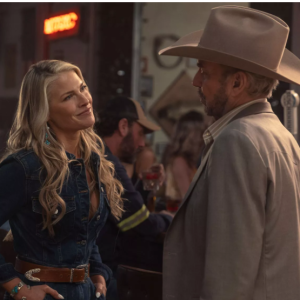
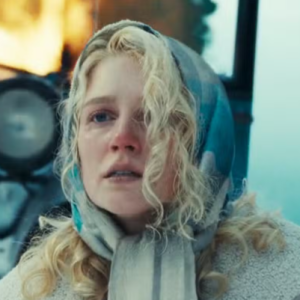
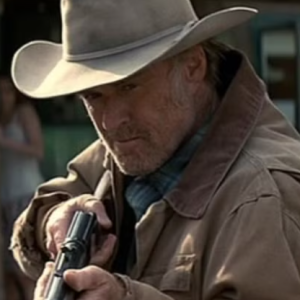
In the sprawling, unforgiving tapestry of Taylor Sheridan’s “Yellowstone” universe, no series has thrown down a more audacious gauntlet than “1923.” This epic saga, a bridge between the foundational struggles of “1883” and the modern-day empire of “Yellowstone,” demands more than just compelling characters and a gripping narrative; it requires a living, breathing world, meticulously crafted to transport audiences to a pivotal, brutal era. Behind the breathtaking scope and visceral reality of “1923” lies the tireless artistry of its production design team, led by the visionary Co-Production Designers Lisa Ward and Carrie White, and the meticulous Set Decorator Carla Curry. Their monumental task? To not just build sets, but to resurrect a world, one historic detail at a time, ensuring every frame pulses with the dramatic weight of the Dutton family’s struggle for survival.
The sheer ambition of “1923” is immediately apparent when Ward recounts her initial reaction to the scripts. “I was astounded by the sheer quantity of sets that we were gonna have to tackle and also all of the locations that we were gonna be in,” she reveals. Indeed, Season One was an odyssey, traversing continents and cultures, from the genteel, if stifling, confines of British aristocracy to the bustling, cacophonous streets of 1920s American metropolises. And Season Two promises an even grander, more perilous journey.
**A Global Canvas: From Edwardian Elegance to American Grit**
The core of “1923”‘s narrative thrust often hinges on the perilous journeys undertaken by its protagonists. For Alexandra (Julia Schlaepfer), her escape from a pre-arranged marriage and her subsequent, fraught journey across the Atlantic to reunite with Spencer Dutton (Brandon Sklenar) demanded an unparalleled commitment to historical accuracy. The production team masterfully recreated the various environments that shaped her transformative arc. “We were delving into Alex boarding the baring in Great Britain, Alex’s arrival on Ellis Island, her subsequent arrival in New York City in the 1920s, which is such a wonderful period and so fun. And then in Chicago once Alex lands there,” Ward elaborates. Each of these locations isn’t merely a backdrop; it’s a character in itself, influencing Alex’s perceptions, challenging her resolve, and marking the profound shifts in her identity.
The details were paramount. From the elegant, if restrictive, interiors of her aristocratic life in Great Britain, to the jarring, overwhelming gateway of Ellis Island – a symbolic crucible for millions of immigrants – every prop, every piece of furniture, every architectural detail had to resonate with the period. The vibrant chaos of 1920s New York City, with its nascent skyscrapers and bustling thoroughfares, and the grittier, more industrial atmosphere of Chicago, were brought to life through “hundreds of photographs,” as Ward describes, meticulously sifting through historical archives “trying to find the right corner and the right place in those spaces for those scenes to happen.” It was a delicate dance between grand vision and granular precision, transforming two-dimensional images into immersive, three-dimensional realities.
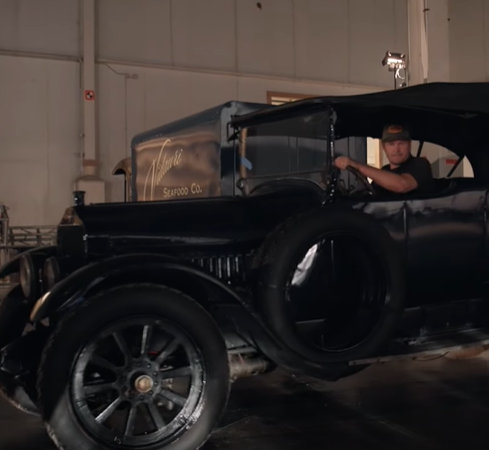
Carla Curry emphasizes the collaborative triumph: “They just really brought the vision to life.” This vision extended far beyond static interiors. The dynamic nature of travel in the early 20th century, critical to the characters’ movements and the show’s relentless pace, necessitated a vast array of period-accurate vehicles and vessels. “We have ships, we have boats, we have trains, the automobiles,” Curry lists. Each mode of transport was a set unto itself, demanding period-perfect detailing. One particular feat was the “engine room set on the merchant ship.” Ward recalls the challenge of “both the architecture of the ship itself, but also figuring out how we were gonna light all of the ovens and all the other elements.” This commitment to depicting the visceral realities of a transatlantic journey, right down to the grimy, thunderous heart of a ship, immersed viewers in Alex’s desperate passage, underscoring the vast distances and formidable obstacles between her and Spencer.
Beyond the global odyssey, the American West itself demanded meticulous recreation. “We had a lot of period streets in this season,” Curry notes, listing iconic Western locales like “New York, Bozeman, we did Amarillo, we did Fort Sill, we did Fort Worth.” This wasn’t merely about finding existing period buildings; it involved an extensive overhaul of modern spaces. “Huge amount of graphics and period decor and details that went into that just to bring it to life,” she explains. The magic was complete when “the period cars get in and it’s pretty magical.” This seamless integration of historical elements creates an undeniable sense of authenticity, allowing actors and audience alike to “just drop right into it,” as one cast member enthusiastically describes – “everywhere you look is the world that you’re playing in. It’s awesome!”
**The Unrelenting Grip of Winter: Montana’s Chilling Embrace**
While the far-flung locales provided a grand backdrop, the heart of “1923”‘s struggle remains firmly rooted in the unforgiving landscape of Montana. Taylor Sheridan’s audacious decision to shoot the series in the dead of winter became a defining, often brutal, element of the production. “When we finished last season, we actually got drove out of Montana because of the snow,” Ward recounts, underscoring the raw power of nature. This firsthand experience informed their approach to the scripts for Season One, where “the Dutton’s are fighting to stay alive in the winter was wonderful because we could all picture it because that’s sort of how we’d left things last season.”
The real Montana winter, however, proved even more relentless. “We had one of the harshest winters on record, I think, in Montana,” Curry confirms, painting a picture of extreme cold. “With the wind chill factor, it was 21 degrees below zero,” a cast member interjects, adding a chilling personal testimony to the production’s harsh conditions. This wasn’t just an aesthetic choice; it was a fundamental narrative element, shaping character dynamics and driving the plot. The severe winter, with its blizzards, frozen ground, and relentless cold, amplifies the Duttons’ struggle for survival against disease, predatory animals, and human adversaries. Jacob Dutton’s near-fatal injuries and long recovery, Cara Dutton’s stoic resilience in managing the ranch, and the family’s desperate efforts to protect their livestock are all magnified by the oppressive, chilling presence of the environment. The production design team meticulously charted the “phases of winter,” from “deep snow crystal on the trees and branches through a sort of more moderate, cold, muddy, snowy, icy into what feels in Montana, like possible emergence of spring where you’re suddenly looking at patches of snow and ice, rather than deep drifts and eddies and just sort of the nuance of all of that.” This subtle yet profound depiction of winter’s grip and eventual thaw reflects the cyclical nature of life and struggle on the ranch, offering glimmers of hope amidst the harsh realities.
The challenge, as Curry humorously notes, was the unpredictable nature of nature itself: “You know, you hope for snow and you don’t have it or you don’t want snow and it happens the other way.” This is where the unsung heroes of the special effects team stepped in, providing the necessary blankets of artificial snow when the real thing failed to materialize, ensuring the visual consistency and dramatic integrity of the winter scenes.
**The Enduring Hearth: The Dutton Homestead**
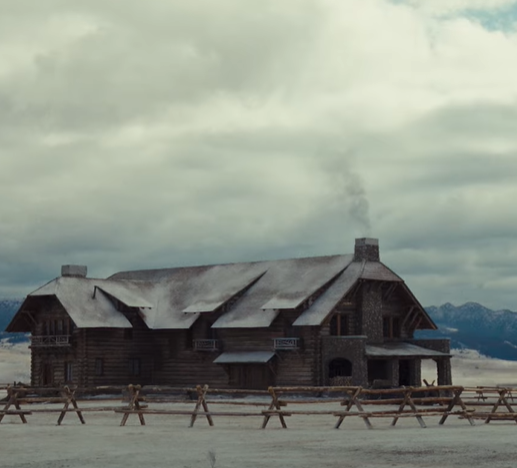
Amidst the global travel and the punishing climate, the Dutton family home remains the anchoring force, a symbol of their enduring legacy. Interviewed in the very dining room where much of the family drama unfolds, Carla Curry reflects on its significance: “You really feel like you are in the great room, and I think we paid respect to it that we wanted it to feel familiar.” This familiarity isn’t just about comforting the audience; it’s about connecting “1923” directly to “Yellowstone,” acknowledging the continuous thread of the Dutton family’s presence on that land.
The furnishings and layout of the dining room, specifically designed to feel like “where Beth sits” in the modern series, were chosen to bridge the temporal gap. While fitting the “style of 1923,” they were arranged in a “familiar way,” ensuring that despite the passage of a century, the spirit of the Dutton home remained palpable. This careful design choice underscores the generational continuity of the Duttons’ fight, reinforcing that the struggles of Jacob and Cara in 1923 are the foundational battles that shaped the future of the Yellowstone Dutton Ranch. It’s a powerful testament to the creative team’s understanding of the universe they inhabit, allowing the emotional resonance of the modern series to reverberate through its historical predecessors.
**A Dynasty of Design: Building the “Yellowstone” Universe**
The set design team’s journey through the “Yellowstone” universe is as epic as the stories they help tell. Lisa Ward, having worked on “Yellowstone,” then “1883,” and now “1923,” describes it as an “incredible design opportunity to move through westerns in each of these different eras.” This unique continuum allows for a profound understanding of the evolving American West, enabling the designers to subtly weave in threads of continuity while meticulously distinguishing each period. From the raw, untamed wilderness of 1883 to the cusp of modernity in 1923, and finally to the contemporary challenges of “Yellowstone,” their work has been instrumental in grounding the entire saga in a tangible, deeply researched reality.
Ultimately, the set design of “1923” is far more than just aesthetics; it is the very bedrock of the storytelling. Through their meticulous research, their unparalleled attention to detail, and their unwavering commitment to authenticity, Carla Curry, Lisa Ward, Carrie White, and their entire team have not merely built sets; they have resurrected an era. They have crafted a world so real, so vibrant, and so painstakingly accurate that it allows the compelling drama of the Dutton family to unfold with a profound, almost tactile, sense of historical gravity. It is this immersive world-building that elevates “1923” from a mere television series into an unforgettable journey through a pivotal, dramatic chapter of American history.