Holby City Emergency Department was rocked to its core in a recent, harrowing episode of BBC One’s “Casualty,” as what initially appeared to be a standard drug overdose rapidly spiralled into a full-blown public health crisis. The gripping narrative, titled “Supply And Demand,” laid bare the devastating realities of an increasingly perilous drug landscape, exposing not only the prevalence of deadly illicit substances but also the shocking vulnerability and exploitation of young people caught in their insidious web. At the heart of this unfolding drama was Cassie, a seemingly ordinary young girl whose involvement in the drug trade pushed the ED team to their limits and unveiled a truth far more disturbing than anyone could have anticipated.
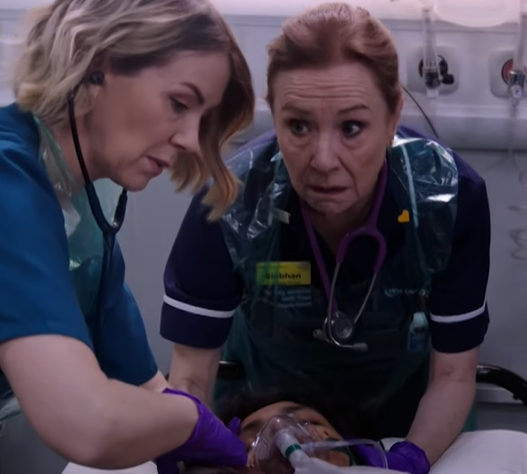
The episode opened with frantic scenes as a young male, later identified as a friend of Cassie’s, was rushed into the ED, unresponsive and struggling to breathe. His condition was critical, exhibiting classic signs of an opioid overdose. As the medical team, led by the diligent Dr. Stephen, battled to stabilise him, a startling development emerged: the patient responded almost immediately to Naloxone, the opioid reversal drug. This swift recovery, while a testament to the team’s expertise, cast a suspicious light on Cassie’s initial, vehement claims that her friend had merely taken “just a pill” – specifically denying any opioid involvement. “Naloxone only works on opioids,” a doctor pointedly observed, the implication of Cassie’s deception hanging heavy in the air. Her denials, initially perceived as simple panic or protective loyalty, soon hinted at a deeper, more complicated entanglement in the very world she claimed to be distanced from.
As the chaos of the first patient subsided, a second, equally distressing case arrived at the ED’s doors – Cassie herself. This time, however, her symptoms were distinct. While showing signs of an adverse reaction, she lacked the severe respiratory depression seen in her friend. It was during her examination that the chilling truth began to materialise. A sharp-eyed medic discovered a partially consumed ecstasy tablet, identical in appearance to the one her friend had reportedly taken. The pieces of the puzzle began to fall into place. Initial assumptions about a simple ecstasy overdose were quickly shattered when Stephen and his colleagues observed the tell-tale pinpoint pupils – a classic sign of opioid exposure. A horrifying hypothesis quickly formed: these seemingly innocuous ecstasy pills were being cut with a highly potent synthetic opioid, likely a nazene. “Your friend was telling the truth,” a doctor concluded, the irony piercing through the medical jargon. “That’s why Naloxone worked.” This revelation not only vindicated Cassie’s initial, albeit misleading, statement about “just a pill,” but it also signaled the terrifying reality of a new, deadly cocktail flooding the streets.
The gravity of the situation escalated dramatically when Cassie, confronted with the evidence, reluctantly confessed to her involvement. Her desperate pleas to “take them back” if “something was wrong with the pills” confirmed her role in their distribution. The ethical dilemma facing the attending doctor was immense: protocol dictated the immediate confiscation of the pills as evidence for the police. Yet, Cassie’s raw plea, “You can’t. Please!” resonated with an underlying fear far beyond legal repercussions. In a tense moment of moral compromise, the doctor agreed to hold onto the pills temporarily, giving Cassie a slim window to “work it out” – a fragile lifeline in a rapidly sinking situation. This decision, fraught with professional risk, underscored the human element of the crisis, prioritizing a vulnerable young life over strict procedural adherence, at least for a crucial moment.
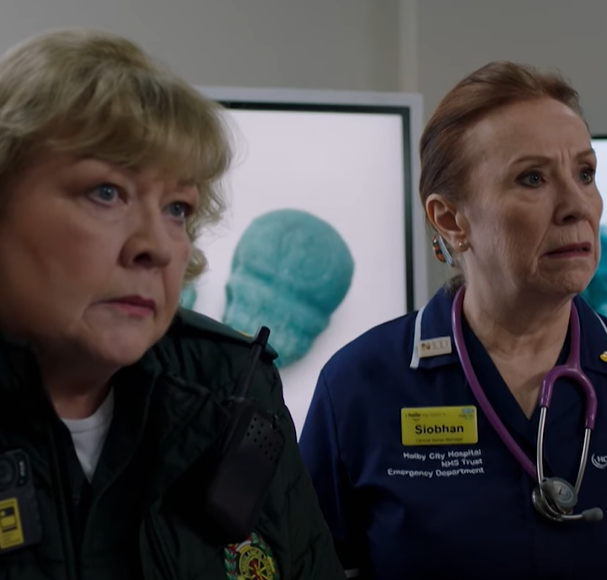
But the “moment” quickly dissolved as the full scope of the crisis came crashing down. Senior medical professional Jan’s grim pronouncement that the pills were indeed cut with nazenes triggered a cascade of urgent actions. The ED team realised they were not just dealing with isolated incidents but a potential public health emergency. “We’re looking at a critical incident,” Jan declared, her voice laced with grim urgency. Concerns immediately shifted to the broader implications: how many of these lethal pills were in circulation? How many more young people were unwittingly consuming them? The terrifying unpredictability of the drug – “no two pills have the same dose, no two patients are exhibiting the same response” – meant that every overdose was a unique, life-threatening lottery.
Calls were frantically placed to the Intensive Care Unit (ITU) for portable ventilators, as the hospital braced for a potential surge of patients suffering severe respiratory depression. The availability of Naloxone, the only effective antidote, became a critical concern, with Jan warning, “If this goes badly, I won’t have enough paramedics… to administer it.” The fear rippled through the department, even reaching outside its walls as Jan grimly acknowledged, “Some of our staff are out tonight.” The episode masterfully conveyed the terrifying scale of such a crisis, transforming a medical drama into a high-stakes race against time, with Holby City itself teetering on the brink of an unprecedented catastrophe.
As Cassie slowly recovered on a Naloxone infusion, the full, heartbreaking truth of her predicament began to surface. When asked about her impending discharge and home life, her response was not one of relief but profound dread: “I just don’t want to go back to work.” This simple statement opened the door to a chilling revelation. Another young female patient, also caught in the aftermath of the drug crisis, gently clarified Cassie’s “work”: “She doesn’t deal. They just make a party with their people.” But the deeper horror was yet to come. The second girl revealed, “I have to go to parties with them. They give me to the dealers who make the most profit.” Cassie had initially tried to mask this chilling reality, describing it as “just flirting, drinking.” But the younger girl’s stark admission painted a picture of calculated exploitation, where young women were commodified, used as bait to draw in clientele, and then effectively handed over for financial gain. The heartbreaking reason she took the pill herself underscored the depth of her despair: “That’s why I took the pill. I didn’t want to feel it.” This poignant confession illuminated the profound emotional trauma and desperation that lay beneath the surface of the drug crisis, hinting at potential sexual exploitation and the complete erosion of agency.
“Casualty” once again proved its prowess in tackling gritty, relevant societal issues with unflinching honesty. The episode concluded with the medical team offering crucial support beyond immediate physical care. Sexual health screenings were offered, acknowledging the likely consequences of the girls’ forced participation in these “parties.” More importantly, the option to speak to the police was presented not as a demand, but as a choice, empowering the vulnerable young women to reclaim some control over their lives.
“Supply And Demand” was a stark and devastating portrayal of the contemporary drug landscape, highlighting the sinister practice of cutting drugs with potent, deadly substances. Beyond the medical drama, it served as a powerful exposé of the systemic exploitation of youth, where vulnerability is weaponized for profit. The episode left viewers with a chilling reminder of the hidden dangers lurking in plain sight and the critical role of frontline services like Holby ED in not only treating the symptoms of a broken society but also fighting to protect its most vulnerable members. The true casualty, it seems, extends far beyond the hospital walls.