Kevin Costner, the acclaimed two-time Oscar winner, is set to receive the prestigious Eva Monley Award from the Location Managers Guild International (LMGI) at their 12th annual awards ceremony on August 23rd at the Eli and Edythe Broad Stage in Santa Monica. This distinguished honor celebrates individuals who have made an extraordinary contribution to the art and craft of filmmaking through their unwavering commitment to the use of authentic, real-world locations. For Costner, whose cinematic journey has consistently championed the power of landscape as a narrative force, this recognition is particularly fitting, underscoring a career deeply rooted in the evocative potential of the American backdrop.
LMGI President John Rakich eloquently articulated the rationale behind the selection, stating, “Kevin Costner has long understood that locations are more than scenery — they are storytelling tools that shape the emotional and visual language of a film. His commitment to authenticity and his deep respect for the craft makes him a perfect recipient of the Eva Monley Award. We’re honored to celebrate his legacy and his ongoing contributions to the art of filmmaking.” This sentiment perfectly encapsulates Costner’s approach, which has seen him consistently gravitate towards projects where the environment is not merely a backdrop but an active participant in the unfolding drama, shaping characters and dictating destiny.
Costner’s extensive filmography is a testament to this philosophy. From his early roles in films like Silverado and Field of Dreams, where the vastness of the American West and the mythical allure of a cornfield in Iowa become characters in themselves, he demonstrated an innate understanding of how setting can profoundly influence storytelling. His directorial triumph, Dances with Wolves, which earned him Oscars for Best Picture and Best Director, is perhaps the quintessential example of this. The sweeping vistas of the American frontier, meticulously scouted and captured, were integral to the film’s authenticity and emotional resonance, immersing audiences in a bygone era and a deep connection to the land. Similarly, historical epics like JFK, Wyatt Earp, and Thirteen Days relied heavily on meticulously recreated or authentic locations to lend credibility and atmosphere to their narratives. Even in more fantastical endeavors like Waterworld or action-thrillers like Robin Hood: Prince of Thieves, the environments, whether flooded future worlds or medieval forests, played a crucial role in establishing the visual and emotional tone.

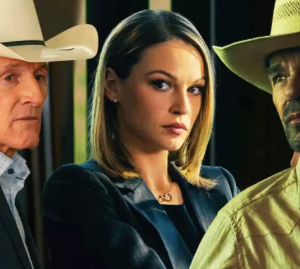
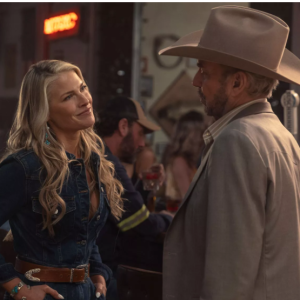
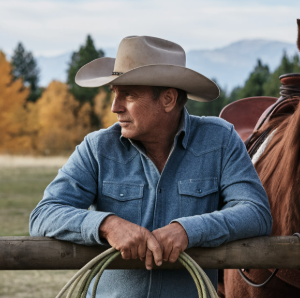
However, it is arguably his role as John Dutton in Taylor Sheridan’s critically acclaimed and massively popular drama series Yellowstone that most recently and powerfully exemplifies Costner’s commitment to location-driven storytelling. Yellowstone is a sprawling saga centered on the Dutton family, owners of the largest contiguous ranch in the United States, perpetually fighting to defend their land and way of life against encroaching developers, a Native American reservation, and political adversaries. The series is filmed almost entirely on location in Montana, utilizing actual ranches and the breathtaking, often unforgiving, landscape of the American West.
In Yellowstone, the land is not just scenery; it is the very heart of the conflict, the source of the Duttons’ identity, and a constant, powerful presence. The sweeping shots of the mountains, valleys, rivers, and the iconic Yellowstone Ranch itself are as crucial to the show’s appeal as its intricate plots and compelling characters. Costner’s portrayal of John Dutton, a stoic patriarch whose life’s mission is to preserve his family’s legacy and their ancestral land, is intrinsically tied to this sense of place. Dutton is literally and figuratively rooted in the soil, his decisions and his very being shaped by the vast, wild, and beautiful, yet perpetually threatened, expanse around him. The authenticity of the locations lends immense weight to the themes of land ownership, tradition versus progress, environmental stewardship, and the raw struggle for survival that permeate the series. The dust, the snow, the endless horizons, and the intimate details of ranch life, all captured in real settings, ground the often-larger-than-life drama in a palpable reality, making the stakes feel incredibly high and personal. Costner’s performance is deeply informed by this environment, projecting a grizzled determination forged by a lifetime spent battling to protect a piece of America that feels both ancient and eternally wild.
Beyond Yellowstone, Costner continues to champion the narrative power of locations with his ambitious multi-part film series, Horizon: An American Saga. This new Western epic, directed by and starring Costner, promises another expansive cinematic journey across the American frontier, further solidifying his dedication to telling stories where the landscape is as vital as any character. His choice to embark on such a grand, location-dependent project highlights his enduring belief that the true essence of a story can often be found in the authentic environments where it unfolds.

While Costner has amassed numerous accolades throughout his career, including an Emmy for his lead role in Hatfields & McCoys and recognition from the Producers Guild, DGA, SAG Awards, Golden Globes, and various critics groups, the Eva Monley Award holds a unique significance. It acknowledges a more fundamental, often unsung, aspect of filmmaking: the art of leveraging real places to create immersive and believable cinematic worlds. The LMGI Awards, which also recognized Ilt Jones with the 2025 Lifetime Achievement Award, honor the vital contributions of location professionals—the unsung heroes who scout, manage, and facilitate the use of these crucial settings.
Kevin Costner’s receipt of the Eva Monley Award is more than just an acknowledgment of his past achievements; it is a celebration of a filmmaker whose vision consistently understands that the most profound stories are often those told with the ground beneath our feet, the sky above, and the undeniable spirit of a place as their enduring foundation. His legacy, from the baseball diamond in Iowa to the sprawling ranches of Montana, will forever be intertwined with the breathtaking, authentic landscapes that have served as the silent, yet powerful, characters in his celebrated career.