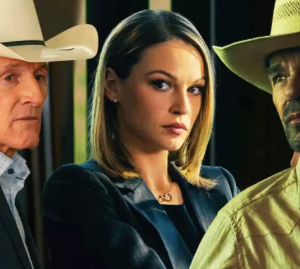
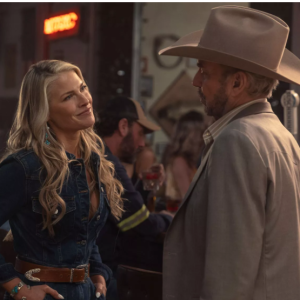
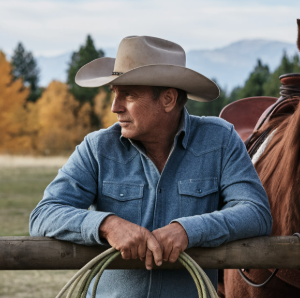
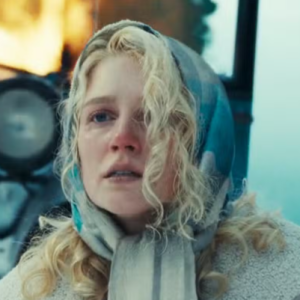
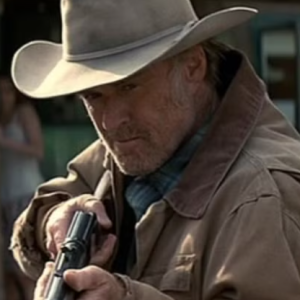
As the dust settled on the first half of “1923,” audiences were left reeling from a brutal winter and the seemingly insurmountable odds stacked against the Yellowstone ranch. Now, as Paramount+ offers a compelling second look at the season’s most pivotal moments, dubbed “Best of 1923 (Part 2),” it’s starkly clear that the Dutton family’s fight for survival is far from over. This is not merely a tale of land and cattle; it is a visceral saga of loyalty, vengeance, love, and the indomitable spirit of a family determined to preserve their dream against a world hell-bent on its destruction. The drama is palpable, the stakes impossibly high, and the echoes of their struggle resonate with every frame.
The very ground beneath the Duttons’ feet is under siege, and the latest threat arrives in the deceptively polite form of Donald Whitfield. A man of shrewd calculation and chilling ambition, Whitfield wasted no time making his intentions known to Cara Dutton, the formidable matriarch holding the fort in Jacob’s absence. Presenting himself as a “neighbor” who had acquired the adjacent “Lazy S” ranch, Whitfield’s words carried a venomous undertone. He offered the Duttons the discarded brand of his newly acquired land, a thinly veiled symbol of their own impending irrelevance. Cara, ever the stoic defender of her family’s heritage, politely yet firmly rebuffed his offer. “One is plenty, thank you.” Her refusal underscored the deep ideological chasm between them: Whitfield saw the valley as ripe for “progress,” an opportunity “beyond cattle,” dismissing ranching as “not much of a business these days, more of a dream… and not a good one.” Cara, with the quiet power of a lifetime etched into her resolve, retorted, “Well, it’s our dream.” This exchange laid bare the fundamental conflict – a clash between the relentless march of industrialization and the raw, unyielding dream of a life tied to the land. Whitfield’s chilling prediction, “Let us spend a winter here without her husband to run that ranch. By spring you beg me to buy,” painted a stark picture of his predatory strategy, turning the harsh Montana winter itself into an accomplice in his scheme to dismantle the Dutton legacy.
Meanwhile, the battle for the Duttons’ very existence raged not just in the high plains but within the hallowed, often corrupted, halls of justice. The climactic showdown between Jacob Dutton and the venomous Banner Creighton reached a fever pitch in the courtroom, a stage for a legal battle that was anything but just. Creighton, arrested for two counts of murder and four counts of attempted murder, defiantly pleaded “not guilty.” But the ensuing verbal volley between the prosecutor, Creighton’s savvy counsel, and Jacob himself laid bare the intricate web of power and personal vendettas. Creighton’s lawyer, armed with photographic evidence of rope burns on Banner’s neck and poignant letters from Scottish widows, accused Commissioner Dutton of extrajudicial killings, painting Jacob’s actions as brutal and unlawful. He argued for Banner’s release, citing a double standard where Jacob faced no such charges for his perceived transgressions. Jacob, a man whose reputation for being “harsh” was equally matched by an unwavering commitment to his word, stood his ground, demanding Banner be held without bail. The judge, caught in the crossfire of accusations and thinly veiled threats, ultimately made a decision that sent shockwaves through the courtroom: Creighton was released without bail, given the lack of immediate physical evidence for his current charges. This outcome was a powder keg, igniting a raw, personal war between the two titans. “You keep sending boys to do men’s work, Dutton,” Creighton snarled, “I guess if I was as old as you, I’d send boys too. This don’t end in court. Lands in a field in front of your house if that’s where you want to die. I’m more than happy to help you out.” Their chilling exchange cemented the grim reality: the legal system, for all its pomp and circumstance, would be a mere prelude to a bloodier, more personal reckoning.
Thousands of miles away, the Dutton’s last hope, Spencer, was undertaking an odyssey of biblical proportions, unknowingly racing against time to reach a family teetering on the brink. His journey, marked by peril and a relentless yearning for home, was a testament to his indomitable spirit. From the harrowing “Mayday” call on a drifting tugboat, where he was forced to navigate by compass under a stranger’s guidance, to the brief, precious moments of levity shared with Alexandra and their quirky British companion, Spencer’s path was a crucible. But just as the horizon of home seemed to beckon, fate dealt its cruelest blow. Onboard the ship, a simmering conflict exploded into a duel that would shatter Spencer’s world. Arthur, Alexandra’s aristocratic, entitled fiancé, challenged Spencer to a sword fight, his honor wounded by Spencer’s unwavering devotion to Alexandra. Spencer, a man who “kills for a living,” warned him of the folly of his challenge, yet accepted to defend Alexandra’s name. The duel was swift and decisive; Spencer, with his lethal precision, disarmed Arthur. But as Spencer lowered his blade, Arthur, a coward disguised as a gentleman, pulled a pistol, a desperate act of treachery. The ship’s captain intervened, declaring the duel illegal. Yet, in a devastating twist of arbitrary justice, Alexandra, who bravely testified on Spencer’s behalf – “my husband threw down his sword, Arthur pulled a pistol on an unarmed man” – was deemed to have “no honor” by the enraged captain and confined to her quarters. Even when a fellow passenger corroborated her account, the captain, blinded by his own rigid code and perhaps a touch of class prejudice, refused to listen. The heart-wrenching climax saw Spencer physically restrained, desperately calling out, “I love you, Alex! Why did you do this to me? Why?” as Alexandra was forcibly taken away, their reunion cruelly snatched away. The final, poignant observation flashed across the screen: “You may question the marriage so, but difficult to question their sincerity.” It was a brutal, soul-crushing separation, leaving Spencer alone with his grief and a renewed, burning resolve to return home.
Beyond the immediate struggles of the Duttons, the season continued to explore the harrowing plight of the indigenous peoples. The relentless search for Teonna Rainwater underscored the pervasive injustice and the systemic efforts to erase native cultures. Her desperate flight for survival, aided by those who risked everything to shield her, added another layer of raw, authentic pain to the narrative, reminding audiences that the fight for land and freedom extended far beyond the Dutton ranch. These interconnected narratives painted a comprehensive picture of a land and its people in turmoil, a society grappling with profound changes and deep-seated prejudices.
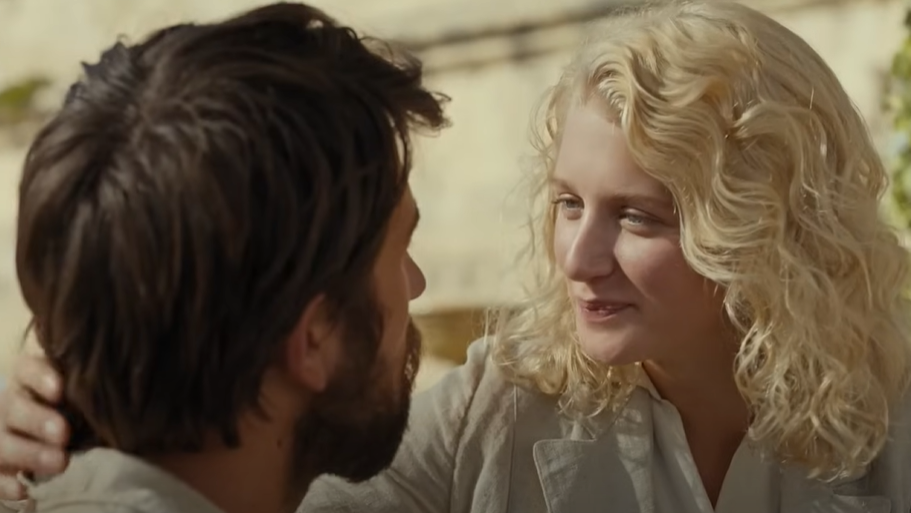
As “1923” hurtles towards its conclusion, the “Best of 1923 (Part 2)” compilation serves as a potent reminder of the unyielding spirit of the Duttons and the relentless forces arrayed against them. Cara’s quiet strength, Jacob’s unwavering resolve, and Spencer’s agonizing journey back home form the bedrock of a family determined to preserve their legacy, no matter the cost. With Banner Creighton free and Donald Whitfield poised to strike, the stage is set for an explosive final confrontation. When Spencer Dutton finally reaches the Yellowstone, battered but unbroken, what will he find? And more importantly, what will he do to those who have dared to threaten his family’s dream? The answer promises to be as brutal, as beautiful, and as unforgettable as the rugged landscape they call home. The Duttons may be down, but they are far from out, and their fight for the Yellowstone is only just beginning.