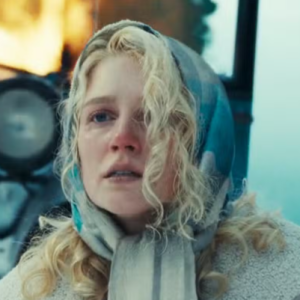
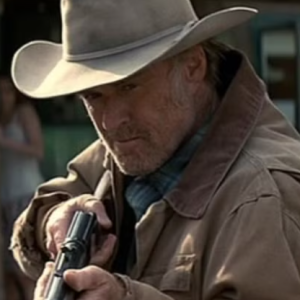
From the dust-choked arenas of the Yellowstone Dutton Ranch, where the wild spirit of the West clashes with the relentless march of modernity, no two figures embody the raw, often brutal, heart of this saga more profoundly than Kayce Dutton and Rip Wheeler. While bound by their loyalty to John Dutton and the sacred land, their relationship is a complex tapestry woven with threads of rivalry, begrudging respect, and ultimately, an unbreakable, if unconventional, brotherhood forged in blood, sweat, and shared sacrifice. This is the story of how a prodigal son and the loyal enforcer navigated the treacherous currents of succession, violence, and the very soul of the Yellowstone.
When Kayce Dutton, the errant son, returned to the Yellowstone, the tension was palpable – a predator entering another’s established territory. Rip Wheeler, the unwavering pillar of John Dutton’s empire and the man who literally bled for the ranch, saw Kayce not as a returning heir, but a dangerous variable. This immediate friction was laid bare in a sequence of events that would define their initial, volatile dynamic.
The jarring encounter with a charging bear, forcing Kayce into a desperate act of self-preservation and the subsequent fatal shot, served as a grim welcome back to the unforgiving world of the ranch. But it was Rip’s arrival, not with concern, but with cutting remarks – “You could get in trouble in a church. You stood your ground though. For once.” – that truly underscored their history of antagonism. Kayce’s defiant retort, “I ain’t used to seeing you off my dad’s leash,” struck at the very core of Rip’s identity, igniting a primal, no-holds-barred brawl.
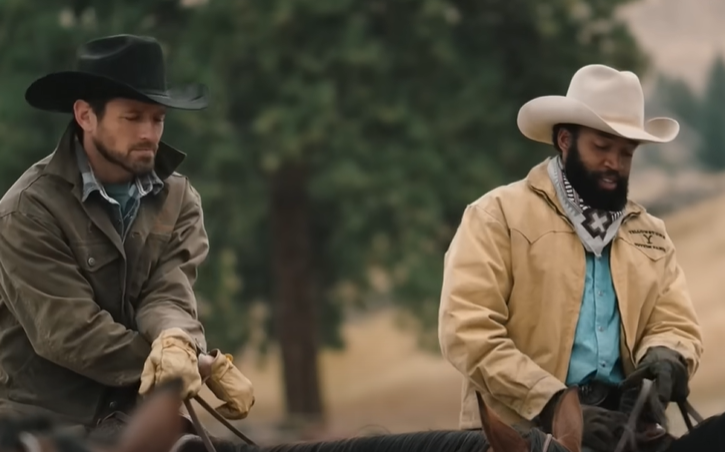
This isn’t merely a fistfight; it’s a visceral dialogue. Every blow exchanged speaks volumes about their past resentments, their competing claims to John’s affection and the ranch itself. Rip, always the pragmatist, ends the pummeling with a chilling declaration: “My job is to protect this family, and you are the worst thing for it.” He accuses Kayce of leaving his father to bury his secrets, a veiled reference to the dark deeds Rip has performed in John’s name, often to clean up Kayce’s messes. This scene cemented Rip’s perception of Kayce as a liability, a force of chaos threatening the fragile stability he so painstakingly maintained. For Rip, the ranch and John Dutton were his entire world, and Kayce’s presence, with all its inherent drama and the legacy it represented, was a direct threat to that order.
The dynamic shifted seismically when John Dutton, facing his own mortality and the grim realities of his family’s future, made a pivotal decision. He summoned Rip, confiding in him with a vulnerability rarely seen: “In a lot of ways, you’re the only person I can trust, Rip. ‘Cause you’re the only person that doesn’t benefit when I’m gone. You do it for me.” This declaration of profound trust, however, came with an almost unbearable burden – the command to guide Kayce toward leadership. “Kayce needs to learn how to run this place… and he can’t do that while he’s living with them.” For Rip, who had sacrificed everything for the ranch and John, this was a bitter pill. His position as the de facto foreman and heir apparent to the ranch’s operational authority was being slowly, deliberately, transferred to the very man he distrusted most. The awkward exchange in the bunkhouse, where Rip curtly noted Kayce’s abstinence from alcohol with a dismissive “That figures,” spoke volumes about the chasm that still existed between them.
John, ever the master manipulator and astute observer of men, understood that Kayce’s authority wouldn’t be granted; it had to be earned. “Ain’t about his respect, son,” he advised, “it’s about everyone else’s.” This set the stage for one of the most pivotal and brutal lessons Kayce would receive. During a cattle drive, Kayce’s attempts at leadership were met with the predictable insolence of some wranglers, particularly the defiant Walker and Cowboy. Rip, rather than immediately intervening, orchestrated a chilling display of ranch justice.
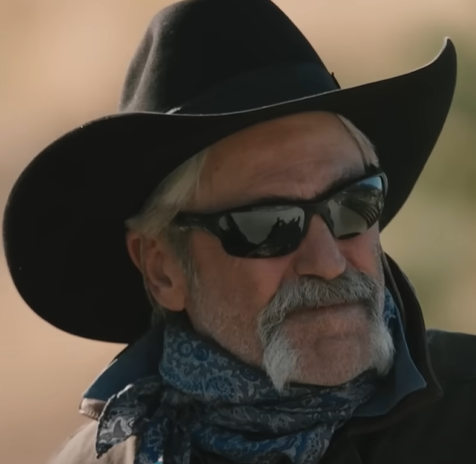
He subtly provoked the unruly wranglers, allowing them to undermine Kayce’s command, then stepped in with a cold, calculated warning: “It’s just a little reminder, Lloyd. They might let us stay here and get old and rusted, but we’re just tools. That’s all we’ll ever be.” This wasn’t just a reminder of their place; it was Rip subtly asserting his own unwavering authority and reminding the men who truly held sway in the bunkhouse hierarchy.
The ensuing showdown, a brutal, public fistfight between Kayce and Rip, was a staged crucible. Rip knew that for Kayce to truly command the respect of the ranch hands, he had to prove his mettle, not through words, but through pain. “You needed an excuse, now you got one,” Rip declared, refusing to take it easy on Kayce. The violent exchange, watched in tense silence by the bunkhouse crew and the stoic John Dutton, was not an act of malice from Rip, but a grotesque act of mentorship. He pushed Kayce to his limit, forcing him to endure, to stand his ground, and ultimately, to earn his stripes.
When the dust settled, Kayce, bloodied but unbowed, delivered his first true decree as a leader: “There ain’t no fighting on this ranch. If you wanna fight, you come fight me.” It was a moment of hard-won respect, a testament to Rip’s brutal tutelage. John, recognizing the sacrifice, thanked Rip, but the older foreman’s skepticism lingered. “I haven’t seen a shred of proof that you can,” he told John regarding Kayce’s dependability, adding a pointed jab: “Jamie’s your son too, sir. What do you see in him?” This stark comparison highlighted Rip’s deep understanding of John’s flawed judgment when it came to his biological children, a vulnerability Rip himself, as John’s chosen son, did not share.
As Kayce gradually assumed more responsibility, his interactions with Rip evolved from open hostility to a grudging, then foundational, partnership. Beth, ever the keen observer, articulated Rip’s true nature to Kayce: “He’s not a bully, Kayce. He is exactly what our father turned him into.” This insight began to soften Kayce’s perception, allowing him to see Rip not just as a rival, but as a product of their shared, complicated father.
When Kayce struggled to command the wranglers, questioning the best methods for moving cattle, it was Rip who provided the pragmatic, ruthless solution. “You ask them questions, Kayce, and the questions will never stop. You tell me what you need and I’ll take care of it. They won’t question me.” This was the turning point: Rip actively choosing to be Kayce’s enforcer, his loyal shadow, ensuring the wranglers followed Kayce’s orders without dissent. It was a clear delineation of roles – Kayce as the decision-maker, Rip as the unwavering implementer, the one who would handle the dirty work and maintain the peace among the men.
Their bond was tested, and ultimately solidified, in the face of external threats. When Kayce, now livestock commissioner, uncovered a dangerous militia plot and needed a volunteer to “draw fire” – to expose themselves to enemy gunfire to gauge their strength, an almost suicidal act – there was only one person he turned to. “I’d do it myself, but…” Kayce began, trailing off. Rip, without a moment’s hesitation, his face grim but resolute, simply stated, “Yeah, I’ll draw your fire.” This was the ultimate expression of loyalty, a willingness to sacrifice his life not just for John, but for Kayce. In that moment, the lines of rivalry blurred entirely; they were brothers-in-arms, bound by a shared code of protecting the ranch and family, no matter the cost.
Later, the casual conversation about the bunkhouse and the female drifter, Avery, revealed another subtle but crucial shift. John, almost dismissively, told Rip to “run the bunkhouse,” only for Rip to cautiously ask, “Sir, does Kayce know that?” John’s reply, “It’s Kayce’s idea,” solidified their dynamic. Kayce, the rightful heir, had himself chosen Rip, the loyal lieutenant, to lead the men under his command. It was a mutual recognition of strengths: Kayce’s strategic mind and inherent authority, and Rip’s unmatched ability to manage and command the ranch’s workforce.
The evolution of Kayce Dutton and Rip Wheeler is a testament to the Yellowstone’s harsh lessons and the enduring power of family, however unconventional. From bitter adversaries battling for John Dutton’s approval and control of the ranch, they have transformed into an indispensable partnership. Kayce, once the rebellious outsider, has become the ranch’s future, finding his voice and authority. Rip, the ever-loyal enforcer, has embraced his role as the unwavering foundation, the man who ensures Kayce’s vision is realized, even if it means stepping into the path of a bullet. Their relationship, built on the brutal realities of the West and forged in the fires of conflict, stands as a brutal, yet beautiful, cornerstone of the Yellowstone saga. They are two halves of a formidable whole, ensuring that the Dutton legacy, come hell or high water, endures.