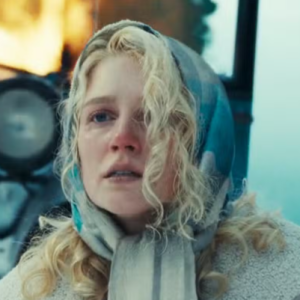
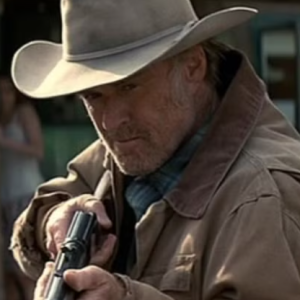
The untamed American West of the late 19th century was a crucible, forging legends and breaking spirits with equal ferocity. In Taylor Sheridan’s acclaimed *1883*, the prequel to the sprawling *Yellowstone* saga, no character embodies this brutal beauty and relentless spirit more profoundly than Margaret Dutton. As the matriarch of the nascent Dutton dynasty, Margaret, portrayed with raw intensity by Faith Hill, is far more than a pioneer wife; she is a force of nature, a protector, a pragmatist, and a woman grappling with the immense toll of a journey fraught with peril. A recent compilation, “Best of Margaret Dutton,” offers a poignant reminder of the moments that cemented her as the unwavering heart of her family’s perilous westward migration.
From the very outset, Margaret Dutton shattered the demure expectations of her era. The compilation opens with a chilling reminder of her steel-edged resolve: the stark aftermath of a life taken. Elsa’s haunting narration details Margaret’s silence, her quiet tears by the fire, and the gut-wrenching confession: “She said she killed a man over a horse. And now John was the only hope our family has to reach heaven.” This single, brutal act, committed to protect what little they possessed, immediately establishes Margaret not as a conventional heroine, but as a survivor, capable of unimaginable violence for the sake of her family. Her internal struggle, glimpsed in the private anguish that followed, reveals a woman burdened by her choices, yet wholly committed to the survival of her bloodline. It’s a foundational moment, demonstrating the primal, protective instinct that will define her every step across the unforgiving plains.
Margaret’s character is a masterclass in contrasts. While she wields a pistol with deadly accuracy, she simultaneously attempts to instill a semblance of civility and order in a chaotic world. Her exchange with the overly forward man on the train, where she expertly uses her purse to ward off unwanted advances, is a testament to her sharp wit and refusal to be intimidated. Later, her acerbic wit shines in the wagon train, particularly in her interactions with the young, impressionable Mary. The scene where Mary questions Margaret’s coffee consumption – “What kind of a woman drinks coffee?” – elicits Margaret’s biting retort: “I can’t wait to hear this lecture on womanhood.” Her explanation, that the coffee is for James after a long night, serves not only as a pragmatic defense but also a subtle lesson in the realities of frontier marriage, hinting at the unspoken labors and sacrifices required. This deft balance of frontier grit and refined defiance illustrates a woman clinging to her identity while adapting to an existence that threatens to strip it away.
Beyond her domestic challenges, Margaret’s innate leadership qualities quickly surface. When the cowboys struggle to manage the herd, Margaret, tired of the incessant rattling of the wagon, makes a bold decision. “My choice is to sit on that log, sit in a saddle? I’m gonna sit in saddle.” This declaration, made to a bemused James, isn’t just about comfort; it’s a proactive step, a willingness to shoulder burdens typically reserved for men. Her subsequent interaction with the cowboys, effortlessly taking charge and guiding the cattle to water, earns her the grudging respect of even the seasoned frontiersmen. “Guess this outfit’s got a new cow boss and it ain’t us,” one remarks, acknowledging her undeniable authority. James’s amused observation that “She could boss the President” perfectly encapsulates Margaret’s commanding presence and natural aptitude for leadership, far beyond the confines of a home.
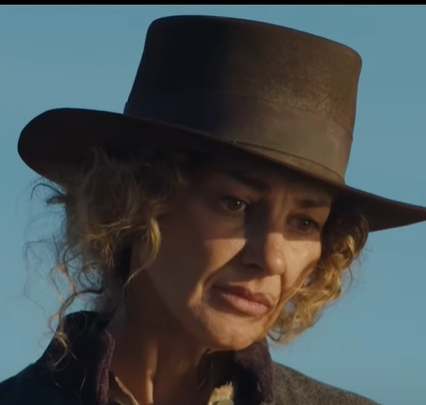
Perhaps the most resonant aspect of Margaret’s journey is her complex relationship with her daughter, Elsa. Their bond is tested, stretched, and redefined by the brutal realities of the trail. The intimate conversation about Elsa’s burgeoning romance with Ennis, where Margaret cautiously addresses the subject of sex, is a powerful moment of maternal guidance. Margaret, herself a woman of passion and experience, advises Elsa to enjoy the freedom of the trail, but warns of the consequences: “Freedom is anything but, Elsa. And every choice has fangs.” This profound statement, born of Margaret’s own lived experience, reveals her deep understanding of the world’s harsh realities. Her subsequent, stark pronouncement – “If you have a child, you’ll raise it. I will not do it for you” – is not a lack of love, but a pragmatic truth born of the immense hardship of their journey, a testament to her refusal to sugarcoat the burden of responsibility.
Margaret’s protective instincts are never far beneath the surface. Her explosive confrontation with Cookie over his vulgar language in front of her young son, John, is a prime example. “You use that word in front of my child again, I’m gonna stab you with this f***ing fork,” she snarls, demonstrating her fierce loyalty and willingness to defend her children’s innocence by any means necessary. This moment, both shocking and darkly humorous, underscores her unwavering commitment to her family’s well-being, even when facing down hardened men of the frontier.
Despite her outward strength, Margaret carries an immense internal weight. A quiet moment shared with another woman on the trail reveals her vulnerability. When asked if she’s happy, Margaret’s honesty is raw: “In general, I’m worried. As a wife, as a mother. Our survival feels beyond our control out here. So, no, I’m not happy in general.” This confession is heartbreaking, offering a glimpse into the constant anxiety that gnaws at her. Yet, she quickly shifts, finding solace in the immediate: “But in this moment, with the man I love, a son I adore, and a daughter I envy, I am very happy.” It’s a testament to her resilience, her ability to find fleeting moments of joy amidst relentless hardship, a vital coping mechanism for survival.
The depth of Margaret’s love and the anguish of inevitable separation are poignantly explored when Elsa makes the choice to leave the wagon train and ride with Sam. Margaret’s despair is palpable. Her desperate plea for a ceremony, for vows before God, stems from a primal desire for her daughter’s happiness and security, even as she knows it’s a futile hope. “All I ask, have a ceremony. Say vows before God, so this at least has a chance.” Her pragmatic understanding of Elsa’s unwavering spirit is evident in her conversation with James: “If you tie her to the back of the wagon, she’ll just chew through that damn rope.” Margaret’s sorrow in this scene is a profound depiction of a mother watching her child forge their own perilous path, unable to intervene.
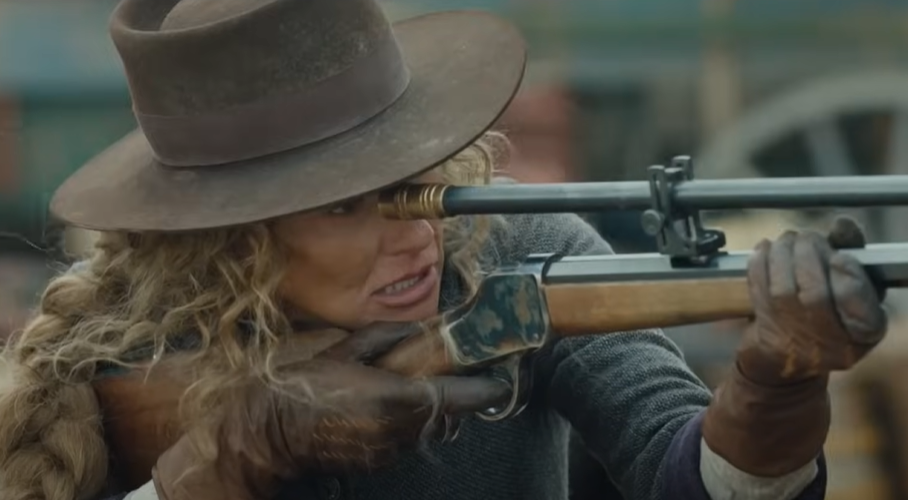
The ultimate test of Margaret’s resolve comes during the brutal Native American attack on the wagon train. Amidst the chaos and carnage, her pragmatic wisdom guides Elsa: “Aim for the horse, you’ll never hit the rider.” Her calm, authoritative demeanor in the face of mortal danger highlights her capacity for crisis management. When Elsa is gravely wounded by an arrow, Margaret’s immediate, unflinching response is to provide first aid. Her composure while pulling the arrow, directing the desperate efforts to staunch the flow of blood, is a harrowing display of fortitude. “You’ve done this before,” asks the man helping her. “Who didn’t?” she replies, a terse but powerful indictment of a life lived through unimaginable conflict.
In the aftermath of the attack, as the family grapples with Elsa’s injury and the continued threat, James makes a solemn declaration that defines their future: “Where we bury her is where we stay. That is our home.” Margaret’s tearful acknowledgment, “No, not in this place. I will find a place. By God, I will find a place,” is not just an agreement, but a renewed, desperate vow. It signifies her commitment to seeing this journey through to its bitter end, to finding the promised land where their sacrifices will finally culminate in a sanctuary.
Margaret Dutton’s journey is a masterclass in quiet, yet profound, heroism. She is the anchor in a storm, the pragmatic voice of reason, and the fierce protector of her family. Through her unwavering spirit, her moments of vulnerability, and her unyielding resolve, Margaret Dutton stands as a towering figure in the *1883* narrative, a testament to the indomitable will required to conquer the wild frontier and lay the foundation for a dynasty. Her story is a dramatic and deeply engaging exploration of womanhood, motherhood, and survival in the face of overwhelming odds, leaving an indelible mark on the hearts of viewers and solidifying her place as one of television’s most compelling figures.