From the moment the opening credits roll, Paramount Network’s “Yellowstone” has captivated audiences with its sweeping landscapes, complex family dynamics, and, perhaps most viscerally, its unsparing depiction of the brutal realities that underpin the Dutton ranch. More than just a backdrop for stunning cinematography, the Montana wilderness serves as a battleground where allegiances are forged in fire and disputes are settled with a primal fury rarely seen on television. The show’s most memorable moments often boil down to its visceral, bone-jarring brawls – explosive confrontations that aren’t just gratuitous violence, but pivotal plot points defining characters, shifting power dynamics, and etching the Duttons’ indelible mark on the land they so fiercely protect.
The bunkhouse, home to the Yellowstone’s loyal yet volatile wranglers, often becomes the epicenter of conflict, a stark reminder that life on the ranch is far from idyllic. One early, telling skirmish saw the naive Jimmy Hurdstrom, attempting to navigate a bar interaction, stumble headfirst into a dangerous situation. His ill-advised attempt at de-escalation, a polite “fuck off,” quickly spiraled into chaos. What began as a seemingly innocent dance request escalated into a full-blown barroom brawl, leaving Jimmy and his compatriots beaten and battered. “This feels broken,” a groaning wrangler lamented, a stark lesson in the immediate physical toll of their chosen lifestyle.
This incident, however, was not merely a random act of violence; it was a catalyst. John Dutton, the stoic patriarch, reacted with quiet fury, dispatching Rip Wheeler, his enforcer and right-hand man, to deliver a resounding message. Rip’s brand of justice is legendary – and terrifying. The subsequent, larger-scale retaliation, involving a bull stampede through a crowded bar, was a shocking display of the Duttons’ “eye for an eye” philosophy, amplified to an almost biblical scale. Amidst the shattered glass and terrified screams, Rip’s calm instruction to Jimmy – “Call ’em out, you hear me!” – cemented the young cowboy’s induction into a world where consequences are brutal and loyalty is absolute. These initial skirmishes set a precedent, establishing that any slight against the Yellowstone would be met with overwhelming, unforgettable force.
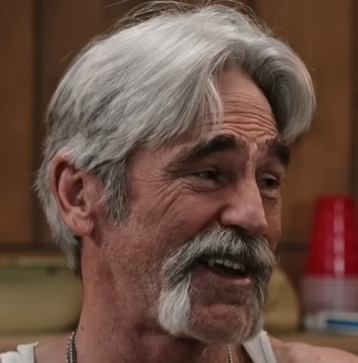
The Duttons’ territorial imperative is perhaps their most defining characteristic, and nothing provokes their wrath more than a perceived invasion of their ancestral land. The shocking confrontation with a gang of arrogant bikers served as a perfect illustration. When a group of leather-clad trespassers, mistaking the sprawling Yellowstone for a public park, defiantly refused to vacate the property, the simmering tensions erupted. “You got a problem, bitch?” one biker sneered at Teeter, the pink-haired, fiercely loyal wrangler, sealing their fate. What followed was a brutal, dust-kicking melee that showcased the wranglers’ raw fighting prowess and unwavering solidarity. Ryan, Colby, Teeter, and Lloyd, despite initial injuries and numerical disadvantage, fought with the ferocity of cornered animals.
But it was Rip’s arrival that truly turned the tide. His cold, calculated dismantling of the biker leader, a man who minutes before exuded cocky bravado, was a chilling spectacle. Rip’s chilling ultimatum – “You leave now, or you never leave. I’ll bury you where you fucking stand” – left no room for misinterpretation. The bikers, defeated and humiliated, were forced to abandon their prized motorcycles, a symbolic gesture of their utter subjugation. This wasn’t just a fight; it was a declaration of sovereignty, a violent reaffirmation that the Yellowstone Ranch belongs solely to the Duttons, and any who challenge that will pay a severe price.
Yet, the most profound and often painful battles on “Yellowstone” are waged not against external threats, but within the confines of the ranch itself, testing the very fabric of loyalty and consequence. The infamous round pen fight between Rip and Walker stands as a stark, brutal example of “cowboy court.” When Walker, weary of the Yellowstone’s dark secrets and ruthless demands, expressed a desire to leave, Rip subjected him to a merciless, one-sided beating. “You’re gonna stand in that fucking round pen all day, every day, until this shit is behind you,” Rip snarled, forcing Walker to confront his defiance in a barbaric display of power. This fight wasn’t about winning; it was about absolute control, a terrifying lesson in the unbreakable bond – and the brutal cost – of being branded by the Yellowstone. It highlighted Rip’s unyielding demand for fealty, and the dire consequences for anyone who dared to question it.
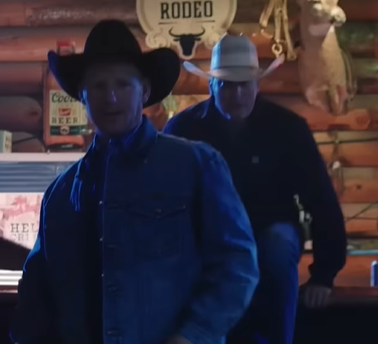
Personal lives, too, often collide with explosive force on the ranch. Jimmy Hurdstrom’s return with his fiancée, Emily, after a stint at the 6666s ranch, ignited an entirely different kind of brawl. His former girlfriend, Mia, still nursing a wounded heart and a fiery temper, instantly confronted Emily. “Kick her fucking ass!” the wranglers cheered, their innate desire for drama overriding any sense of decorum. The ensuing catfight between Emily and Mia, a visceral tangle of hair-pulling and shouting, was a chaotic spectacle that underscored the raw, untamed emotions simmering within the bunkhouse. Even Lloyd, usually the voice of grizzled reason, found himself amused, commenting, “That’s gonna go over like a fart in church.” This brawl, while less about territorial defense, was a potent illustration of the intense, often unbridled passions that define relationships on the ranch, and how quickly personal slights can erupt into public spectacles.
Perhaps the most potent and emotionally charged brawls involve Beth Dutton and Rip Wheeler, the show’s volatile and fiercely devoted power couple. Their bond is cemented in a shared capacity for vengeance and a no-holds-barred approach to defending each other. When a bar bouncer dared to put his hands on Beth, placing her in a chokehold, Rip’s protective instincts erupted with terrifying force. He moved with a primal, unthinking rage, unleashing a brutal assault on the bouncer, his singular focus on protecting the woman he loves. “You put your hands on my wife and you get the horn,” Rip declared, a chilling mantra of his undying loyalty.
Even the arrival of Sheriff Haskell, and later John Dutton himself, couldn’t completely defuse the tension. John, ever the pragmatist, understood Rip’s fury, acknowledging, “What would you do if that was your fucking wife?” This scene powerfully showcased the Duttons’ deep-seated contempt for conventional law when family is threatened, illustrating their readiness to face legal repercussions rather than allow any harm to come to their own. Beth and Rip’s fights are not just physical; they are explosive expressions of a love so fierce it transcends all boundaries, embodying the very soul of the “Yellowstone” universe.
In “Yellowstone,” a punch thrown is rarely just a punch. It’s a statement of ownership, a lesson in loyalty, an act of love, or a chilling decree of justice. These brawls are not mere filler; they are the narrative bedrock, propelling character arcs, deepening thematic resonance, and underscoring the raw, untamed essence of the Dutton family’s fight for survival. Each grunt, groan, and shattered bottle serves as a visceral reminder that on the Yellowstone, the line between civilization and wilderness is thin, and often, the only law that truly matters is the strength of your own fist. As the Duttons continue their fight to preserve their legacy, audiences can rest assured that the series will continue to deliver its signature blend of high-stakes drama and unforgettable, bone-crunching confrontations.