In the sprawling, tumultuous world of Taylor Sheridan’s “Yellowstone,” where the land is a battlefield and loyalty is carved in blood, one figure stands as the unshakeable bedrock of the Dutton dynasty: Rip Wheeler. From the moment he first appeared, an orphaned, broken boy saved by John Dutton, Rip has embodied the brutal, uncompromising spirit necessary to defend America’s largest contiguous ranch. A recent compilation, aptly titled “Best of Rip Taking Care of Business,” offers a visceral journey through the moments that define his complex character, revealing the cold, hard logic that governs his every action, and the unwavering devotion that makes him both a terrifying adversary and the ranch’s most vital, albeit lethal, asset.
The compilation opens with a stark reminder of Rip’s absolute authority within the bunkhouse hierarchy. A seemingly simple fight between two ranch hands, Fred and Jimmy, quickly escalates into a demonstration of Rip’s iron-clad rules. “What’s the rule about fighting, Fred? You wanna fight somebody, you come fight me. I’ll fight you all God damn day.” This isn’t just a threat; it’s a foundational tenet of the Yellowstone code. Jimmy, already bearing the ranch’s “Y” brand, is protected by an unspoken pact – an understanding that those who commit to the Duttons are family, and family protects its own. Fred, in his defiance, learns a brutal lesson: disrespect to a branded man is disrespect to the ranch itself. Rip’s response is swift and merciless. Fred is beaten, threatened with death, and summarily dismissed. “These guys, they just work here, Jimmy. You’ll see a thousand of them come and go. But not us, we die here. This is your family.” This declaration isn’t merely a statement of loyalty; it’s an oath, binding Rip, Jimmy, and every branded man to the land and to each other, highlighting the profound, often tragic, consequences of belonging to the Yellowstone family.
The inherent dangers of the ranch are starkly illustrated when Kayce Dutton finds himself in a life-or-death struggle with a charging bear. With his horse in distress, Kayce is forced to put down the apex predator, an act that, while necessary, is fraught with legal and ethical peril. Rip’s arrival isn’t one of immediate comfort, but rather a chilling blend of assessment and tough love. His wry observation, “You could get in trouble in a church. You stood your ground though, for once,” underscores a complex dynamic with Kayce, who, despite his lineage, has struggled to fully embrace the Dutton way. Rip’s subsequent, seemingly unprovoked punch to Kayce’s face – “I ain’t used to seeing you off my dad’s leash” – is a brutal test, a reminder of the raw power dynamics that govern their relationship. It’s a moment of fraternal antagonism disguised as a reassertion of dominance, ensuring Kayce understands the ranch’s hierarchy extends beyond bloodlines.
Perhaps the most chilling and definitive demonstration of Rip’s loyalty and ruthless pragmatism comes when Jamie Dutton, embroiled in a catastrophic personal crisis, calls on Rip for help. Having accidentally killed a journalist investigating the Duttons, Jamie is paralyzed by fear and guilt. Rip, with a chilling calmness, takes immediate command of the scene. The “Best of” clip meticulously details Rip’s methodical process: the disposal of the body, the cold instruction to destroy the victim’s phone, the careful wiping of prints, and the calculated decision to make Jamie complicit, ensuring his silence. The “train station,” a euphemism whispered among the ranch hands for the remote canyon where enemies of the Duttons disappear forever, becomes terrifyingly real. “You just made me an accessory to murder, didn’t you, Rip?” Jamie whimpers. Rip’s response is a masterclass in psychological manipulation: “What do you mean accessory? My prints aren’t on that rental car. I didn’t load a kayak and a bunch of other shit in the back of a pickup, you did.” This moment cements Rip as the Duttons’ ultimate fixer, willing to cross any moral line to protect the family, even if it means dragging Jamie, whom he despises, further into the abyss of their shared secrets.
The constant battle for land and resources on the Montana frontier is vividly depicted in the confrontation with Wade Morrow. When Rip discovers a herd of buffalo, suspiciously out of place, on Dutton land, he instinctively knows trouble is brewing. The ensuing verbal sparring quickly devolves into a brutal exchange of blows, revealing the raw, untamed nature of ranch disputes. The appearance of Wade Morrow, a figure from John Dutton’s past, adds layers of history and betrayal to the conflict. Morrow, a former branded man who deserted the ranch and now works for a rival, symbolizes the ultimate betrayal of the Dutton code. Rip’s seething rage and desire for a “fair fight” are palpable, demonstrating that his loyalty extends not just to protecting the ranch’s physical boundaries, but also to settling old scores and upholding the sanctity of the brand.
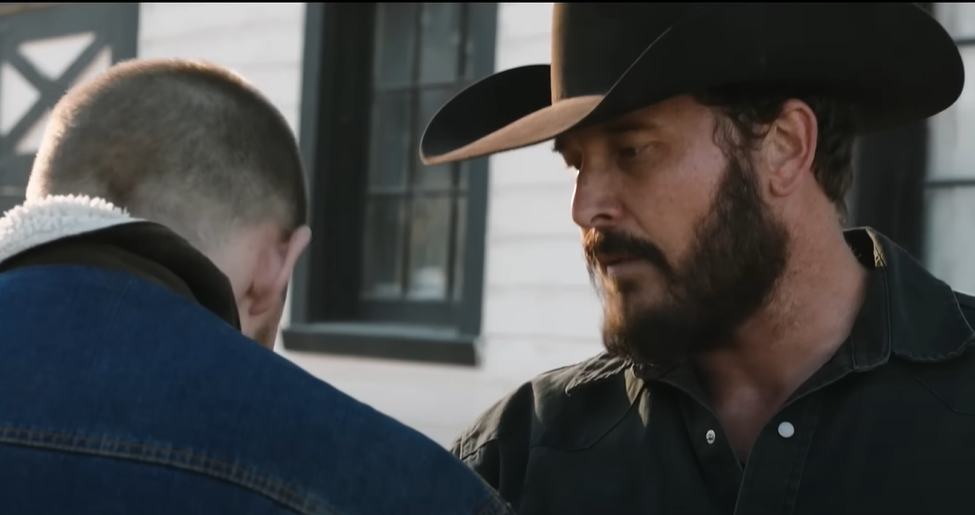
Back in the bunkhouse, Rip’s enforcing hand falls equally hard on his own. When tensions between Lloyd and Walker explode into a violent brawl, Rip intervenes with the same brutal efficiency he displayed with Fred. “What’s the rule about fighting, Lloyd? God damn you for making me do this.” The scene is a mirror of the compilation’s opening, reinforcing the consistency of Rip’s principles. Even Lloyd, a loyal, long-standing hand, is subjected to a painful beating for breaking the cardinal rule against infighting. It’s a harsh reminder that the Yellowstone’s internal peace is maintained through fear and absolute adherence to Rip’s rigid code, ensuring that the ranch’s collective strength is never compromised by internal strife.
Beyond internal discipline and the elimination of external threats, Rip also navigates the complex, often illegal, landscape of protecting the ranch’s interests from environmental regulations. When ranch hands mistakenly shoot collared wolves, Rip orchestrates the meticulous removal and disposal of their GPS beacons in the river, ensuring no trace is left. His chilling directive to Ryan – “Listen up, you don’t tell a fucking soul ever. This never happened” – highlights the Duttons’ willingness to operate outside the law when it serves their survival. It’s a testament to Rip’s practical intelligence and his unwavering commitment to the ranch’s perceived best interests, regardless of the legal ramifications.
The compilation concludes with a glimpse into the arduous, traditional work of the ranch: branding season. Rip’s logistical prowess is on full display as he discusses the complexities of coordinating crews, managing livestock, and housing temporary workers. His pragmatic solutions, like the use of tents to avoid liability, underscore his deep understanding of the ranch’s operations. The branding, however, is more than just work; it’s a public spectacle orchestrated by John Dutton, now governor, to reaffirm the Yellowstone’s dominance and heritage. “Nobody knows what the hell we do anymore. It’s time we remind them,” John declares. Rip’s role here is pivotal, not just as a foreman, but as the executor of John’s vision, transforming a necessity into a grand display of power and tradition.
Through these pivotal moments, the “Best of Rip Taking Care of Business” paints a comprehensive portrait of a man forged by the ranch and dedicated solely to its preservation. Rip Wheeler is more than just a ranch hand; he is John Dutton’s shadow, his sword, and the embodiment of the Yellowstone’s raw, unyielding will. His actions, often brutal, are always driven by a singular, unshakeable loyalty to the land and the Dutton family. He is the quiet force that ensures the ranch’s survival, a walking, breathing testament to the show’s central theme: that on the Yellowstone, the line between justice and vengeance is often blurred, and the cost of defending one’s home is often measured in blood. In a world of shifting alliances and encroaching modernity, Rip remains the immovable object, the dramatic, compelling, and ultimately terrifying heart of “Yellowstone.”