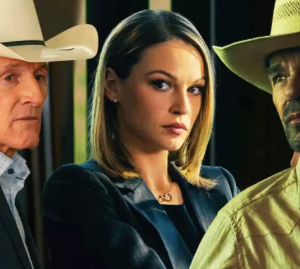
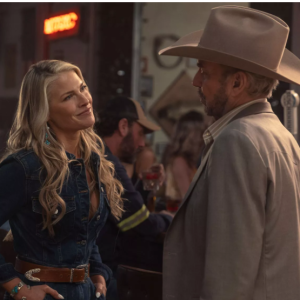
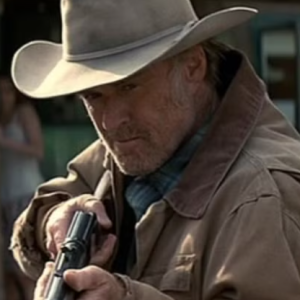
In the brutal, unforgiving landscape of the American frontier, where death lurks behind every whisper of wind and life is a constant, exhausting struggle for survival, Taylor Sheridan’s 1883 stands as a testament to the raw human spirit. A visceral, unflinching prequel to the behemoth Yellowstone, the series masterfully chronicles the Dutton family’s arduous journey west, a pilgrimage fraught with unimaginable peril and heart-wrenching loss. Amidst this saga of grit and grim determination, one scene stands out for its profound emotional resonance and unexpected intimacy: the quiet, devastating conversation between the hardened Pinkerton agent Shea Brennan and the grief-stricken Elsa Dutton.
This pivotal moment, arriving after a succession of tragedies that have chipped away at Elsa’s youthful idealism, showcases the very core of 1883’s narrative genius: its ability to extract profound human truth from the crucible of suffering. Elsa Dutton, beautifully portrayed by Isabel May, is the beating heart of the series. Her lyrical narration guides viewers through the untamed wilderness, her initially naive perceptions slowly giving way to a fierce, independent spirit forged in fire. She falls in love, experiences the intoxicating freedom of the open range, and embraces the life of a cowgirl with unbridled passion. But the frontier, as the series relentlessly reminds us, is a merciless teacher. Her transformation comes at a devastating cost, culminating in the brutal death of her beloved, Ennis, a cowboy whose hopeful spirit briefly illuminated her world.
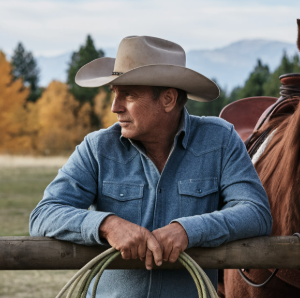
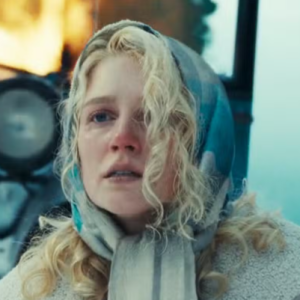
It is in the aftermath of this crushing loss that we find Elsa, utterly broken, contemplating a surrender to the vast, indifferent emptiness around her. She sits, an embodiment of despair, the vibrant light that once defined her dimmed by an ocean of sorrow. Into this void steps Shea Brennan, brought to life with a quiet intensity by Sam Elliott. Initially introduced as a stoic, almost unfeeling leader, tasked with guiding a wagon train of unprepared immigrants across a treacherous continent, Shea has been a man defined by his own, unspeakable grief – the loss of his wife and young daughter to smallpox, a tragedy that has left him contemplating his own demise.
The scene opens with Shea’s gravelly voice, cutting through the silence of Elsa’s despair like a surgeon’s scalpel, precise and deeply felt. “I know how you feel,” he begins, not as a platitude, but as a statement of devastating, shared truth. He immediately acknowledges the emptiness of such words when uttered by others, but asserts his own lived experience: “I know it’s true when I say it. I’ve sat right where you’re sitting, thinking the same thing. Thinking I don’t want to live without them. Don’t see the point.”
This admission from Shea Brennan is nothing short of a seismic event within the character’s arc. For episodes, he has been the unflappable, often brutally pragmatic voice of reason, seemingly impervious to emotional weakness. Yet, here he is, laying bare the deepest wound of his soul, revealing a vulnerability that humanizes him profoundly. He confesses, with raw honesty, that even now, “Still do most days,” the yearning for oblivion persists. This shared dark secret — the contemplation of suicide in the face of insurmountable grief — establishes an immediate, unbreakable bond between the two, a connection forged in the hottest fires of human suffering.
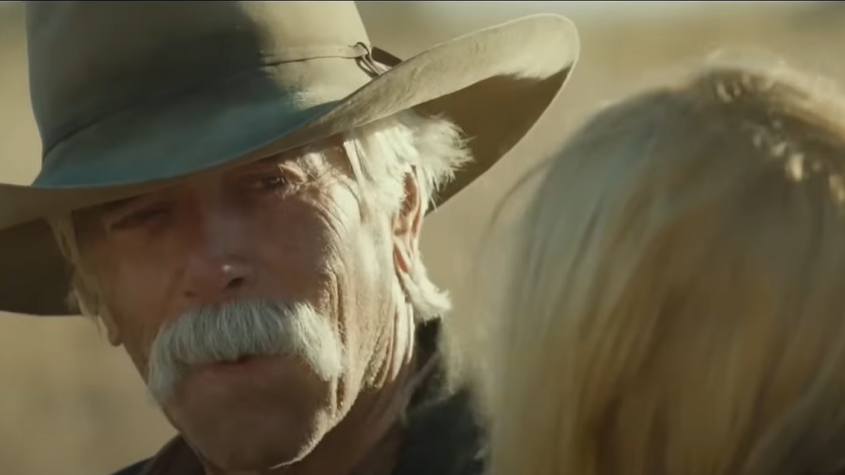
Elsa, barely able to articulate her pain, responds with a single, desperate “Why?” She seeks a reason to endure, a flicker of purpose in a world suddenly devoid of meaning. Shea’s answer, delivered with a quiet resignation, yet imbued with a profound sense of duty, distinguishes their plights while acknowledging their shared pain. “My reason’d be different than yours. I don’t really have anyone left who loves me. You do.” It’s a stark reminder of his profound isolation, a man who has lost everything, yet who, paradoxically, sees in Elsa’s continued existence a reason for her to fight.
Then, Shea Brennan reveals his most guarded secret, the fragile thread that keeps him tethered to life: “I’ll tell you a secret. I’ll tell you why I’m still shucking there today. I’m headed to the ocean.” The ocean, a vast, unknowable entity, becomes his singular beacon, a destination that holds the promise of both peace and reunion. It is the final act of devotion to his deceased wife, whose dream it was to see the boundless sea. “I’ll take my wife to the ocean. And I’m gonna sit on the beach and let her see it. That was her dream. Then I’m gonna see her, that’s my dream.” This revelation transforms his journey from a grim obligation into a sacred pilgrimage, a final promise to be kept before, implicitly, he allows himself to find his own peace. It’s a stoic, yet incredibly romantic, vision of purpose.
But the most profound revelation, the heart of Shea’s comfort, comes from an ancient wisdom, shared with him by an Apache scout. “When you love somebody you trade souls with them. They get a piece of yours and you get a piece of theirs. And when your love dies a little piece of you dies with them. That’s why it hurts so bad.” This philosophical insight provides a spiritual explanation for the unbearable anguish of loss, validating Elsa’s pain as a natural consequence of deep love. It explains why the heart feels so brutally torn asunder, why a part of oneself feels irrevocably gone.
Yet, this wisdom also offers the balm of enduring connection: “But that little piece of him is still inside you, and he can use your eyes to see the world.” This is the revolutionary concept Shea offers Elsa: Ennis is not truly gone. A part of him lives on within her, not just as memory, but as an active, living presence. Her continued existence, her ability to witness the world, becomes an extension of his own, a way for his spirit to endure. It transforms grief from an all-consuming void into a sacred trust, a responsibility to carry forward the light of the beloved. It is a powerful redefinition of loss, from absolute cessation to a profound, internal continuation.
This Apache wisdom, filtered through Shea’s world-weary voice, is the turning point for Elsa. It provides her with a framework to understand her suffering and, more importantly, a reason to live beyond it. Her journey of love and loss is reframed not as an end, but as a deeper integration of experience. She is no longer just herself, but herself imbued with the essence of Ennis.
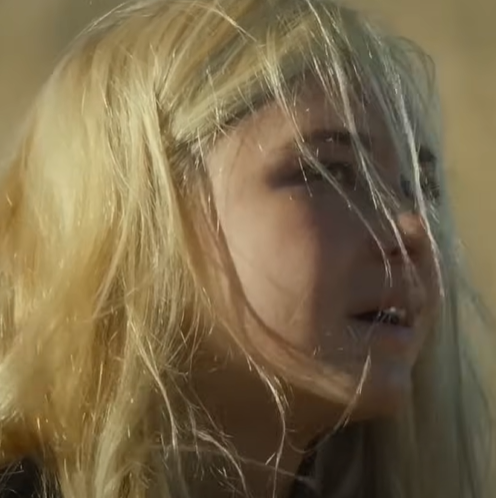
The scene concludes with Shea, ever the pragmatist despite his profound emotional unveiling, gently nudging Elsa back towards the harsh realities of their existence. “In the meantime, a herd could sure use its cowgirl.” This stark reminder underscores the relentless demands of the frontier. Even in the depths of personal tragedy, life demands to be lived, responsibilities fulfilled, and the journey must continue. It’s a call to action, a challenge to Elsa to channel her pain into purpose, to honor Ennis’s memory by living with the same vibrancy he instilled in her.
This scene between Shea and Elsa is a masterpiece of character development and emotional depth. It solidifies Shea Brennan as far more than just a hardened trail boss; he becomes a reluctant shaman, guiding Elsa through the darkest night of her soul. For Elsa, it marks a critical juncture in her evolution, moving from passive despair to a fragile, yet determined, resilience. It is a moment that encapsulates the core themes of 1883: the brutal cost of the American dream, the enduring power of love and loss, and the incredible strength of the human spirit to find meaning and purpose even amidst unimaginable suffering. As the somber music swells and the lone bird chirps, the scene leaves an indelible mark, a quiet testament to the profound connection forged between two souls scarred by the same, universal pain.