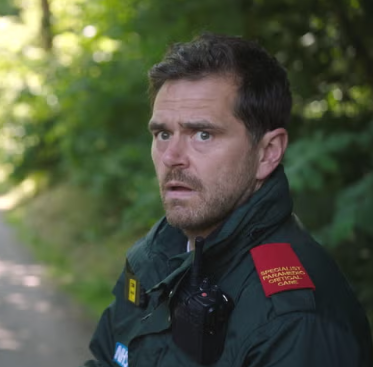
The long-running medical drama, Casualty, recently captivated audiences with one of its most ambitious and terrifying stunts to date, featuring paramedic Iain Dean in a precarious crane rescue. Star Michael Stevenson, who portrays the intrepid Iain, has offered an exclusive behind-the-scenes look into the rigorous reality of filming this high-stakes sequence, revealing the immense dedication required to bring such a dramatic moment to the screen.
Iain Dean, a character renowned for his unwavering commitment to patient care and his tendency to push boundaries, faced what could be described as his most perilous challenge yet in the debut episode of the show’s new boxset, titled ‘Supply and Demand’. The intense scenario saw Iain and his team dispatched to Holby Docks, where an urgent situation compelled him to disregard standard protocol. Driven by a desperate need to reach a stranded patient before it was too late, Iain undertook the extraordinary feat of scaling a colossal crane, navigating its dizzying heights without the safety of a harness.
Michael Stevenson vividly recounted the conversations with Casualty’s production team that led to this unprecedented stunt. He shared a running joke with a producer about continually finding new, life-threatening situations for Iain, never truly believing he would be sent hundreds of feet into the air on a crane. Yet, the concept materialized, and the script was soon in development, with Stevenson committed to performing the bulk of the sequence for real. This particular stunt was conceived to not only challenge the character of Iain but also to push the very limits of the medical drama’s acclaimed production capabilities, delivering something truly fresh and thrilling for its loyal viewership.
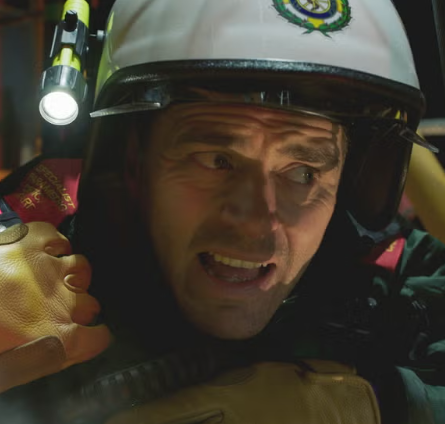
The sheer scale and daring of this action sequence are truly remarkable, but Stevenson candidly admitted that the most formidable aspect of the entire shoot was battling the biting cold. He confirmed the scene was filmed with an unparalleled commitment to authenticity, taking place 30 metres above ground. After completing a day of essential training in relatively warmer conditions, the actual shoot unfolded during a grueling night session, lasting from 2 to 3 AM, high in the air overlooking the city of Newport. Despite the challenging combination of extreme heights, darkness, and an intense cold, Michael successfully completed the demanding feat. He proudly described it as the kind of extraordinary, large-scale scene that only a show with Casualty’s legacy and production prowess can truly execute.
While Stevenson’s colleagues often express a playful envy for the daring scenes his character is often involved in, this particular crane stunt proved to be an exception. He recounted how Charles Venn, who plays Jacob, and Milo Clarke, who portrays Teddy, both separately texted him after reading the script, unequivocally stating their preference to sit this one out. Their genuine, slightly horrified reactions underscore the truly exceptional and dangerous nature of the stunt, even for seasoned actors accustomed to Casualty’s high-octane sequences.
Iain Dean has always been a character defined by his inherent bravery and a relentless drive to save lives, often at great personal cost. From navigating dangerous, crime-ridden estates to confronting armed individuals, his career has been punctuated by acts of extraordinary heroism that frequently bend, if not outright break, the rules. The crane stunt, in this context, isn’t an isolated incident but a pivotal moment in his long-standing pattern of self-sacrifice. It illustrates a deeper, almost compulsive need to push boundaries, driven by a profound empathy for his patients. This latest extreme act begs the question of where the line between heroism and recklessness lies for Iain, and what emotional or psychological toll such repeated exposure to peril takes on him. Does he crave the adrenaline, or is it simply an unshakeable moral compass that dictates his actions, regardless of the danger to himself? This internal struggle makes him one of the show’s most compelling figures, grounding his spectacular actions in a relatable human drama.
The reactions from his colleagues, particularly Jacob Masters and Teddy Gowan, further underscore the unique and often challenging position Iain holds within the Holby emergency department. Jacob, a seasoned nurse and a close friend, has witnessed Iain’s daring acts countless times, often stepping in to support him or mitigate the inevitable fallout. Teddy, the younger paramedic, frequently looks up to Iain, admiring his courage and resilience. Their collective awe, mixed with genuine relief that they weren’t required to undertake the stunt themselves, speaks volumes about the extreme nature of the challenge. This moment of shared, slightly horrified respect reinforces the tight-knit bond within the ambulance crew—a group accustomed to high-stress situations but still capable of being astounded by Iain’s exploits. It also subtly highlights the camaraderie among the actors, whose real-life reactions mirror those of their characters, proving the scene’s visceral impact.
Furthermore, the significant hint within the new boxset about a “major drug crisis” casts Iain’s crane rescue in a potentially darker and more expansive light. It is plausible that the patient trapped high above Holby Docks is somehow entangled in this escalating crisis, or perhaps the precarious situation itself serves as a powerful metaphor for the widespread societal breakdown that the drug crisis represents. Iain’s willingness to go to such extraordinary lengths to save a single life could powerfully foreshadow his pivotal role in confronting this broader societal issue. As paramedics, Iain and his colleagues are often the very first responders to the devastating human cost of drug addiction – from overdoses and violence to neglect and despair. His audacious, rule-breaking approach to patient care might be exactly what’s needed to navigate the complex and dangerous landscape of a widespread drug epidemic gripping the city. This particular stunt, therefore, could serve as his crucible, hardening him for the harrowing challenges ahead and forcing him to make even more difficult choices where established protocols might prove tragically insufficient against a pervasive and destructive force.
For over three decades, Casualty has maintained its status as a cornerstone of British television by consistently pushing boundaries in its portrayal of medical emergencies and the intense human drama unfolding within the confines of the emergency department. The crane stunt is a resounding testament to the production team’s unwavering commitment to delivering cinematic, large-scale sequences that truly immerse viewers in the high-stakes world of emergency medicine. Unlike many dramas that might rely heavily on green screens or computer-generated imagery, Casualty frequently opts for practical effects and real-world locations, adding an unparalleled layer of authenticity and gritty realism. Michael Stevenson’s account of filming 30 metres up in the biting cold of an early morning underscores this dedication. It’s not merely about spectacle; these meticulously planned and executed stunts serve to ground the narrative in a believable, if heightened, reality, allowing the audience to truly grasp the immense pressures and inherent dangers faced by real-life paramedics. This relentless pursuit of realism, even when physically demanding for the cast and crew, is a hallmark of the show, contributing significantly to its enduring appeal and critical acclaim. It firmly positions Casualty not just as a compelling medical drama, but as an action series in its own right, showcasing the unexpected heroism found in everyday professions.

While Iain’s immediate heroic act undoubtedly saved a life, the repercussions of bypassing established safety protocols are rarely straightforward in the world of Casualty. His actions could potentially spark an internal investigation, leading to disciplinary action or at the very least, a stern reprimand from hospital management, eager to uphold professional standards and avoid liability. However, Iain’s consistent track record of success in life-or-death situations, coupled with the undeniable positive outcome, often sees him evade severe consequences, albeit with a cautionary note. This particular stunt, given its high visibility and extreme nature, might elevate his status to that of a legend within the Holby ED, further solidifying his reputation as the one who will always go above and beyond, no matter the personal risk. Yet, it could also place a heavier burden on him, with colleagues and superiors perhaps subconsciously expecting similar audacious acts in the future. Psychologically, surviving such a terrifying ordeal could either reinforce his belief in his own unconventional, yet effective, methods or, conversely, lead to a period of deep reflection on the true limits of his courage and the immense toll it takes on his well-being. As the broader narrative of the drug crisis unfolds across the boxset, Iain’s harrowing experience on the crane will undoubtedly shape his approach, making him a central and indispensable figure in Holby’s ongoing fight against this new, formidable societal threat, proving once again that in the world of Casualty, heroes aren’t just found in capes, but in paramedic uniforms, willing to scale any height for a patient in need.