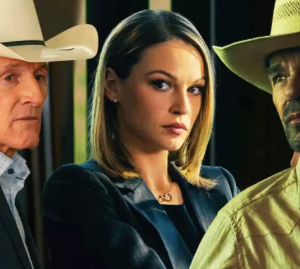
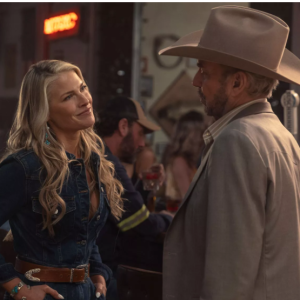
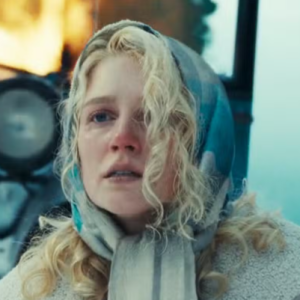
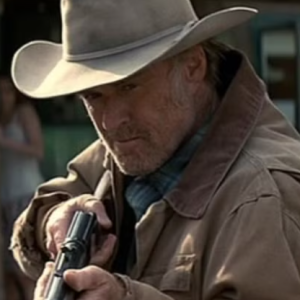
“Working with them is the deal with the devil, Dad.”
“All the angels are gone, son. There’s only devils left. At least they admit it.”
This chilling exchange, a raw distillation of the Dutton family’s world, immediately plunges audiences into the moral abyss and untamed spirit of “Yellowstone.” In an era when traditional Westerns were thought to be as extinct as the wild buffalo, one visionary writer, director, and real-life cowboy has not only resurrected the genre but transformed it into a global phenomenon. Taylor Sheridan, the creative force behind Paramount’s record-breaking hit, has proven himself a singular voice in Hollywood, crafting narratives as vast and unforgiving as the Montana landscape they inhabit.
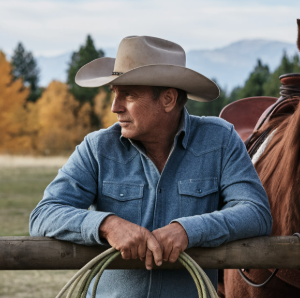
For five years, the sprawling vistas of Montana’s Bitterroot Valley have served as the iconic backdrop for “Yellowstone,” a modern-day Western that has ridden across the television landscape like a stampede. Starring Kevin Costner as the indomitable patriarch John Dutton, “Yellowstone” transcends mere entertainment; it is a cultural touchstone, shattering viewership records and becoming the most-watched scripted series on television. Its success is not merely numerical; it’s a testament to Sheridan’s audacious vision, marrying the sprawling family drama of “Bonanza” with the ruthless, often bloody, machinations of “The Godfather.” As Costner himself quipped, the Dutton family is “a little violent, a little bit Murder Incorporated.”
At the heart of “Yellowstone” lies John Dutton, a man stubbornly anchored in the past, fiercely clinging to his legacy: the largest contiguous ranch in the United States. Land, to John, is not merely property; it is identity, heritage, and the very soul of his family. His mantra, “This is America, we don’t share land here,” encapsulates the series’ core conflict: the relentless battle against land developers, indigenous communities reclaiming ancestral territories, and the relentless march of modernity. Loyalty is John’s second religion, and betrayal carries the ultimate price: “If you betray me again, you’re dead to me, son. You understand?” This uncompromising ethos defines the Duttons, a family bound by blood and dirt, willing to cross any moral line to preserve their dominion. The series unflinchingly reminds us that the romanticized notion of the American West often conveniently forgets the brutal realities of its founding—the dispossession of native populations, the violent struggles for dominion over a beautiful, yet unforgiving, frontier.
To craft such an authentic and compelling world, one must not merely observe it but live it. Few possess this authority more profoundly than Taylor Sheridan. “I just make movies to support my horse habit,” he quips, a statement that speaks volumes about his genuine connection to the cowboy life. Sheridan is not an armchair auteur; he is a seasoned horseman, roper, and rancher who owns two ranches in Texas, even providing most of the horses used in his productions. “All the horses for the most part in our business are terrible. They’re not very broke, they’re not very safe,” he explains, highlighting his commitment to authenticity by personally sourcing and even training actors to ride. His dedication is so profound that when he couldn’t find an actor skilled enough to play a horse trader on “Yellowstone,” he stepped into the role himself, effortlessly embodying the part with a natural gravitas that blurs the line between creator and character.
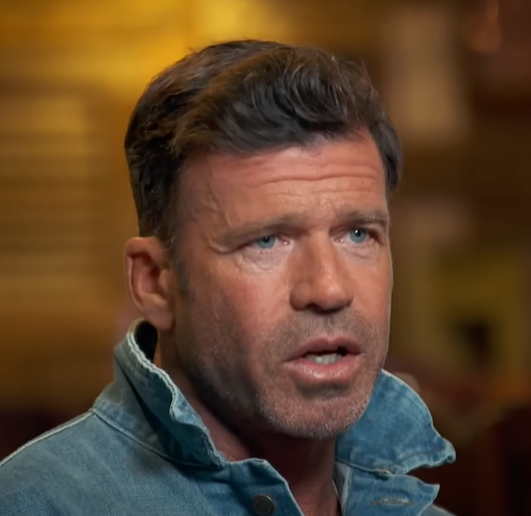
Sheridan’s writing possesses an economy of language and a directness that mirrors his personal demeanor. On set, he runs “not much of a democracy.” “The words are the words,” he states, embodying a confidence born from deep understanding. He has been hailed as one of the most vital Western storytellers in decades, a master who understood that Hollywood’s dismissal of the Western genre was not because audiences no longer cared, but because “they made a bunch of bad movies about it.” Sheridan’s genius lies in stripping away the clichés, presenting a far more complex, nuanced, and brutally honest portrayal of the West that resonates with contemporary audiences precisely because it’s so much more than a simple tale of good versus evil.
The success of “Yellowstone” proved to be merely the vanguard of a burgeoning universe. Sheridan expanded his narrative empire with “1883,” a gritty, raw prequel chronicling the perilous journey of the first generation of Duttons across the Great Plains. Starring the unlikely yet captivating duo of Faith Hill and Tim McGraw, “1883” captivated audiences with its unflinching portrayal of pioneer life, from savage storms to desperate struggles for survival. Its overwhelming popularity swiftly led to another hotly anticipated prequel, “1923,” bringing cinematic legends Harrison Ford and Helen Mirren to the Dutton family saga. Sheridan’s disbelief at collaborating with such icons – “It’s ludicrous that I’m working with these people… it’s fantastically insane” – underscores the meteoric rise of his storytelling prowess.
Sheridan’s journey to becoming Hollywood’s reigning Western architect was, however, far from linear. For over two decades, he toiled as an actor, landing supporting roles in shows like “Veronica Mars” and “Sons of Anarchy.” Despite his “stubbornness” and a refusal to fail, the leading man status eluded him. He admits, “I had come to where the best I was ever going to be was, you know, 10th on the call sheet.” But Hollywood, in its peculiar way, revealed his true calling. A friend brought him a project not to audition for, but to write. “I said, look, I have no idea how to do this, but I have a 15-year education on how not to do it.”
What followed was nothing short of a creative explosion. His first script, “Mayor of Kingstown,” was penned in a single furious night. “When I was done, I said, ‘Man, I should have wished I had done this 15 years ago.'” From then on, the words flowed with unstoppable force. He quickly delivered the Oscar-nominated screenplay for “Hell or High Water,” a taut, modern-day Western heist thriller, followed by acclaimed films like “Sicario” and “Wind River.” Yet, when he pitched “Yellowstone,” Hollywood executives, convinced that TV Westerns were a dead genre, universally passed.
Chris McCarthy, President and CEO of MTV Entertainment and Paramount Network, saw what others missed. He “essentially bet the ranch” on Sheridan’s vision. “I’ve been in television nearly 20 years, and there’s very few times where my 18-year-old niece and my 80-year-old aunt ask me about the same show,” McCarthy explains, highlighting the universal appeal of “Yellowstone.” Sheridan creates not just a series but an entire world, writing what he knows with unparalleled skill.
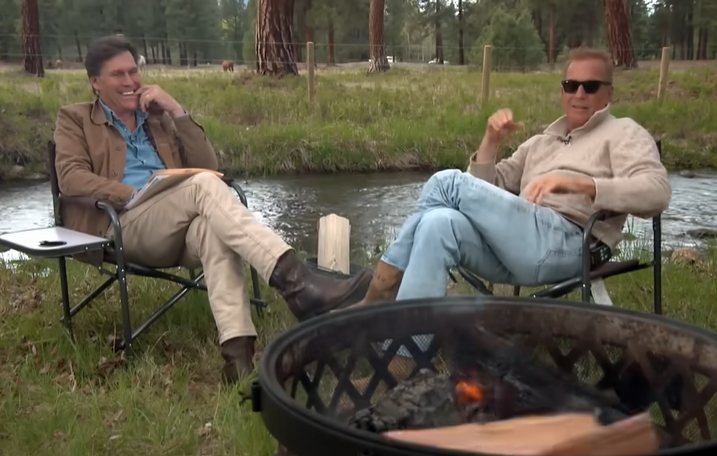
Today, Taylor Sheridan’s influence is undeniable. He oversees no fewer than ten Paramount series, either on air or in development, effectively building an entire television empire. His life is a whirlwind of creative endeavors and strategic business ventures, including his recent co-ownership of the historic Four Sixes Ranch, an iconic Texas property spanning over a quarter of a million acres. The scale of his ambitions is breathtaking, requiring him to “keep on writing hits to pay it all off.” Yet, for a man who once planned to retire at 50, his passion remains undimmed. “I don’t know how to [play golf],” he muses, “I see that much grass, I want to put cows on it.”
John Wayne once observed that nothing was more discouraging to an actor than working on brightly lit interior sets. Kevin Costner, immersed in the untamed grandeur of “Yellowstone,” shares that sentiment. The outdoor world Taylor Sheridan has meticulously crafted is a place that draws you in, captivating actors and audiences alike. “At the end of the day shooting… sometimes I just don’t go home,” Costner reveals, acknowledging the magnetic pull of the land. “I just stay right here. I mean, if those mountains don’t feel the need to move, why should I?”
Through the gritty authenticity of his storytelling and the sheer force of his will, Taylor Sheridan has not only breathed new life into the Western but forged an entertainment dynasty that redefines the genre. He is the true cowboy behind “Yellowstone,” a visionary who understands that the dramatic heart of the American frontier still beats strong, echoing through the triumphs and tragedies of a family fighting for its very soul in a world that refuses to share.